
Brands
Supreme Court gives Centre two weeks on food warning labels
Court questions delay over front-of-pack warnings for foods high in sugar, salt and fat


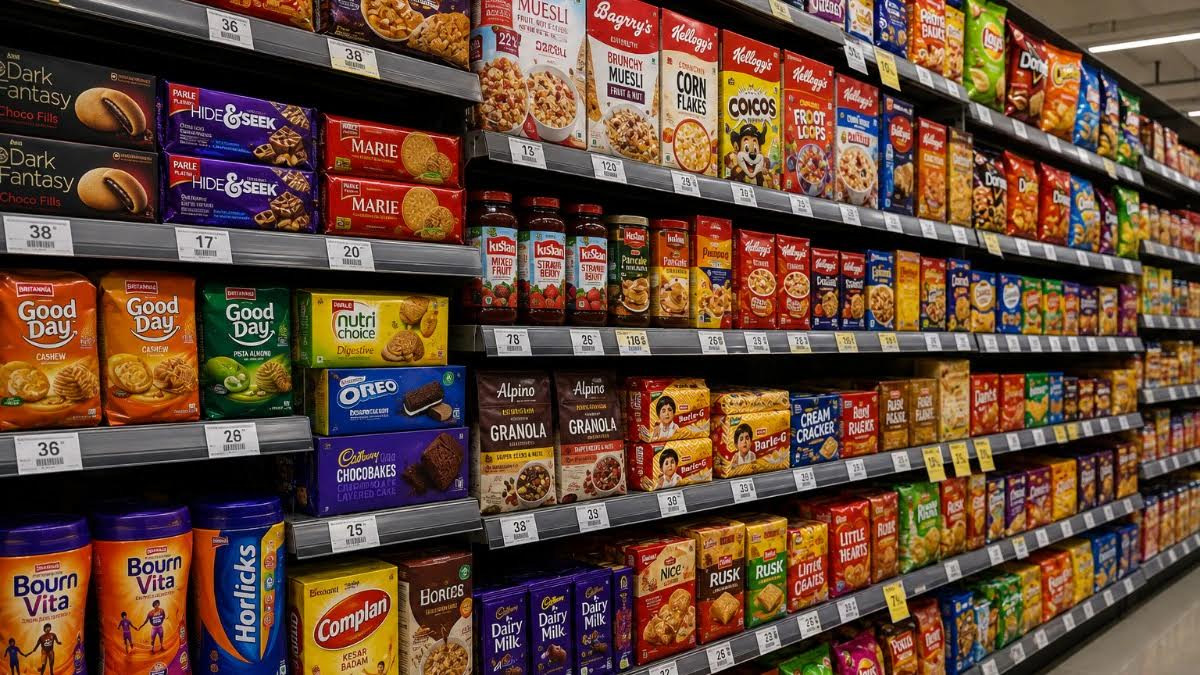
NEW DELHI: The warning bell is ringing louder for packaged food. The Supreme Court has given the Centre two weeks to take a final decision on proposed front-of-pack warning labels for packaged foods high in sugar, salt and saturated fat, cautioning that it could step in with further directions if the government fails to act.
A bench of Justices JB Pardiwala and K Vinod Chandran questioned the Centre and the Food Safety and Standards Authority of India (FSSAI) over the delay, stressing that the issue concerns public health, particularly the wellbeing of children.
During the hearing, Additional Solicitor General Brijender Chahar, appearing for the Union government, raised concerns about applying stringent warning labels to Indian foods. Citing products such as namkeen, he argued that international nutritional benchmarks may not always align with Indian dietary habits. He also pointed out that even two eggs could cross the permissible daily fat limit.
The bench, however, was not convinced that such differences should prevent consumers from receiving clearer nutritional information. The judges questioned whether the government wanted people, particularly growing children, to remain exposed to health risks without more prominent information.
The Court also questioned whether commercial considerations were influencing the government’s approach. The bench made it clear that manufacturers’ business interests could not take precedence over consumer health and stressed that it was not targeting any particular food product.
At the heart of the matter is the proposed front-of-pack warning system, which would make nutritional risks more visible before consumers buy a product. The Court noted that consumers already know packaged foods contain sugar, fat and carbohydrates, but said prominent warnings could make it easier to understand what they are actually consuming.
The bench also brushed aside arguments that such warnings could hurt manufacturers, pointing out that the ultimate decision to purchase would still rest with consumers.
The hearing also touched on alternative approaches. Senior advocate Devadutt Kamat suggested that food products could be classified differently, with their nutritional content displayed accordingly. Meanwhile, the Court told a manufacturer represented by senior advocate Maninder Singh that policy on citizens’ health could not be dictated by manufacturers.
The judges referred to an earlier order dated 10 February 2026 concerning warning labels and also took note of minutes from an FSSAI meeting held on 7 March, which appeared to reflect a position different from the Court’s earlier suggestions.
The Union has maintained that adopting international standards for packaging and nutritional warnings could be difficult. The Court questioned that reasoning, asking whether differences between global standards should prevent India from strengthening its own public-health safeguards.
The bench went further, saying India needed to demonstrate that it was serious about protecting its citizens, particularly children, and that the country’s approach to food safety should reflect that priority.
The Centre now has two weeks to place its final decision before the Court. The judges made it clear that the government can take a decision on the proposed warnings itself otherwise, the Court may take the matter into its own hands.
As the bench put it, “This is your last chance. Next time we will dictate the judgement.”






