Brands
Solinas Integrity raises $5.5 million in Series A1 round led by Hero Enterprise
IIT Madras incubated robotics startup eyes Rs 100 crore revenue by FY28 with global push


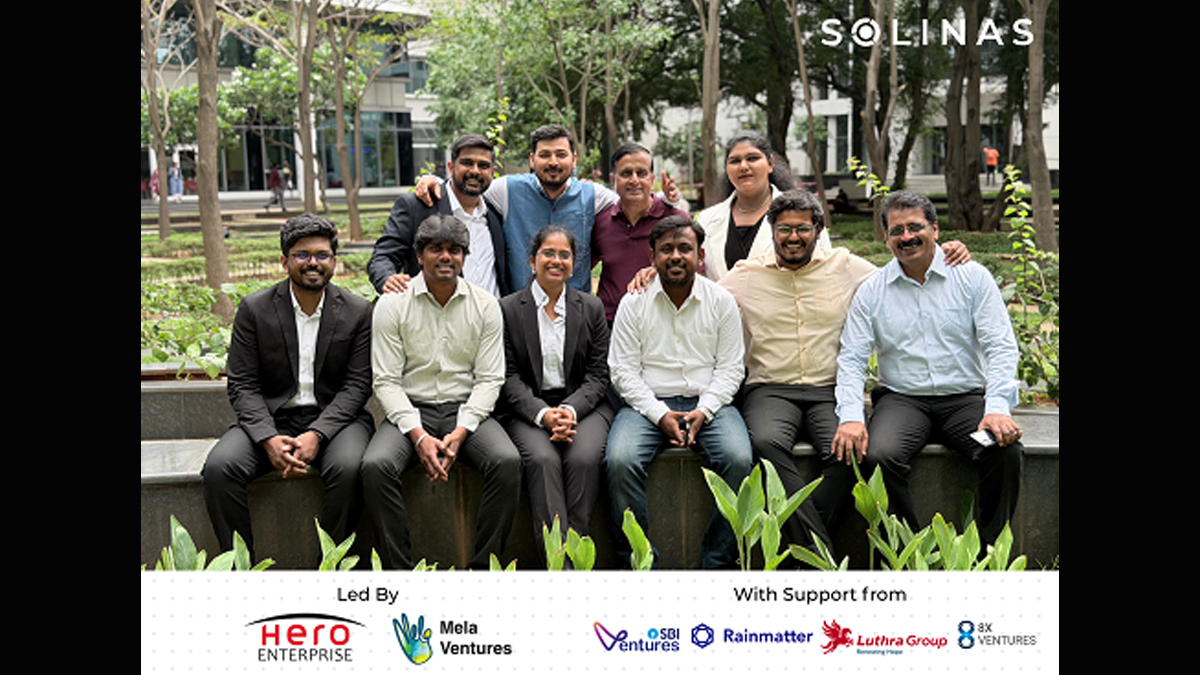
Chennai: Digging deep without lifting a shovel. Solinas Integrity, the robotics startup using AI to modernise underground infrastructure, has secured fresh funding from a consortium of investors led by Hero Enterprise, alongside Mela Ventures, SBI Ventures Limited, Rainmatter, Luthra Group and 8X Ventures, to accelerate its expansion in India and overseas.
The Indian Institute of Technology Madras incubated startup, founded by Divanshu Kumar and Moinak Banerjee, develops robotics and AI systems that inspect, clean and digitise underground water and wastewater networks. Its technology aims to reduce water losses, improve worker safety and eliminate manual scavenging by replacing hazardous manual inspections with robotic systems.
Although the company did not disclose the size of the investment, it said the fresh capital will be used to deepen its presence in existing markets, expand into more states and municipal corporations across India, and strengthen its international footprint with a focus on the Middle East and Southeast Asia.
The company also plans to accelerate the development of next-generation robotic inspection and cleaning systems, enhance its AI-powered asset management software and broaden its industrial solutions portfolio. Beyond water and sanitation, Solinas is targeting sectors such as oil and gas and defence, where critical underground infrastructure also requires continuous monitoring and maintenance.
Commenting on the fundraise, Solinas Integrity, co-founder and chief executive officer, Divanshu Kumar said the company has demonstrated that both its technology and business model work consistently across cities and large-scale deployments. He added that with a strengthened leadership team and long-term institutional backing, Solinas now aims to build India’s largest technology company focused on underground asset management while expanding into adjacent high-stakes industries.
The startup is targeting Rs 100 crore in revenue by FY28, driven by continued growth in its core water and sanitation business and its expanding industrial asset management operations.
Backing the company, Hero Enterprise, chairman, Sunil Kant Munjal said India’s biggest infrastructure challenges require technology-first solutions rather than incremental improvements. He said Solinas addresses critical issues around water security, worker safety and urban resilience through robotics-driven innovation.
Similarly, Mela Ventures, managing partner, Krishnakumar Natarajan said traditional maintenance of India’s underground water infrastructure remains labour-intensive, hazardous and expensive, while Solinas offers an integrated robotics platform capable of mapping, diagnosing and managing underground assets more efficiently.
Adding to that, SBI Ventures Limited, chief investment officer, Neev Funds, Akshay Panth said Solinas has successfully converted deep engineering innovation into commercial traction at the intersection of water security, climate resilience and worker safety, making it a strong example of technology-led infrastructure transformation.
Solinas’ technology is already deployed across more than 35 cities and 15 states in India, working with utilities and municipal bodies including Chennai, Bengaluru, Hyderabad, Noida and Tripura. To date, the company has completed more than 100 projects, identified over 25,000 defects in underground infrastructure and served more than 20 industrial clients. It says its robotic inspection systems can help save up to 600,000 litres of water per kilometre of inspection each day while reducing operational costs by as much as five times.
As governments and utilities increasingly prioritise water conservation and smart infrastructure, Solinas is betting that robotics and AI will become essential tools for managing the vast networks that keep cities running, even if most of that work happens out of sight beneath the ground.