Brands
Society Tea’s Karan Shah on balancing 93 years of legacy with the next wave of growth
From product innovation and quick commerce to speciality tea, matcha and global expansion, Society Tea director Karan Shah discusses how the legacy brand is adapting to changing consumer habits while staying true to its core


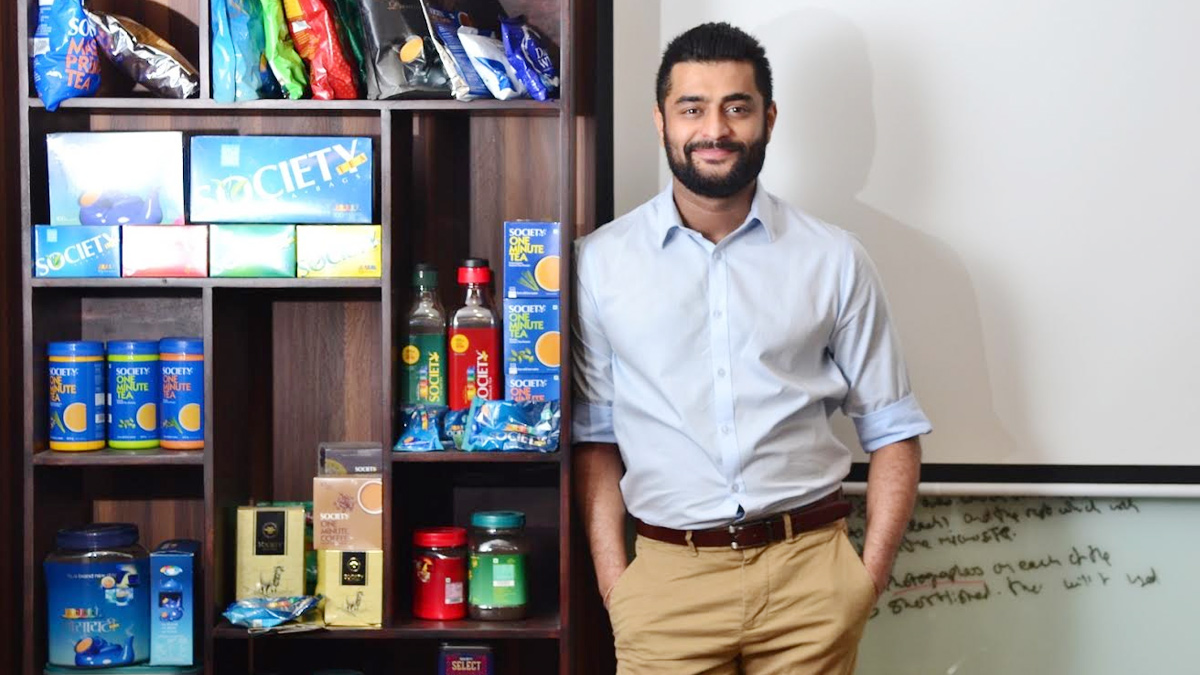
MUMBAI: For a 93-year-old tea brand, staying relevant is less about chasing every new trend and more about knowing what should never change. For Society Tea, that balance is becoming increasingly important as consumption habits shift from the traditional kitchen shelf to quick-commerce apps, office pantries and newer tea occasions.
Karan Shah, Director, Society Tea, sits at the centre of that transition. In this conversation, Shah discusses how the Mumbai-rooted brand is evolving while protecting the consistency that has defined it for decades. He speaks about the changing role of quick commerce, the rise of premixes and speciality teas, reaching younger consumers through digital, adapting the blend for different regional markets, competing with larger FMCG players and taking Society Tea beyond India. He also shares his perspective on what the brand should become over the next decade, while keeping tea at the heart of its identity.
After 93 years, what parts of Society Tea’s legacy are non-negotiable and what must change to win the next generation?
The non-negotiable part is the cup. Not the story around it, the actual liquor in the cup. Three
people in my family still taste tea every single day. That is not a heritage detail we put in a deck;
it is an operating process. Tea is an agricultural product, so the same garden gives you a
different leaf across flushes and across seasons. If nobody is sitting there correcting for that
every morning, the consumer tastes the difference long before any dashboard shows it. That,
plus our manufacturing standards, the leaf is not touched by human hands until it is packed
, is the part I will not trade for growth.
What has to change is almost everything else. My father sold Society Tea to a housewife who
walked to a kirana on a Tuesday morning. A meaningful part of our business today goes to
someone who opens an app at eleven at night because they’ve run out. Same brand,
completely different moment of truth. Winning the next generation is not about making the
tea younger. It’s about being present and legible in the places where they now decide.
How far can Society Tea modernise its products before it risks losing what consumers love about the brand?
I use one test: does this change the cup, or does it change the occasion?
The core chai blend is the cup. You don’t touch it. People have been drinking the same Society
at the same time of morning for thirty years, and if the strength moves even slightly, we hear
about it, which is, frankly, a good problem to have.
Occasions are open season. Iced tea, the one-minute premixes, green and herbal, Tea Culture
of the World for a completely different consumer, none of those ask anybody to give up their
morning chai. They ask for the four o’clock slot, or the office pantry, or a summer afternoon we
were never in.
The real risk in modernising is not novelty, it’s inconsistency. If somebody buys a Society iced tea
and it’s mediocre, they don’t just stop buying iced tea, they start wondering about the chai.
That is why we are stubborn about making things ourselves. We built our own dairy plant in
Baroda for a very unglamorous reason: we could not buy a dairy whitener good enough for our
one-minute tea, and I wasn’t willing to launch the product with someone else’s compromise
inside it.
So the limit isn’t a number of SKUs. The limit is the point at which we’re launching something we
can’t stand behind in a tasting.
What did you have to unlearn internally to make a 93-year-old business operate with the speed of a modern D2C brand?
The annual cycle. We used to plan a year, launch, and then wait sixty to ninety days for
secondary sales data to come back through the distributor network before we knew whether it
had worked. That rhythm is fine when the category moves once a decade. It is useless now.
The second thing we unlearned is harder to admit: we assumed the trade would tell us what
consumers wanted. The retailer is a brilliant source of information about what is moving. He
cannot tell you what somebody searched for on an app and didn’t find, or what they put in a
cart and abandoned. For the first time we have visibility into demand that never reached a
shelf, and that has changed what we choose to make.
The third is a comfort with launching before we’re a hundred per cent certain. We now put
things out in one channel, in one market, read it in weeks rather than quarters, and either scale
it or quietly stop.
But I’d push back gently on the D2C framing. We are not trying to become a D2C company. A
D2C brand would pay enormous money to have what we already have, our own plants, a trade
network built over decades, and blends nobody else can copy. What we are borrowing is the
responsiveness, not the model.
How has quick commerce changed what Society Tea sells, how it packages it and how it reaches consumers?
Quick commerce is the most interesting thing to happen to this category in my working life, and
I don’t think it’s mainly a distribution story.
Nobody plans a ten-minute delivery. By definition it is an unplanned moment, guests have
turned up, the milk is over, it’s four o’clock and somebody wants chai now. That makes it the
first genuinely impulse-driven channel tea has ever had. For ninety years, tea was a monthly
grocery decision. Now it’s also a fifteen-second decision, and the two behave completely
differently.
That has changed three things concretely.
What we sell. Smaller packs work far harder here than large ones. Premixes, which are built
around exactly this “I want it now” instinct, over-index. Iced tea behaves like a beverage, not a
grocery.
How we package. Our pack now has to work as a thumbnail on a phone. Blue helps us
enormously, in a grid of red and green tea packs we are the one thing your eye catches. But
we’ve had to rethink hierarchy, because a variant name that reads perfectly on a shelf at arm’s
length disappears at 300 pixels.
How we reach people. This is the part I find genuinely exciting. Quick commerce lets us be in a
household in a city where we don’t yet have a single kirana relationship. We’re now reaching
consumers across 100-plus cities online, and a large part of that is people who have never
seen our pack in a physical store. It’s also the cheapest consumer research we’ve ever run,
search terms are honest in a way survey answers are not.
What it does not do is replace the general trade. The kirana is still where the habit lives. Quick
commerce is where the discovery and the emergency live. We want both, and we want them
stocked differently.
Are premixes bringing new consumers into the category or taking consumers away from traditional tea?
Both happen, but not to the same person at the same moment, and that distinction is the
whole business case.
Look at where a premix actually gets drunk: a hostel room, a hotel kettle, an office pantry, a
night shift, a train. These are places where nobody was ever going to boil milk. We are not
taking that cup from our own chai; we’re taking it from an instant coffee, a soft drink, or from
nothing at all.
The competitive threat to tea at four in the afternoon is not another tea. It’s instant coffee, it’s
an energy drink, it’s a cold beverage out of a fridge. Our premix range, including one-minute
coffee, which we make because a tea household will still want one coffee occasion in the day,
is how we hold that slot rather than concede it.
Where there is genuine substitution, it is usually a household that has got smaller and busier,
and honestly, if we didn’t offer them a convenient format somebody else would, and we’d lose
the household entirely.
Can a traditional tea brand build the same cultural relevance through digital and social that earlier generations built through TV and OOH?
It can, but it’s harder work and you control far less of it. On television you bought reach. On
digital you have to earn attention every single time, and you find out within a day whether you’ve
earned it.
What I’ve learned is that specificity travels and generality doesn’t. Our Marathi work in
Maharashtra, including the physical cut-outs we put up in the smaller towns, worked because
it was unmistakably of that place, not a Hindi idea translated into Marathi. The ‘Tea Society
Called India’ campaign worked on the same logic: not one national idea about tea, but the
recognition that every region has its own grammar around the cup. Our freshness work took
the same route, go all the way back to the garden and the picker, and let the pack appear
almost as an afterthought.
On collaborations, my approach has not changed and I don’t intend to change it. We don’t
work with agencies, we work with people. If that person happens to sit inside an agency, fine,
but the conversation has to be with a person, not an entity. And we don’t go to town with
hundreds of influencers. I would rather have a handful of associations that actually make
sense, like the ‘News In A Minute’ integration, than a spreadsheet of reach.
The one thing digital cannot manufacture is familiarity. Familiarity comes from being in
somebody’s kitchen for thirty years. Digital can make you interesting; only time and consistency
make you trusted. We’re lucky enough to be playing with both.
Is the rise of matcha and speciality teas a passing urban trend or a genuine threat and opportunity for traditional tea brands?
Opportunity, clearly, but the opportunity isn’t matcha.
The interesting thing is that a twenty-two-year-old is willing to pay a few hundred rupees for a
cup of tea, learn a preparation ritual, and care about where the leaf came from. That is not a
new consumer. That is exactly the consumer my great-grandfather was selling to in Masjid
Bunder, showing up a century later in a different outfit. People are trading up in tea the same
way they traded up in whisky, first you drink the category, then you start asking questions
about the source.
We already have the vehicle for this. We acquired Tea Culture of the World in 2019 precisely
because we could see this coming, fruit and flower teas, speciality blends, a genuinely
premium proposition that sits apart from the mass brand. Under twenty-five is where Tea
Culture of the World comes in, where the iced teas come in. That’s how we reach that
consumer without confusing the core brand.
Where I’d push back on the hype: matcha has something Indian speciality tea hasn’t fully built,
which is a visible ritual and a café culture around it. Whisking is theatre. Our premium teas are,
at the moment, mostly consumed privately. Closing that gap, giving speciality tea a place
people can go and experience it, is a real piece of work, and it’s one I’m actively thinking
about.
The genuine risk is treating this as a novelty SKU. Trends give you trial. Only habit gives you a
business.
How do you take a distinctly Mumbai-rooted tea brand to new regions without diluting its identity?
By being very clear that the brand is the promise and the blend is the product, and only one
of those should travel unchanged.
The promise is the blue pack, the consistency, the fact that it tastes the same in March as it did
in October. That goes everywhere untouched.
The blend absolutely should change, and anyone who tells you otherwise hasn’t sold tea
outside their home state. Kolhapur does not drink like Pune. Pune does not drink like Chennai.
Strength, liquor, colour, how it holds up to a lot of milk, all of it shifts. We blend across
estates and we customise by market, and that is not a compromise of identity, it is the identity.
Getting the local cup right is the whole skill.
What I’m careful about is not pretending to be local where we aren’t. In Mumbai, we’re family.
In a new market we’re the outsider, and we have to earn the right to be in that kitchen. So we
go in knowing the market first, the trade, the water, the milk habits, the price ladder,
before we go in loudly.
Quick commerce has changed the economics of this considerably. We can now put the product
into a city, read real demand, and understand the taste profile before we commit to building a
distributor network there. That used to be an expensive bet. Now it’s a test.
Our current focus markets remain the ones where we see genuine pull rather than where we’d
simply like to be present, Maharashtra as the base, and building out through the south,
Gujarat and central India.
How can a regional player like Society Tea win against FMCG giants with far deeper pockets?
Not by spending. That’s a race we would lose in one quarter.
We have three advantages that money can’t buy quickly. The first is that we own our
manufacturing, our plants in Gujarat, our dairy facility in Baroda. When leaf prices move,
we’re not renegotiating with a co-packer; we’re deciding. That control shows up in the cup and
in the margin.
The second is decision speed. My family tastes the tea. A launch gets decided across a table,
not across three committees and a stage-gate process. When a channel like quick commerce
appears from nowhere and changes buying behaviour in eighteen months, that speed is worth
more than a war chest.
The third is that we can profitably be interested in things a large company can’t be bothered
with. A fruit-and-flower tea doing a modest number is a real business for us and a rounding
error for them.
The mistake challengers make is trying to be present everywhere at once. You have to pick your
battles, go deep in markets where you can genuinely be a leader, rather than thin everywhere
and memorable nowhere.
When you look overseas, are you building an Indian diaspora brand or a globally relevant premium tea brand?
We’re starting with the first because it pays for the second.
The diaspora is real revenue with almost no education cost. Somebody in Sharjah or New
Jersey already knows what Society tastes like and is relieved to find it. We’re present across the
Middle East and on both coasts in the US, and select European markets are the next step.
There’s a nice symmetry to the Gulf in particular, my family was trading tea with that region
long before there was a Society Tea brand.
But I’d be kidding myself if I thought that was the whole opportunity. Diaspora business has a
ceiling, and it thins out by the second generation, the grandchildren don’t feel the nostalgia.
The bigger question, and the one I find genuinely interesting, is whether masala chai can travel
as a format the way matcha travelled out of Japan. If it does, our most successful export may not
be our Indian best-seller at all. It may be a premix or a bottled iced tea, because those need no
explanation and no equipment.
In ten years, do you want Society Tea to be known primarily as India’s tea authority or as a broader beverage company?
Tea authority first. If we get that right, the beverage business follows as a consequence
rather than as an ambition.
My goal is to be present in every avenue connected to tea consumption. Not every beverage,
every tea occasion. The morning chai at home. The premix in the office drawer. The cold bottle
in the fridge in May. The wellness infusion someone drinks at night instead of a second coffee.
The cup poured across a counter. Those are five very different businesses, and tea is the
thread through all of them.
The adjacent things we’ve built, the coffee premixes, the dairy range, the pickles and
chutneys, exist because we had a capability or a family recipe, not because we set out to
become a diversified FMCG company. I’m quite disciplined about that. The question I ask is not
“is this category growing?” It’s “are we the right people to make this, and will it pass a tasting?”
Plenty of good-looking categories have failed that second test in our office.
The test I’d apply in ten years is whether my grandfather would still recognise the business.
He’d be bewildered by the app, obviously. But if he walked into the tasting room and found
three people still arguing over a sample, he’d know exactly where he was.
For Society Tea, the next phase of growth appears to be less about moving away from its legacy and more about extending it into new consumer behaviours, formats and markets. As tea consumption evolves, from traditional cups to premixes, speciality offerings and digitally enabled buying occasions, the brand is looking to broaden its relevance while retaining the consistency and quality that have defined it for decades. For Karan Shah, the challenge is ultimately one of balance: understanding where the consumer is headed while ensuring that a 93-year-old brand continues to have a meaningful place in that journey.