Brands
Siddhanta Srivastava joins Renault India as product marketing manager


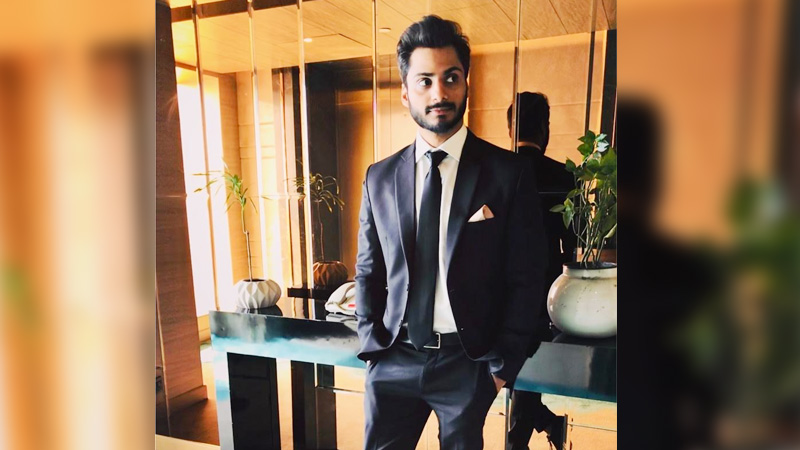
Gurugram: Renault India has roped in Siddhanta Srivastava as product marketing manager, tasking him with one of its most high-stakes assignments yet—the comeback of the Duster, a name that once redefined the midsize SUV segment in India.
Srivastava joins Renault after a three-and-a-half-year stint at Kia India, where he handled product planning, operations and strategy for models including the Sonet, EV6 and EV9. His role spanned sales analysis, market intelligence and pricing strategy, ensuring competitiveness across four-wheeler segments in an increasingly crowded market.
At Kia, Srivastava was also deeply involved in electric vehicle strategy, working cross-functionally with R&D, design and finance teams to build viable EV business cases. He led cost simulations to unlock CAFE benefits and central and state government incentives, aligning product development with regulatory and commercial realities.
Earlier, at Honda Cars India, Srivastava worked in advanced product planning, representing the company on regulatory and standards panels such as BIS, AISC, SIAM and ICAT—giving him a ringside view of how policy, compliance and product strategy intersect.
His grounding in regulations was sharpened further at the International Centre for Automotive Technology, where he worked on homologation and regulatory frameworks as a senior engineer. Before that, he cut his teeth in engineering and installation roles, including a stint at TK Elevator, and led a Department of Science and Technology project that resulted in a patent for wireless power transmission.
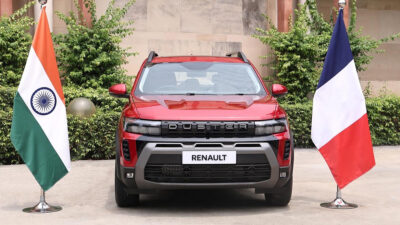
At Renault India, Srivastava steps straight into launch mode. The new Duster is positioned as a cornerstone of the brand’s revival strategy, aimed at reclaiming relevance in a segment now dominated by aggressive new-age SUVs.
For Srivastava, the move marks both continuity and escalation—a return to hands-on product storytelling, backed by deep regulatory, technical and market insight.
For Renault, it is a calculated bet on execution.
As the Duster prepares to re-enter the spotlight, the message is clear: the icon is back—and this time, the groundwork runs deep.