MAM
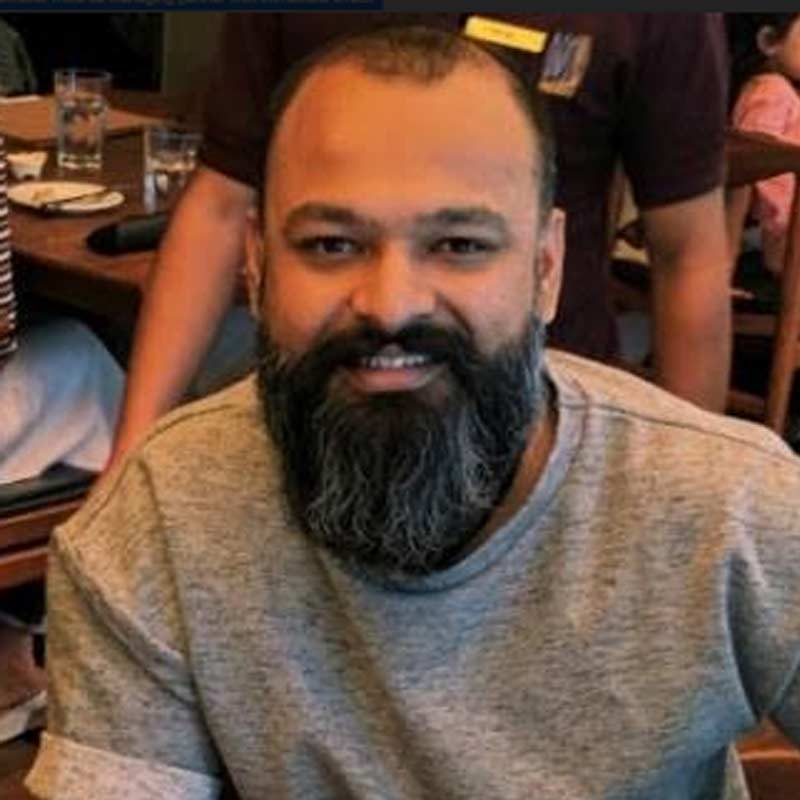
Shekhar Banerjee moves to Wavemaker India as managing partner
MUMBAI: Shekhar Banerjee, the erstwhile COO at Madison Media, has joined Wavemaker India as managing partner with immediate effect.
Banerjee will be filling the vacant chair of Anand Chakravarthy, who was appointed as the managing director of Essence India.
At Wavemaker, Banerjee will report to Wavemaker India MD Kartik Sharma.
Banerjee had joined Madison in 2004 as COO and handled key accounts such as Asian Paints, ITC and Marico.
Last year, GroupM Wakemaker was created from the merger of Maxus and MEC. The agency is number two in India in terms of size and has over 700 employees with a service portfolio of clients including FMCG giant ITC and L’Oréal.
Also Read:
WPP’s merged MEC and Maxus entity to be called Wavemaker
GroupM’s Wavemaker launches India biz

Brands
Amazon doubles down on Anthropic with $25bn AI investment plan
Deal locks in massive compute capacity and pushes Claude deeper into AWS stack
MUMBAI: Amazon and Anthropic have significantly expanded their strategic partnership, committing to a long-term collaboration that combines billions in fresh investment with one of the largest AI infrastructure deals to date.
At the heart of the agreement is Anthropic’s plan to spend more than $100 billion over the next decade on AWS technologies. This includes access to up to 5 gigawatts of compute capacity powered by successive generations of Trainium chips, alongside tens of millions of Graviton cores. The scale signals a clear intent to future-proof the infrastructure behind its fast-growing Claude models.
In parallel, Amazon will invest $5 billion in Anthropic immediately, with the option to add up to $20 billion more tied to performance milestones. This builds on the $8 billion the tech giant has already committed to the AI firm.
The collaboration also tightens product integration. Anthropic’s full Claude Platform will now be accessible directly within AWS, allowing developers to use its native tools without leaving their existing cloud environment. The models are already widely used through Amazon Bedrock, where more than 100,000 customers are running Claude for tasks ranging from customer support to scientific research.
Amazon CEO Andy Jassy said, “Our custom AI silicon offers high performance at significantly lower cost for customers, which is why it’s in such hot demand.” He added that Anthropic’s long-term commitment to Trainium reflects the progress both companies have made in building scalable AI infrastructure.
Anthropic CEO and co-founder Dario Amodei said, “Our users tell us Claude is increasingly essential to how they work, and we need to build the infrastructure to keep pace with rapidly growing demand.” He noted that the partnership would help advance research while serving a rapidly expanding user base.
The two companies have already been working closely since 2023. Their joint efforts include Project Rainier, a massive AI cluster featuring hundreds of thousands of Trainium chips, now used to train and deploy newer versions of Claude. The new agreement extends this momentum, with fresh capacity expected to come online through 2026, including next-generation Trainium3 and Trainium4 chips.
Anthropic’s growth has been equally striking. The company says its annualised revenue run rate has crossed $30 billion, up sharply from about $9 billion at the end of 2025, driven by surging enterprise and consumer demand. That rapid uptake has also strained infrastructure, making this expanded deal as much about stability as it is about scale.
The partnership will also expand globally, with increased inference capacity planned across Asia and Europe, ensuring Claude’s reach keeps pace with its popularity.
From powering ride-hailing support systems to accelerating drug research workflows, Claude’s use cases continue to broaden. With this deal, Amazon and Anthropic are not just adding more compute, they are doubling down on a shared bet that AI’s next leap will be built on deeper, tighter integrations between models and infrastructure.
If the past few years were about proving the promise of generative AI, this alliance suggests the next phase will be about building it at industrial scale.