Brands
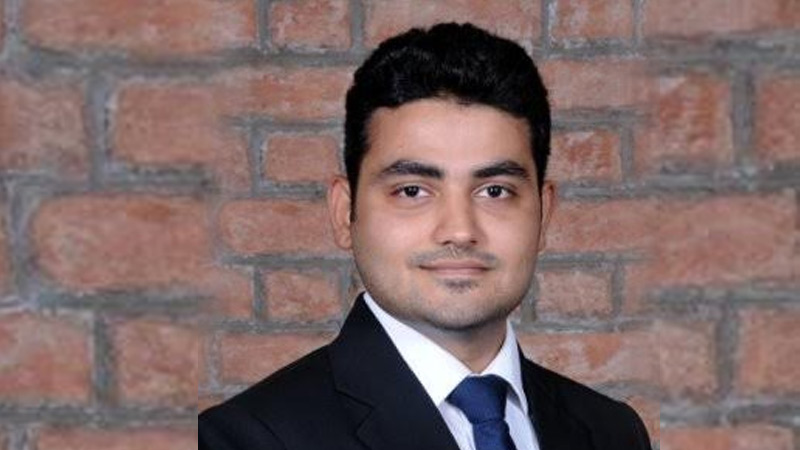
Shashwat M steps up as vice president at Reliance Industries
MUMBAI: Shashwat M has been elevated to vice president at Reliance Industries, stepping into a senior role as the conglomerate accelerates its push into renewable energy. The appointment signals Reliance’s intent to back its clean-energy ambitions with leadership that blends strategy, execution and sector depth.
In his new role, Shashwat M will work closely with the top leadership at Reliance Industries, driving high-impact initiatives across the renewable energy value chain. His remit spans battery materials, cell manufacturing, electric mobility and hydrogen-powered vehicles, all central to Reliance’s plans to build an integrated energy ecosystem.
He has spent the past four years at Reliance Industries, most recently as senior general manager and earlier as general manager for strategy and planning, where he helped shape long-term business and go-to-market strategies. Before joining Reliance, he spent five years in management consulting at Analysys Mason, leading strategy and transaction support assignments in the telecom, media and technology space for corporates, governments and investors across India, the Middle East and APAC.
An alumnus of IIM Ahmedabad and IIT Kanpur, Shashwat M brings a rare mix of engineering rigour and strategic fluency. As Reliance doubles down on clean energy, his elevation underscores a simple message: the green race is heating up, and Reliance wants its sharpest minds on the front line.

Brands
6 in 10 face bias, 58 per cent delay care: India’s LGBTQIA+ health crisis
Study highlights bias in care and unsafe spaces shaping everyday choices
MUMBAI: A significant number of LGBTQIA+ women in India are putting off essential healthcare, with 58 per cent reporting delays or avoidance due to discrimination, according to a new study. The figure is the highest among five countries surveyed, pointing to deep-rooted systemic challenges.
The research, conducted by Kantar in partnership with DIVA Charitable Trust and The Curve Foundation, draws insights from over 3,200 LGBTQIA+ women and non-binary individuals globally. Released around Lesbian Visibility Week, the findings highlight how bias continues to shape access to care.
In India, 60 per cent of respondents said they had faced discrimination in healthcare settings, often feeling dismissed or not taken seriously by providers. This has led many to delay seeking treatment, underscoring how trust deficits in the system directly impact health decisions.
The study also reflects broader social realities. Instances of verbal or physical abuse were commonly reported across platforms such as social media, public transport and social venues, reinforcing a persistent sense of insecurity in everyday life.
At the same time, expectations from brands are evolving. In India, 78 per cent of respondents believe companies should actively contribute to advancing diversity and inclusion, signalling a growing demand for corporate accountability.
Kantar India HR head Mridul Shekhar said, “LGBTQIA+ women and non-binary people remain underrepresented and overlooked. Their experiences are shaped by uneven access to care and systems not designed with them in mind. When people are invisible in data, they become invisible in decision-making.”
DIVA Charitable Trust executive director Lady Phyll added, “When people delay healthcare because they fear discrimination, we are no longer talking about symbolic inclusion. These are life decisions driven by the need to feel safe.”
The findings underline a stark reality. While awareness around inclusion is growing, bridging the gap between intent and lived experience remains an urgent priority.