MAM
September bliss Ipsos survey finds consistent happiness levels!


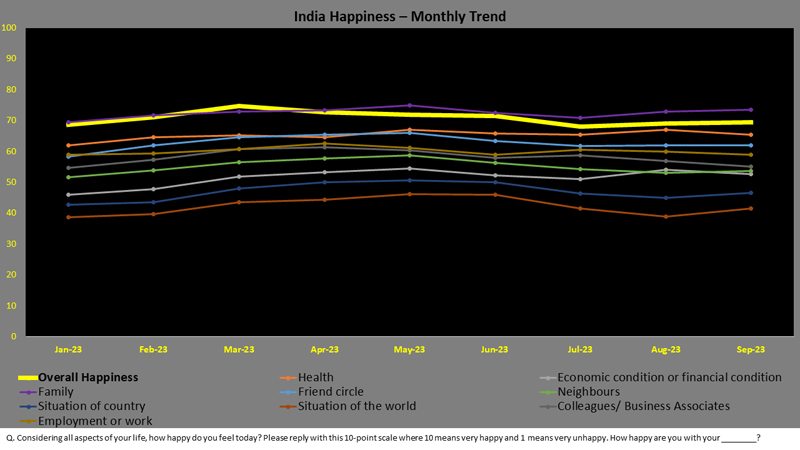
Mumbai: The September wave of Ipsos IndiaBus happiness monitor shows happiness has stayed steady in September with no change in happiness levels. However, 69 per cent of urban Indians claim to be happy.
A graph showing different colored lines
Description automatically generated

Interestingly, the cohorts that emerged happiest were full-time students (74 per cent), homemakers (73 per cent), women (71 per cent) and those with higher education (70 per cent).
94 per cent of urban Indians living in tier-one towns claimed to be happy. Urban Indians in the west and north were happier than those in the South and East. 87 per cent of urban Indians living in the west zone were happy and similarly, 77 per cent of those living in the north zone claimed to be happy. Only 54 per cent of those living in the South Zone were seen to be happy. And only one in two (50 per cent) in the east per cent one were happy. The trend was seen across demographics.

Overall, happiness has surged for family (+1 per cent), situation of the world (+3 per cent), situation of the country (+2 per cent), and neighbours (+1 per cent); and decreased for health (-2 per cent), economic/ financial conditions (-1 per cent), colleagues/ business associates (-2 per cent), employment or work (-1 per cent) and with no change around friends’ circle, in September, over the previous month.
Looking at the pecking order of happiness contributors for urban Indians, it was led by family (74 per cent), health (65 per cent), friends’ circle (62 per cent), employment or work (59 per cent), colleagues/ business associates (55 per cent), neighbours (54 per cent), economic/ financial conditions (53 per cent), situation of the country (47 per cent) and situation of the world (42 per cent).
Commenting on the findings of the survey, ESG & CSR group service line leader, public affairs, and corporate reputation, Parijat Chakraborty said, “Happiness Levels have held steady and family continues to be the biggest driving force in infusing happiness. The happiness monitor also shows happiness is defined by different aspects of our daily life. It is about close family ties, social framework and societal engagement, work environment and colleagues, financial conditions, how the country is being run and how the global scenario looks. The G20 Summit has rubbed off on the perception of India and the world and is being positively manifested in the happiness monitor in September. Likewise, work and colleagues and increasing work pressures have slightly dented happiness levels. Women and homemakers seem happier with their “me” time.”
“West and North zones have seen a maximum boom in terms of jobs, access to the best of facilities and overall development. Tier one towns are the emerging centres of consumerism. Seeing a major boost in quality of life and happiness,” added Chakraborty.
Methodology
Ipsos IndiaBus is a monthly pan-India omnibus (which also runs multiple client surveys), that uses a structured questionnaire and is conducted by Ipsos India on diverse topics among 2200+ respondents from SEC A, B and C households, covering adults of both genders from all four zones in the country. The survey is conducted in metros, Tier 1, Tier 2 and Tier 3 towns, providing a more robust and representative view of urban Indians. The respondents were polled face-to-face and online. We have a city-level quota for each demographic segment that ensures the waves are identical and no additional sampling error. The data is weighted by demographics and city-class population to arrive at the national average. Data collection is done every month and the results are calculated on a two-month rolling sample.






Brands
Hyundai and TVS Motor partner to develop electric three wheelers
Joint development pact targets last mile mobility with localisation push
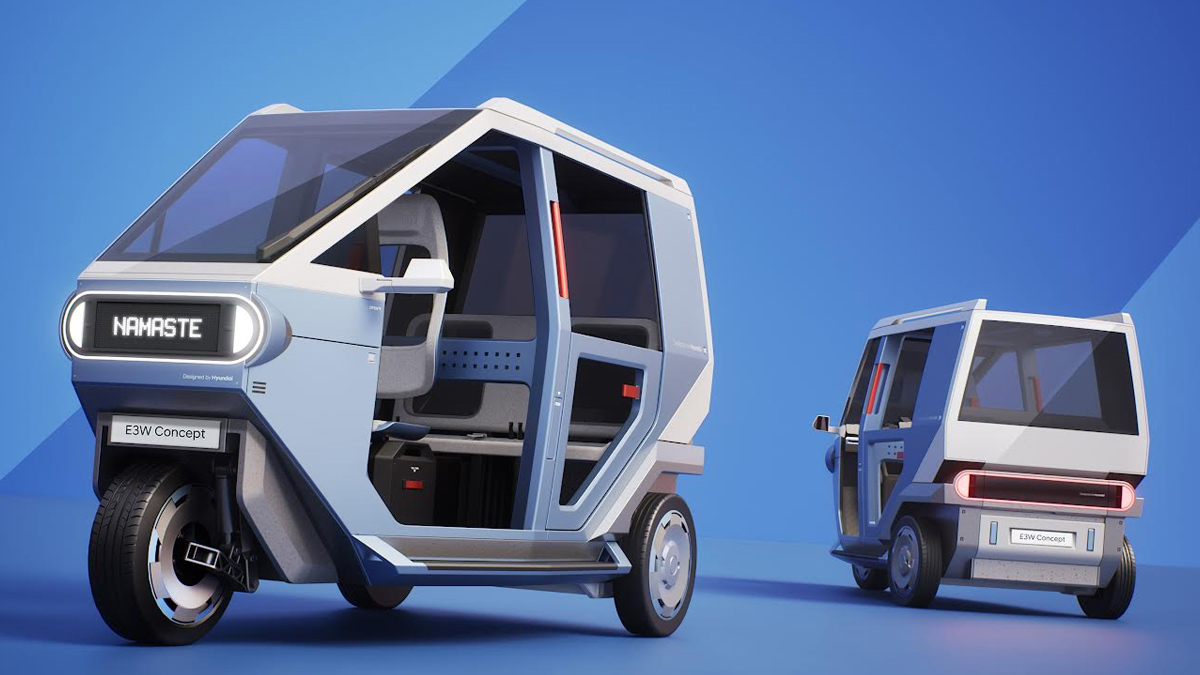
MUMBAI: Three wheels, one big ambition and a charge towards the future. Hyundai Motor Company and TVS Motor Company have signed a joint development agreement to co-create electric three-wheelers (E3Ws), aiming to crack India’s complex last-mile mobility puzzle. The collaboration moves beyond concept talk into execution mode, building on the E3W prototype first showcased at the Bharat Mobility Global Expo 2025. The goal now is clear, design, develop and commercialise a purpose-built vehicle tailored to Indian roads, riders and realities.
Under the agreement, Hyundai will lead design and co-development, bringing its global R&D muscle and human-centric engineering approach to the table. TVS Motor, meanwhile, will anchor the product on its electric platform, leveraging deep three-wheeler expertise and local market insight. It will also handle manufacturing and sales in India, with an eye on exports down the line.
The timing is strategic. India remains the world’s largest three-wheeler market, where affordability, durability and adaptability often outweigh sheer innovation. The upcoming E3W aims to strike that balance combining advanced technology with practical features such as adaptive ground clearance for monsoon-hit roads, improved thermal management for tropical climates, and flexible interiors suited for passengers, cargo or emergency use.
A key pillar of the partnership is localisation. Major components will be sourced and manufactured within India, a move expected to strengthen the domestic supply chain, create jobs, lower costs and improve after-sales support.
The shift from prototype to production will involve rigorous testing, certification and refinement to meet regulatory standards and consumer expectations. Dedicated cross-functional teams from both companies are already in place to accelerate timelines.
At a broader level, the tie-up reflects a growing trend in mobility, global players partnering with local specialists to navigate emerging markets. For Hyundai and TVS, the bet is that combining scale with street-level insight could unlock a new chapter in sustainable urban transport, one that runs not just on electricity, but on relevance.