MAM
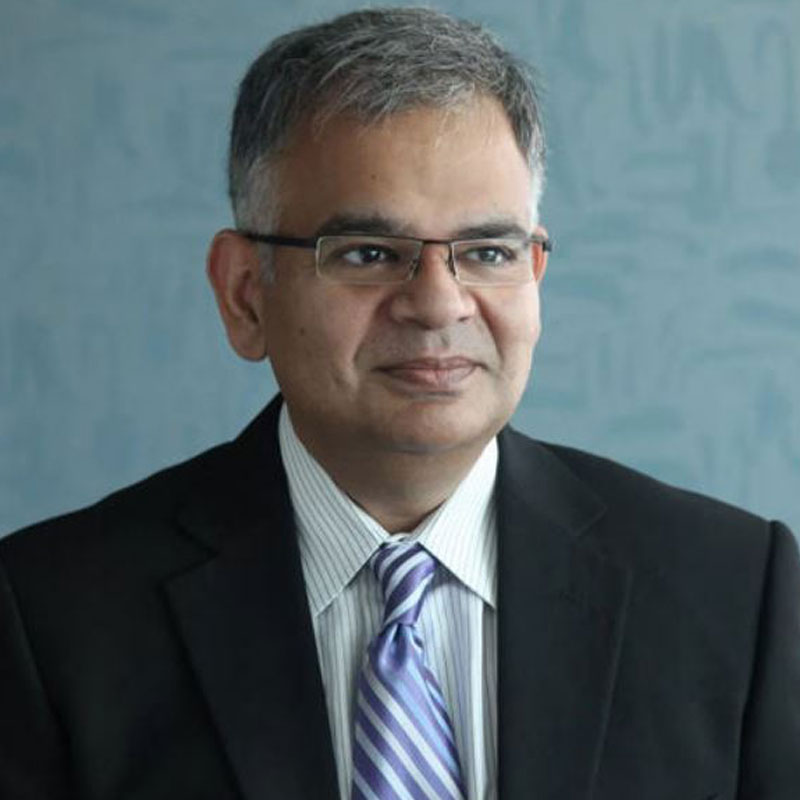
Sanket Atal takes charge as Salesforce sr VP & India MD
BENGALURU: Cloud software firm Salesforce has brought on Sanket Atal as senior vice president and managing director, sites (India).
Atal’s new role came into effect on 15 March 2021. He will report to Salesforce India CEO & chairperson Arundhati Bhattacharya.
Previously, the business strategist was managing director at financial software firm Intuit India and group vice president at tech giant Oracle.
"Atal's appointment is a reflection of our commitment and continued investment in India. We welcome him to Salesforce and look forward to driving even greater innovation and success in this market," said Bhattacharya.
Atal will be tasked with driving the next phase of growth for Salesforce in India combining the best of design thinking and digital strategies to build breakthrough customer experiences and ways of working with specific focus on operational execution.
India is home to the second highest Salesforce workforce outside of the US, with over 4,000 employees across Hyderabad, Mumbai, Delhi and Bengaluru.
"Given my passion and deep experience with the start-up ecosystem, I am also excited to empower businesses of all sizes, particularly start-ups, to create future-ready solutions leveraging the Salesforce platform,” said Atal.
Launched in 2016, the Salesforce Centre of Excellence (CoE) located in Hyderabad has been instrumental in fuelling innovation globally, building end-to-end solutions for customers. Salesforce is the global leader in Customer Relationship Management (CRM), bringing companies closer to their customers in the digital age.

Brands
Jio Financial Services posts Rs 1,560 crore FY26 profit
Revenue rises to Rs 3,513 crore as investments and lending scale up.
MUMBAI: If money makes the world go round, Jio Financial Services Limited is quietly spinning a much bigger wheel. The Reliance-backed financial arm reported a consolidated net profit of Rs 1,560.9 crore for FY26, slightly lower than Rs 1,612.6 crore in FY25, even as revenue growth gathered pace.
Total revenue from operations rose sharply to Rs 3,513.3 crore in FY26 from Rs 2,042.9 crore a year earlier, driven largely by a surge in interest income, which more than doubled to Rs 1,901.9 crore from Rs 852.5 crore. Fee and commission income also saw a significant jump to Rs 597 crore, compared to Rs 155.2 crore in FY25, reflecting expanding financial services activity.
For the March quarter, profit stood at Rs 272.2 crore, broadly flat compared to Rs 269 crore in the same period last year. Quarterly revenue from operations climbed to Rs 1,018.5 crore, up from Rs 493.2 crore year-on-year, signalling steady momentum in core income streams.
Expenses, however, moved in tandem with growth. Total costs nearly quadrupled to Rs 1,982.9 crore in FY26 from Rs 524.8 crore in FY25, with finance costs alone rising to Rs 745.1 crore from just Rs 7.7 crore a year earlier, reflecting increased borrowing and scale of operations. Employee expenses also grew to Rs 387.3 crore, while other expenses expanded to Rs 755 crore.
Profit before tax stood at Rs 1,911.7 crore for the year, slightly below Rs 1,946.9 crore in FY25. After accounting for a total tax outgo of Rs 350.8 crore, the company reported its final net profit figure.
Beyond the income statement, the balance sheet tells a story of rapid expansion. Total assets surged to Rs 1,63,497 crore as of March 31, 2026, up from Rs 1,33,510 crore a year earlier. Investments alone stood at Rs 1,33,088.7 crore, underscoring the company’s strong focus on treasury and financial asset growth.
However, the year also saw sharp volatility in other comprehensive income, which swung to a loss of Rs 16,028.3 crore, largely driven by fair value changes in equity instruments. This dragged total comprehensive income for FY26 to a negative Rs 15,756.1 crore, compared to a positive Rs 14,870 crore in FY25.
On the capital front, the company’s paid-up equity share capital remained steady at Rs 6,353.1 crore, with other equity rising to Rs 1,27,500.5 crore.
The numbers reflect a business in transition scaling rapidly across lending, investments and fee-based services, but also navigating the volatility that comes with mark-to-market movements in financial assets. In other words, while the top line is accelerating, the fine print still carries a few swings.