MAM
Resilient rural market drives HUL’s growth in Q1, net profit rises to Rs 2,100 cr


New Delhi: A resilient rural market, coupled with subsequent decline in Covid cases has infused growth in theFMCG major Hindustan Unilever Ltd (HUL) this quarter. The company reported a 10.7 per cent increase in its consolidated net profit for Q1 ended June, 2021.
The FMCG major posted a net profit of Rs 2,100 crore in Q1 2021, compared to Rs 1,897 crore recorded in the April-June quarter of the previous fiscal. Net sales during the quarter under review stood at Rs 11,996 crore, up 13.49 per cent, as against Rs 10,570 crore in the corresponding period a year ago.
HUL’s total expenses were at Rs 9,546 crore in the quarter under review, up 14.68 per cent from Rs 8,324 crore a year ago. The FMCG major delivered a strong performance with domestic consumer growth of 12 per cent, underlying volume growth of 9 per cent and profit after tax growth of 10 per cent, said the company in a statement.

“In a challenging environment, we have delivered a strong performance across topline and bottomline. Our performance in the quarter has been resilient and is reflective of our capabilities, the agility in our operations and the intrinsic strength of our portfolio, “said HUL CMD Sanjiv Mehta.
The number of Covid cases have come down June onwards, paving the way for FMCG industry’s growth and market levels to reach close to March 2021 levels. “The rebound that we have seen in the month of June and early July is led by rural. So, the good news is that rural is resilient, and it has started to come back, strongly ahead of urban,” HUL CFO Ritesh Tiwari while talking to the media virtually post Q1 results. “Rural has been a good engine for FMCG for the last few quarters, and it continues to be resilient. Hopefully, we see a good monsoon and this will augur well for the rural economy.”
The company witnessed double-digit growth across all three divisions — Home Care, Beauty & Personal Care and Foods & Refreshment.
Household care continued to perform well growing in high double-digits on a strong base. Liquids and Fabric Sensations also benefited from robust market development initiatives. HUL’s revenue from the home-care segment was up 11.94 per cent this quarter to Rs 3,797 crore, as against Rs 3,392 crore in the corresponding quarter in 2020.
The company’s revenue from Beauty & Personal Care was up 13.41 per cent to Rs 4,585 crore, as against Rs 4,043 crore of the corresponding quarter. This was led by Hair Care and Skin Care, both growing in high double-digits, said HUL. “Contextual communications in Hair Care continue to yield good results. Skin Cleansing continued its strong momentum, soaps grew on a high base and the premium segment performed well. Hand Hygiene portfolio declined against an exceptionally high base,” it said in a statement.
The Food & Refreshment segment was up 12.2 per cent to Rs 3,319 crore, as against Rs 2,958 crore in the corresponding period, helped by double-digit growth in segments as tea, ketchups, soups and nutrition business. According to HUL, all Tea brands also continued to grow in high double-digits despite a very strong base in the prior year.
HUL said it is cautiously optimistic about future demand recovery.







Brands
Janhvi Kapoor teams up with Amaha to spotlight alcohol addiction
‘Off the Rocks’ aims to shift stigma to science in mental health discourse
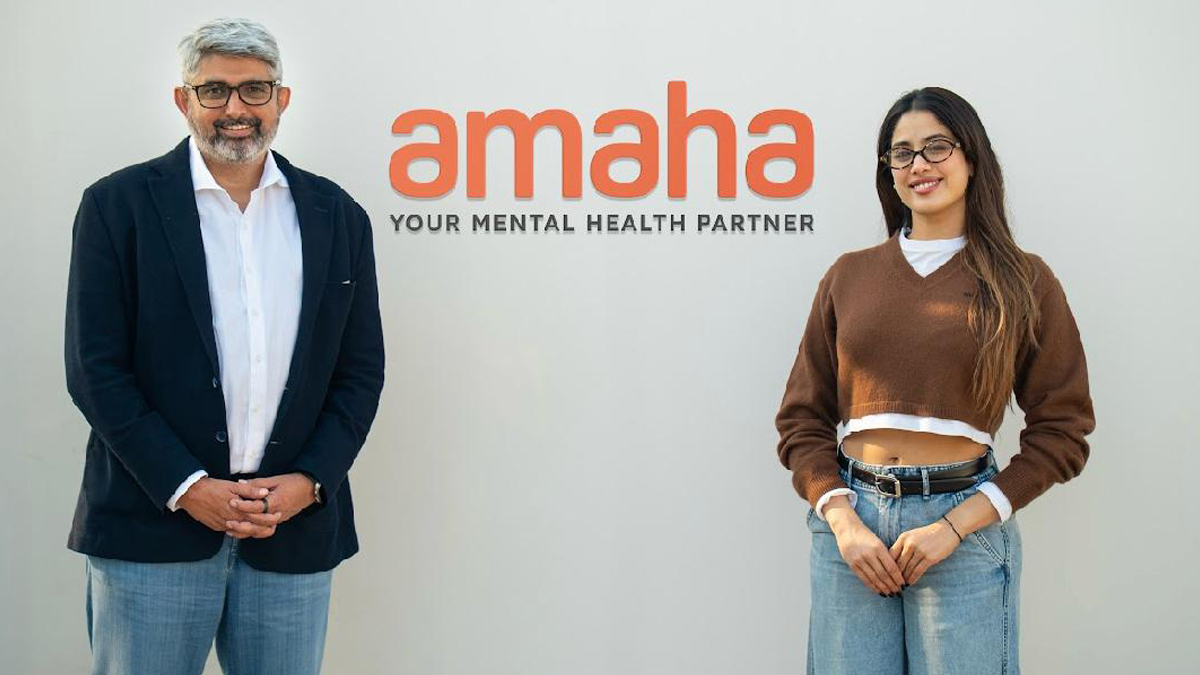
MUMBAI: Janhvi Kapoor has partnered with Amaha to launch Off the Rocks, an awareness-led initiative that seeks to reframe alcohol addiction as a clinical mental health condition rather than a moral failing.
The initiative comes at a time when alcohol consumption is increasingly normalised in social settings, yet awareness around dependency and addiction remains limited. According to estimates, nearly one in five alcohol users in India may face addiction, but many continue without diagnosis or access to professional care, often held back by stigma or lack of understanding.
Kapoor said the idea for the campaign stemmed from a gap she has observed in public conversations. “The conversation around alcohol is either completely absent or deeply judgmental, and neither serves the people who actually need support,” she said. “Alcohol addiction is real, it’s clinical, and it affects people across every walk of life.”
Off the Rocks is designed as a long-term, multi-format effort rather than a one-off campaign. It will feature expert-led discussions, personal stories, and accessible content aimed at building awareness, reducing stigma, and guiding individuals towards professional help.
To ensure clinical depth, Kapoor has teamed up with Amaha, a full-spectrum mental health organisation with a large network of psychiatrists and psychologists. The organisation brings both infrastructure and expertise, particularly in treating moderate to severe mental health conditions, including alcohol use disorder.
“Addiction sits at the intersection of neuroscience, psychology, and lived experience, and remains one of the most stigmatised conditions we see,” said Amaha founder and CEO Amit Malik. He added that the initiative would help connect public awareness with credible, evidence-based care.
Amaha currently operates across multiple cities with in-person centres and digital services, offering therapy, psychiatry, and self-care tools in several languages. Its platform has reached millions globally, reflecting a growing demand for structured mental health support in India.
With Off the Rocks, Kapoor and Amaha are attempting to shift the narrative from blame to understanding, and from silence to support. If it succeeds, the initiative could help more people recognise when social drinking crosses the line and, more importantly, where to turn next.






