Ad Campaigns
Renault India’s social experiment to reveal ‘Who are India’s worst drivers’


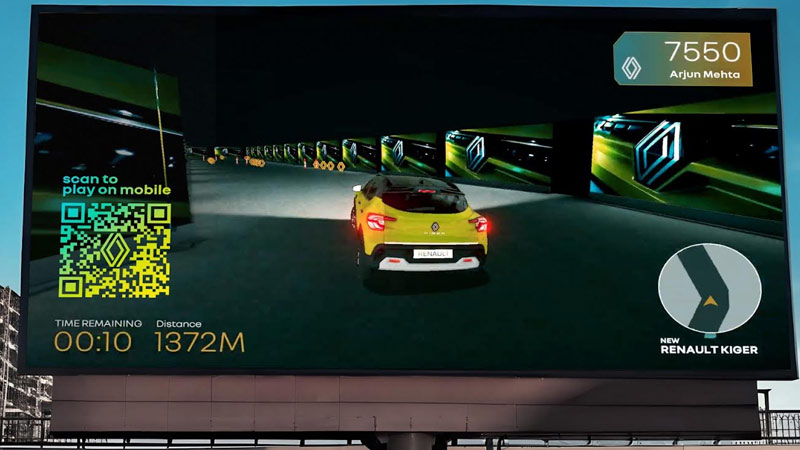
MUMBAI: With the thought to find ‘Who are India’s Worst Drivers?’ Renault India along with its creative agency Law and Kenneth Saatchi and Saatchi recently conducted a social experiment in the streets of Mumbai and New Delhi by monitoring the traffic violations that took place every hour across some key sites. The experiment throws the spotlight on a cross-section of vehicle owners spanning bikes, auto-rickshaws, taxis, buses, trucks, among others.
The startling findings of the experiment showed there are almost 110 traffic violations per signal / per hour. The initiative further goes on to educate viewers to maintain road discipline and urges them to become agents of change via #RespectTheRoad.
L&K Saatchi and Saatchi executive director Charles Victor commented, “This initiative – Driving Smiles, is a wonderful initiative by Renault where we try and give back to the world we sell to. From lighting up villages during Diwali to lighting up smiles at an orphanage during Christmas, the initiative has always tried to take a step towards change. What better change to expect than to change the way Indians drive. This little social experiment aimed at showing us that the change needs to begin with us.”

Renault India vice president and head of marketing Virat Khullar mentioned, “Renault stands for ‘Passion for life’ which in a way means easy life for our customers. But for an easy life with cars, one important aspect is to follow the rules defined for driving these cars on road. In India, we all face huge traffic issues and true to our nature, all externalise the fault. This campaign is an attempt to portray reality that the traffic situation can only improve if we change ourselves and respect the road.”
The campaign has been released on digital platforms only as a two-part series that aims to serve as an educational tool. While the first film questions people on who are the traffic offenders, the second film goes on provide answers to the questions and how we all need to become agents of change.





NATIONAL: Amazon Ads has laid out a sharply tech-led vision for the advertising industry in 2026, arguing that artificial intelligence, streaming TV and creator partnerships will combine to turn brand building into a more precise, performance-driven business.
At the heart of the shift, the company says, is the fusion of AI with Amazon’s vast trove of shopping, browsing and streaming signals, allowing advertisers to move beyond blunt reach metrics to campaigns designed around real customer behaviour.
“The future of advertising is not about reaching more people, but the right people with messages that resonate,” said Amazon Ads India head and vice president Girish Prabhu. “By combining AI with deep customer insights, we help brands move from broadcasting campaigns to having meaningful conversations wherever audiences spend their time.”
One of the biggest changes, according to Amazon Ads, will be the collapse of the wall between media planning and creative development. Retail media, powered by first-party data, is increasingly shaping everything from brand discovery to final purchase, pushing marketers to design campaigns around audience insight rather than internal instinct.
AI is also moving from a support tool to a creative engine. Agentic AI, which automates and accelerates production, is expected to make high-quality creative accessible even to small businesses, compressing weeks of work into hours and giving challengers the ability to compete with larger brands on speed and scale.
Behind the scenes, AI-driven analytics will take on a bigger role in campaign optimisation, identifying patterns, spotting opportunities and recommending actions that would previously have required teams of analysts.
Streaming TV is another big battleground. With India’s video streaming audience now above 600 million and connected TV users at 129.2 million in 2025, advertisers are set to treat streaming not just as a branding channel but as a performance engine, measured increasingly by sales, sign-ups and bookings rather than just reach.
Finally, Amazon Ads sees creators and contextual advertising reshaping how brands tell stories. Creators will act less like influencers and more like long-term partners, while scene-aware ads on streaming platforms will allow brands to insert hyper-relevant offers into the flow of what viewers are watching.
Taken together, Amazon Ads argues, these shifts mark a move towards advertising that is both more human and more measurable, where AI handles the complexity, and creativity does the persuading.






