
MAM
Remembering Ratan Tata: The industrialist who built businesses with a conscience
From taking the Tata Group global to championing philanthropy, Ratan Tata’s legacy was defined by ambition, integrity and a belief that business must serve a larger purpose.


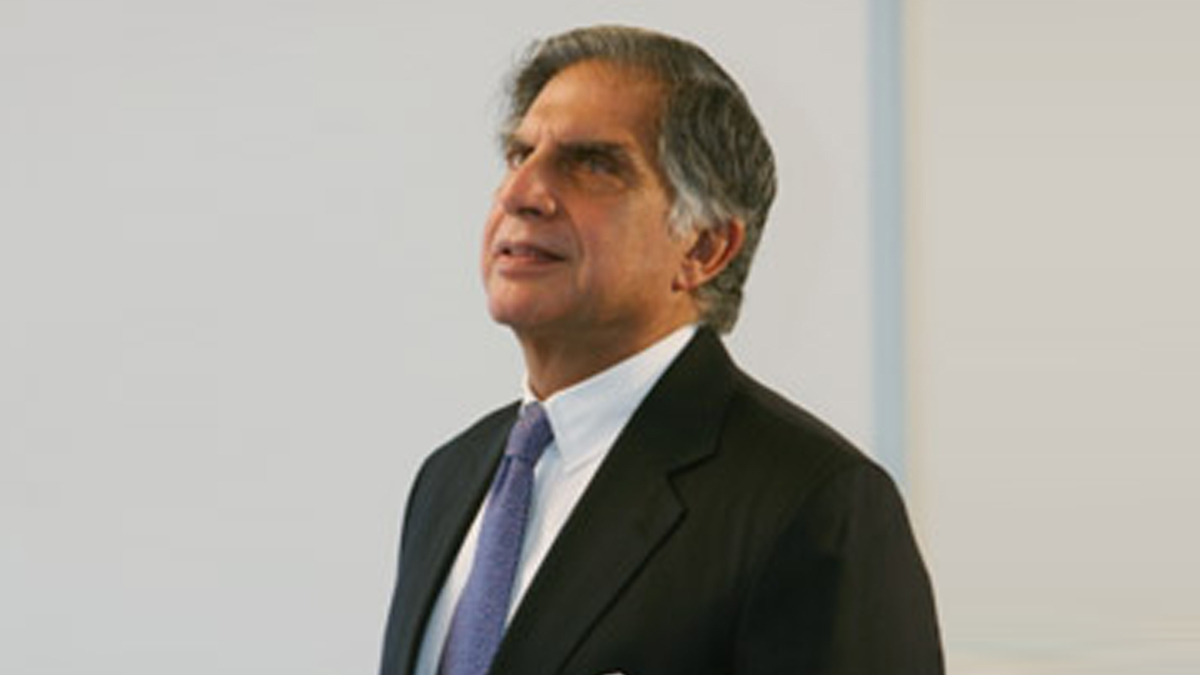
MUMBAI: There are business leaders who build empires, and then there are those who leave behind an idea of what an empire should stand for. Ratan Naval Tata, the former chairman of Tata Sons, belonged to the latter category. The industrialist, philanthropist and one of India’s most respected corporate figures died on 9 October 2024, aged 86, leaving behind a legacy that extended well beyond balance sheets, boardrooms and billion-dollar acquisitions. For millions of Indians, he represented a rare combination of corporate ambition, personal humility and a deep-rooted commitment to the country.
Born on 28 December 1937 in Bombay, now Mumbai, Ratan Tata was raised by his grandmother, Lady Navajbai Tata, after his parents separated. His early years were shaped by the values of discipline, responsibility and service. He studied at Cornell University in the United States, graduating with a degree in architecture in 1962. Although his education could have led him towards a different professional path, Tata returned to India and joined the Tata Group in the same year, beginning a career that would eventually reshape one of the country’s most influential business houses.
From the shop floor to the chairman’s office
Tata’s journey through the group was not simply a passage from privilege to power. He began by working on the shop floor at Tata Steel in Jamshedpur, gaining an understanding of industrial operations before moving into leadership roles. He joined the board of Tata Sons in 1974 and, in 1991, succeeded J. R. D. Tata as chairman.
The timing was significant. India was embarking on economic liberalisation, opening its markets and redefining its relationship with the global economy. Tata took charge at a moment when Indian businesses had to look beyond protected domestic markets and prepare to compete internationally.
Under his leadership, the Tata Group pursued a more integrated global strategy, expanding its presence across automobiles, steel, information technology and consumer businesses. He pushed the group towards a more unified identity, encouraging its companies to operate under the Tata brand and adhere to a common set of values.
The transformation was not without resistance or difficult decisions. Yet Tata’s tenure would ultimately be remembered for turning a sprawling Indian conglomerate into a globally recognised business group, with revenues exceeding $100 billion by the time he stepped down as chairman in 2012.
The acquisitions that changed the Tata Group’s global standing
Some of the defining moments of Tata’s chairmanship came through acquisitions that demonstrated his willingness to take risks on a global scale.
In 2000, Tata Tea acquired the UK-based Tetley Group, marking a major step in the international expansion of the group’s consumer businesses. In 2007, Tata Steel acquired Anglo-Dutch steelmaker Corus, significantly expanding its international footprint. A year later, Tata Motors acquired Jaguar Land Rover from Ford, bringing two storied British automotive marques into Indian ownership.
These transactions were ambitious and, in some cases, financially challenging. They also reflected Tata’s conviction that Indian companies could own, operate and develop globally respected businesses rather than remain on the margins of international commerce.
The Jaguar Land Rover acquisition, in particular, became a defining chapter in India’s corporate story. It demonstrated that an Indian automaker could take responsibility for premium global brands and compete on the international stage.
Not every venture delivered the results its proponents had hoped for, and the risks associated with global expansion were substantial. But Tata’s larger objective was clear: to make the Tata Group a credible international force while preserving its distinctive identity.
The Nano and a vision of accessible mobility
Tata’s ambitions were not confined to luxury cars or multinational acquisitions. One of his most personal projects was the Tata Nano, unveiled in 2008 as an attempt to make car ownership more accessible to Indian families.
The idea reportedly grew from his concern about families travelling on two-wheelers in difficult weather and potentially unsafe conditions. He wanted to create an affordable four-wheeled alternative without treating affordability as a reason to abandon the aspiration of car ownership.
The Nano became one of the most discussed products in India’s automotive history. Its engineering and pricing attracted worldwide attention, but commercial success proved elusive. Positioning, consumer perceptions and the practical challenges of bringing an ultra-low-cost car to market all complicated its journey.
Yet the Nano remains an important illustration of Tata’s approach to innovation. He was willing to pursue an unconventional idea because he believed it addressed a real need, even when the market did not ultimately respond as anticipated.
His legacy in the automotive sector also included the Tata Indica, launched in 1998 as an Indian-developed passenger car. Together, the Indica and Nano reflected his interest in building products for Indian consumers rather than simply adapting existing models.
A business leader with a philanthropic mission
For all the attention given to his corporate achievements, Tata’s influence cannot be understood without examining his commitment to philanthropy.
The Tata Group’s philanthropic tradition predates Ratan Tata by generations, rooted in the vision of its founder, Jamsetji Tata. During his leadership of the Tata Trusts, Ratan Tata helped steer this tradition towards more structured, long-term interventions in areas such as healthcare, education, nutrition, water and rural livelihoods.
He believed philanthropy should do more than provide immediate relief. It should help address the conditions that create inequality and enable communities to build more sustainable futures.
The Tata Trusts supported initiatives ranging from cancer care and rural development to educational access and digital literacy. Among the notable initiatives associated with his tenure was the Tata-Cornell Institute for Agriculture and Nutrition, established in 2008 to advance research into food systems, nutrition and rural livelihoods.
His philanthropic outlook was also reflected in his support for institutions in India and overseas. At Cornell University, his alma mater, the Tata Scholarship helped students from India access undergraduate education, while the Tata-Cornell Institute supported research focused on poverty and nutrition.
For Tata, social responsibility was not a separate exercise designed to improve a company’s public image. It was integral to the purpose of business itself. That distinction helped sustain his reputation as a leader whose influence extended beyond the commercial interests of the group he headed.
The quiet power of humility
In an age when corporate leaders increasingly became public personalities, Tata maintained a relatively understated presence. He was not known for flamboyant displays of wealth or an appetite for celebrity. Instead, his public image was shaped by his reserved manner, measured communication and apparent preference for letting institutions and initiatives speak for themselves.
That restraint helped make him a particularly recognisable figure among younger Indians, many of whom encountered him not only through the Tata Group’s businesses but also through his later investments in emerging companies and start-ups.
Beginning in 2014, Tata invested in several young ventures, including businesses in technology and consumer services, extending his interest in entrepreneurship beyond the established conglomerate. His participation offered founders both financial support and the encouragement associated with his name.
His compassion for animals also became part of his public identity. His support for animal welfare, including the establishment of a dedicated small-animal hospital in Mumbai, reflected a personal concern that extended beyond business and institutional philanthropy.
These aspects of his life helped create a public image that was unusual for a business leader of his stature: influential without being ostentatious, powerful without being distant, and admired for qualities that could not be measured in market capitalisation.
A legacy larger than a conglomerate
Tata stepped down as chairman of Tata Sons in December 2012 and was named chairman emeritus. He continued to lead the Tata Trusts and remained involved in philanthropic and institutional initiatives until his death.
His contributions were recognised with some of India’s highest civilian honours. He received the Padma Bhushan in 2000 and the Padma Vibhushan in 2008. Yet the significance of his life is not captured by awards alone.
His tenure was marked by difficult commercial choices, ambitious international expansion and projects that did not always achieve their intended outcomes. A balanced assessment of his legacy must acknowledge these complexities. But it must also recognise the scale of his contribution to the evolution of Indian enterprise and the values he consistently associated with it.
Ratan Tata helped demonstrate that an Indian business group could aspire to global leadership without abandoning its social commitments. He showed that innovation could be driven by the needs of ordinary consumers, that philanthropy could pursue structural change, and that personal restraint could coexist with extraordinary institutional influence.
Two years after his death, his legacy remains visible in the companies he helped transform, the institutions supported by his philanthropy and the entrepreneurs inspired by his example. But perhaps his most enduring contribution lies in the question he leaves behind for future generations of business leaders: what is the purpose of success if it does not make a meaningful difference to others?
For a man who spent decades building businesses, that may be the most fitting measure of what he left behind.






