
MAM
Rajeev Mantri joins Axis Bank as group head and chief financial officer
A finance veteran with 28 years across India, the UAE and Singapore takes charge of the numbers at one of India’s big lenders


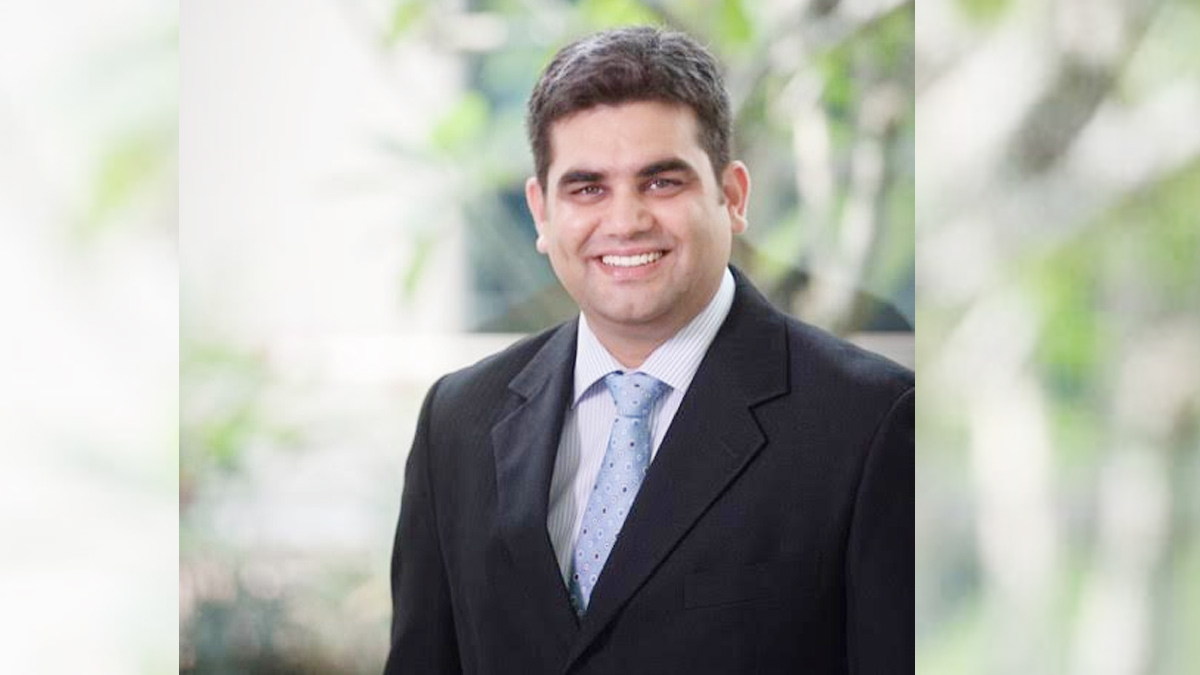
MUMBAI: Rajeev Mantri has a new desk, and a big one. He has taken over as group head and chief financial officer (CFO) of Axis Bank, moving from Bandhan Bank after a career that has taken him through banks, a credit bureau and a spirits giant, and across three countries.
Mantri announced the move himself, saying he was “happy to share” that he is starting the new position. At Axis Bank he is responsible for providing finance leadership to the bank. He has more than 28 years of experience in finance roles spanning India, the UAE and Singapore. He is a chartered accountant from the Institute of Chartered Accountants of India (ICAI) and holds an executive MBA from INSEAD business school in Singapore. His latest posting is in Mumbai, and he started in September 2026.
The appointment is worth a closer look, because the CV reads like a tour of everything a modern bank CFO must master. Start with the most recent stops. At Bandhan Bank, Mantri served as executive president and CFO from February 2024 to September 2026, a stint of two years and eight months in Mumbai. Before that he spent two years and five months, from October 2021 to February 2024, at Citi as managing director, CFO for India and cluster finance head for South Asia. There he ran the finance function, overseeing business planning and strategy, balance sheet management, financial controls, reporting, tax and franchise-level matters in India. He also oversaw the finance functions of Sri Lanka and Bangladesh.
Then came a detour that few bank CFOs make. From December 2018 to October 2021, Mantri was CFO of TransUnion CIBIL Limited, the largest credit bureau and credit information company in India. It is part of TransUnion, one of the largest American credit information companies, which operates in over 30 markets. The job covered all aspects of finance (performance, planning, accounts, tax and controls), as well as internal audit, procurement and facilities management. For a banker, a spell inside the outfit that scores borrowers is a useful education in how credit really behaves.
The deepest layer of his experience was built at Standard Chartered Bank, where he spent a total of eight years and ten months in Singapore across several senior roles, after an earlier stint of five years and six months in Mumbai. In Singapore, he was:
- CFO investments and head of finance, operations, regions, controls and change for global information technology and operations (ITO), from January 2018 to November 2018. The global role covered the finance of the investment portfolio across the bank’s businesses, regions and functions. He was also financial controller for ITO, handling cost policies and procedures, accruals, software capitalisation and impairment, and governance of the ITO cost portfolio. He supported the board and management team on investment prioritisation, and drove strategic planning and forecasting. He also led the strategic transformation programme for ITO and investment finance, covering end-to-end process automation, a governance framework, stronger controls and data integrity, and better transparency and documentation in line with tax transfer pricing requirements.
- global head of cost management, client businesses, from October 2015 to December 2017. He led cost and investment management for all client businesses: corporate and institutional banking, retail banking, commercial banking, private banking, wealth management, and brand and marketing. He also provided analytics and insights on the bank’s total cost. The role involved driving cost allocation methodologies globally, governance on cost controls and processes, and the change agenda for better cost management. He led the ideation, analysis, execution and tracking of business efficiency initiatives, and the planning, prioritisation and tracking of technology and other investments, reviewing their financial returns and benefits to the businesses.
- head of group retail lending finance, from September 2014 to September 2015. This global role covered all financial aspects of the bank’s $140bn retail lending portfolio, including mortgages, credit cards, personal loans and other retail loans. He partnered business and credit teams on product economics, risk-based pricing, validation of loss forecasts, capital usage, and market and product evaluations. He ran the planning and forecasting process for retail lending products from a global perspective, using driver-based models informed by macroeconomics and portfolio characteristics, and constructively challenged the plans submitted by countries. He evaluated the effect of maturation, vintage quality and time-based effects, such as seasonality, policy changes and macroeconomic shifts, on product performance relative to the maturation curve. He also assessed resource allocation by product and customer segment across expenses, capital and risk-weighted assets, along with product incentives and rewards, and end-to-end profitability of retail lending products, including the cost of servicing them.
- head of balance sheet management and regulatory reporting, country finance, from November 2012 to August 2014. He ensured compliance with local regulatory reporting requirements for Standard Chartered Singapore, and supported the bank’s assets and liabilities committee in maintaining a strong balance sheet, liquidity and capital.
- head of financial control and regulatory reporting, from February 2010 to October 2012. He strengthened financial control discipline through an enhanced secondary review process, and rolled out best practices from Singapore to other South East Asian countries.
In between came Dubai. From June 2006 to January 2010, Mantri was vice-president of finance for corporate, investment and private banking at Mashreq Bank, a stint of three years and eight months. He fostered the strategic growth of corporate and investment banking and private banking through financial planning, performance monitoring, management reporting, financial control and analytical support. He supported the business head in driving more than 30 per cent annual growth in the business over three years.
His earlier years were spent in Mumbai. At Standard Chartered from December 2003 to May 2006, he was manager of business finance, client relationships, providing analytical support to corporate banking through performance monitoring and reviews, and insights for business growth and efficiency. From December 2000 to November 2003, he was manager of management accounting, furnishing regular management information and analysis of country-level financial performance to the country management committee, including the chief executive and the CFO. He began his career at Diageo, where from September 1998 to November 2000 he was assistant manager of finance, based in the Mumbai metropolitan region. He supervised a detailed management information and planning system covering product volumes, sales and profitability at the most granular level, and provided analytical support to local management and the group head office through a monthly management information and analysis pack. It helped senior management identify the drivers of growth and areas of focus.
What does this add up to? Three things stand out. First, Mantri knows retail lending from the inside, having managed the finances of a $140bn book, from pricing and loss forecasts to capital use and cost to serve. Second, he is a cost and investment specialist, having led cost allocation and efficiency work across all of Standard Chartered’s client businesses. Third, he has run finance in very different settings: a global bank, a listed lender, a credit bureau and a Gulf bank. For Axis Bank, that mix of balance sheet discipline, regulatory fluency and commercial curiosity is a handy one. A CFO who has moved from Diageo’s product-level profitability packs to group finance leadership at a large bank is unlikely to be short of appetite for detail.






