MAM
PVR hopes for Rs 300 crore ticket sales through PayTM in first year


NEW DELHI: PVR Theatres, which had entered into a strategic tie-up with PayTM few days ago, hopes to sell tickets worth Rs 300 crore on PayTM’s e-commerce platforms in the first year, besides selling tickets from ticket counters and other channels.
PVR Joint Managing Director Sanjeev Kumar Bijli told indiantelevision.com in an exclusive chat that this was a strategic business tie–up and therefore refused to comment about the monetary portion of the deal.
The deal was part of PVR’s nationwide foray in the on-line movie ticket segment. There will be a complete 360 effort to publicize the deal on all PVR’s 501 screens. The tie up would be visible on all PVR screens. PayTM is also launching a 360 degree campaign to publiclise the new deal.

PayTM founder and CEO Vijay Shekhar Sharma, while declining to give any specific figures for the campaign on his company’s deal with PVR told indiantelevision.com that PayTM had spent Rs 1,670 crore on marketing in the previous year. He said that PVR would itself handle the marketing on its screens and PayTM would handle it outside.
Asked how PayTM would be different from the PVR App or bookmyshow.com,Sharma said that there would be less clicks for booking a ticket and there wouldbe cash backs on every booking along with loyalty premiums. At a later stage, snacks during intervial could also come through PayTM, thus reducing huge queues.
He also said that PayTM had 125 million (12.5 crore) registered users andhandled 90 million (9 crore) orders per month and it would benefit from this tie-up, with PVR getting a different clientele than that normally queues online or offline for cinema tickets.
Earlier this week at a press meet during which the tieup was announced,Sharma had described the PVR chain as the most marquee brand to tie-up with PayTM.
Answering a question, Sharma had said that around 3.5 million (35 lakh) tickets are sold online daily in China, and there should be no reason for Indians not following suit.
PVR’s Bijli said the new tie-up also included trailers of the films to be released in two or three months on the PayTM app, thus covering films that were running and those still to be released. This would help the viewer to decide on the film that should be seen.
PVR chief of strategy Kamal Gianchandani said that the aim was to take online bookings up to sixty per cent. At present, around one-third of the buyers take their tickets online. When asked about whether any seats were kept out of the ambit of online bookings, he said these number was less than ten for any last minute bookings and are opened half hour before the show.
PayTM is the first e-commerce site to add cinema booking as a category,Gianchandani said, adding that this would add to the user experience for the ease in booking tickets.





MAM
Lego brings Messi, Ronaldo, Mbappé, Vinicius together
Campaign clocks 314 million views ahead of FIFA World Cup 2026 buzz.
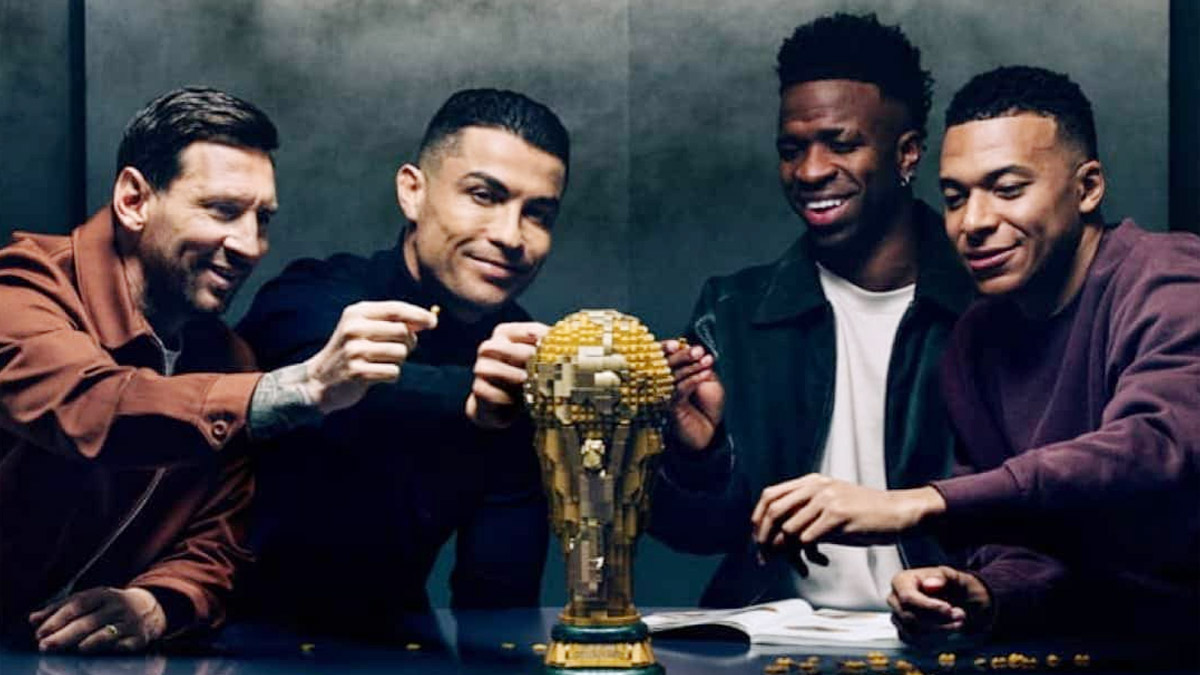
MUMBAI: Four legends, one frame and not a single tackle in sight. Lego has pulled off a crossover few thought possible, uniting Lionel Messi, Cristiano Ronaldo, Kylian Mbappé and Vinícius Júnior in a single campaign ahead of the FIFA World Cup 2026 only this time, they’re building dreams brick by brick.
Titled “Everyone wants a piece”, the campaign features the quartet assembling a Lego version of the World Cup trophy, before placing miniature versions of themselves atop it, a playful nod to football’s ultimate prize. Shared widely across social media, the ad carries a pointed disclaimer: it is not AI-generated, a subtle but telling signal in an era where even reality is often questioned.
The numbers tell their own story. The campaign has already crossed 314 million views on Instagram across the players’ accounts, with fans hailing it as a rare, almost nostalgic moment particularly for the reunion of Messi and Ronaldo, whose last shared campaign ahead of the 2022 World Cup became one of the platform’s most-liked posts.
Beyond the film, Lego is extending the play with exclusive, player-themed sets tied to each of the four stars, part of a broader football-led programme designed to ride the global momentum building towards 2026. The idea, as echoed by the players themselves, leans into the parallels between football and play experimentation, creativity, failure, and triumph.
Messi described the sets as a way to bring on-pitch moments into an imaginative, hands-on world, while Ronaldo called the transformation into a Lego figure a rare honour, blending sport with storytelling. Vinícius, meanwhile, struck a more personal note, recalling childhood moments of building with Lego and framing creativity as a universal language that transcends borders.
The timing is no accident. With the 2026 World Cup set to run from June 11 to July 19 across the United States, Canada and Mexico, and featuring an expanded 48-team format, global anticipation is already building. Argentina, led by Messi, will enter as defending champions, adding another layer of intrigue.
For Lego, the campaign does more than celebrate football, it taps into its mythology. Because when icons become figurines and rivalries turn into play, the beautiful game finds a new kind of pitch. one built, quite literally, by hand.






