MAM
Pulse on point as DS Group proves culture is the sweetest strategy

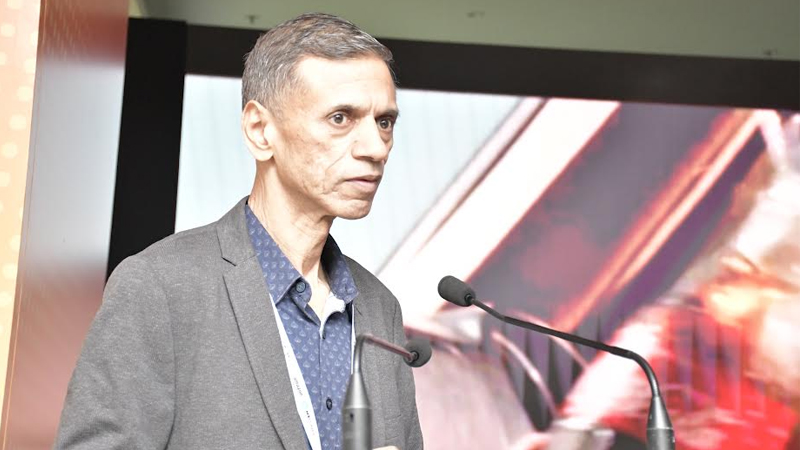
MUMBAI: When a candy meant for grown-ups causes a social media frenzy and movie stars post about it for free, you know you’ve struck marketing gold. That’s precisely what DS Group sr. vice president of corporate marketing Rajeev Jain laid out in his eye-opening session at Goa Fest 2025 titled ‘Cultural Marketing Can Be a Winner: Pulse Candy a Case Study’.
Jain opened with a powerful quote from CK Prahalad, “While it is true that multinationals will change emerging markets forever, the reverse is also true.” And Pulse, it turns out, is a case of the latter, an unapologetically Indian brand that rewrote the rules of candy marketing.
The secret sauce? Culture. Not just flavours, but deep-seated values and norms. Jain drew parallels from around the globe: how Coca-Cola supported Saudi women driving under its “Keys of Change” campaign, or how Nescafé cracked Japan by first selling coffee-flavoured toffees to build a taste habit among kids who grew into coffee-loving adults.

Pulse did something equally audacious back home.
Backed by two years of intense R&D, Pulse launched a centre-filled candy that catered to Indian palates think tang, spice, and chatpata chaos. It wasn’t your average sweet treat. It was a nostalgia bomb, a street-side snack, and a meme-worthy munch all rolled into one.
The brand boldly went where few dare: marketing candy to adults. “Why should kids have all the fun?” wasn’t just a slogan, it was a war cry. And consumers responded with their thumbs generating a flood of user-generated content without a rupee spent on influencer tie-ups.
Case in point? Disha Patani posting about Pulse on her own. “That’s when we knew we weren’t just in the candy business,” said Jain. “We were in the cultural relevance business.”
The talk underscored a central truth: great cultural marketing isn’t loud, it’s resonant. Pulse didn’t follow trends; it tapped into India’s taste DNA. The result? A product that felt tailor-made for the local market yet had the swagger of a global disruptor.
In a world flooded with algorithm-driven campaigns and AI-generated creatives, Pulse’s story is refreshingly analogue, it’s about listening before selling, and tapping into what people crave emotionally, not just gastronomically.
At a fest packed with tech talk and future-forward buzzwords, Jain’s candy-coated case study reminded everyone that flavour still wins when it hits the culture nerve just right.





MAM
Lego brings Messi, Ronaldo, Mbappé, Vinicius together
Campaign clocks 314 million views ahead of FIFA World Cup 2026 buzz.
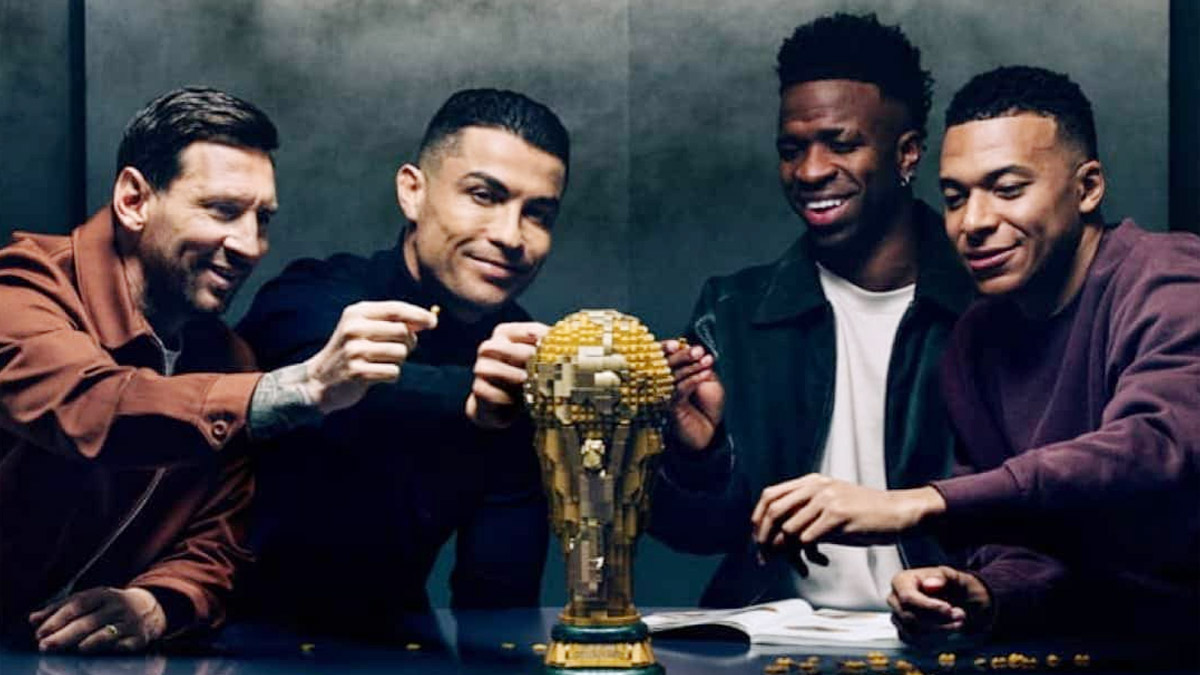
MUMBAI: Four legends, one frame and not a single tackle in sight. Lego has pulled off a crossover few thought possible, uniting Lionel Messi, Cristiano Ronaldo, Kylian Mbappé and Vinícius Júnior in a single campaign ahead of the FIFA World Cup 2026 only this time, they’re building dreams brick by brick.
Titled “Everyone wants a piece”, the campaign features the quartet assembling a Lego version of the World Cup trophy, before placing miniature versions of themselves atop it, a playful nod to football’s ultimate prize. Shared widely across social media, the ad carries a pointed disclaimer: it is not AI-generated, a subtle but telling signal in an era where even reality is often questioned.
The numbers tell their own story. The campaign has already crossed 314 million views on Instagram across the players’ accounts, with fans hailing it as a rare, almost nostalgic moment particularly for the reunion of Messi and Ronaldo, whose last shared campaign ahead of the 2022 World Cup became one of the platform’s most-liked posts.
Beyond the film, Lego is extending the play with exclusive, player-themed sets tied to each of the four stars, part of a broader football-led programme designed to ride the global momentum building towards 2026. The idea, as echoed by the players themselves, leans into the parallels between football and play experimentation, creativity, failure, and triumph.
Messi described the sets as a way to bring on-pitch moments into an imaginative, hands-on world, while Ronaldo called the transformation into a Lego figure a rare honour, blending sport with storytelling. Vinícius, meanwhile, struck a more personal note, recalling childhood moments of building with Lego and framing creativity as a universal language that transcends borders.
The timing is no accident. With the 2026 World Cup set to run from June 11 to July 19 across the United States, Canada and Mexico, and featuring an expanded 48-team format, global anticipation is already building. Argentina, led by Messi, will enter as defending champions, adding another layer of intrigue.
For Lego, the campaign does more than celebrate football, it taps into its mythology. Because when icons become figurines and rivalries turn into play, the beautiful game finds a new kind of pitch. one built, quite literally, by hand.






