Brands
Pronto faces privacy backlash over AI camera recordings inside customers’ homes
Startup says users opt in each time, but critics question AI data collection norms


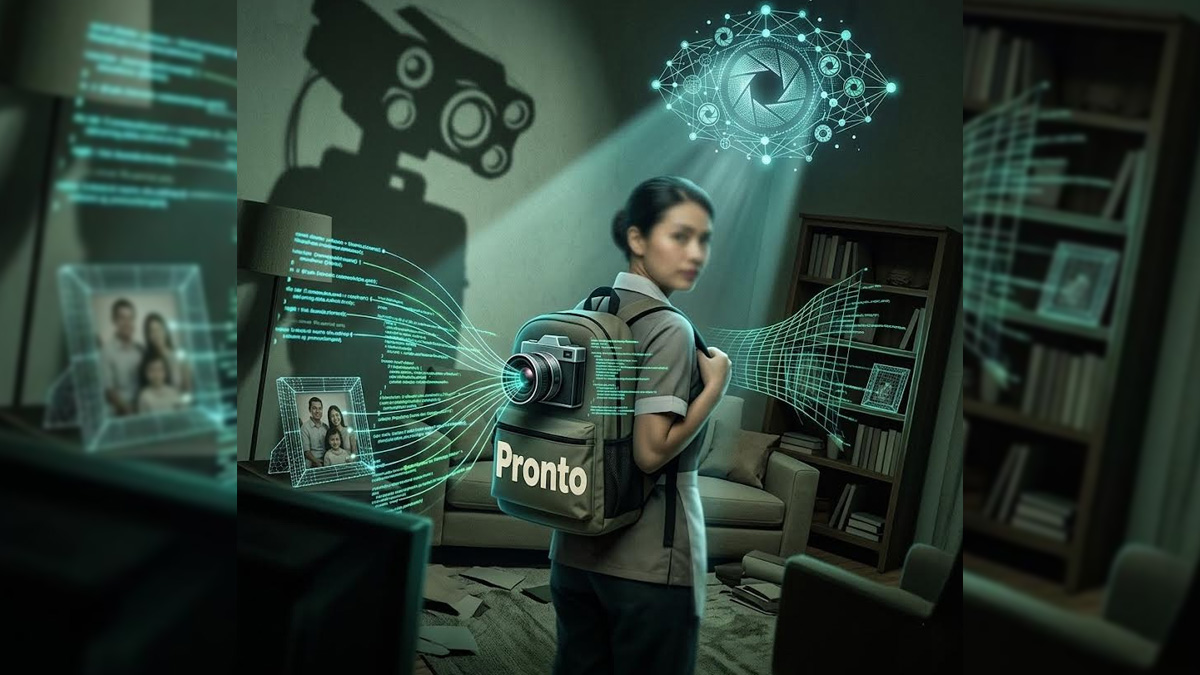
MUMBAI: Looks like India’s latest AI debate has come home, quite literally. Pronto, the Bengaluru-based startup known for promising household help in under 10 minutes, has landed in the middle of a privacy storm after reports revealed that some service visits involved workers carrying outward-facing cameras inside customers’ homes.
The controversy erupted after journalist Harsh Upadhyay posted on X claiming the company was using “small outward-facing cameras during select opt-in jobs” as part of a broader push linked to physical AI research. The post quickly gained traction, clocking more than two lakh views and triggering a wider conversation around consent, surveillance and the future of AI training.
At the centre of the debate is “physical AI”, a fast-growing field focused on training robots and intelligent systems to perform real-world tasks such as cleaning, cooking and elderly care. For such systems to improve, companies need massive amounts of real-life behavioural data, and that increasingly means collecting information from homes and workplaces.
In response to the backlash, Pronto insisted that recordings are only carried out with explicit customer consent.
In a statement shared on X, Pronto said users must actively opt in before every booking involving cameras. The company added that unless customers agree and pay for the programme separately, no worker arrives with recording equipment.
The startup also clarified that the pilot currently reaches only 0.1 per cent of its customer base. It claimed that faces and identifying details are automatically blurred, no personally identifiable information is uploaded or shared, and footage is deleted within 48 hours.
Still, the clarification has not fully swept away concerns.
Critics and legal observers have pointed to sections of the company’s privacy policy that mention aggregated user data may be retained indefinitely for “research or statistical purposes”. Questions have since emerged around what exactly qualifies as research, who can access the data, and whether customers and workers fully understand how recordings may ultimately be used.
Under India’s Digital Personal Data Protection Act 2023, consent is expected to be purpose-specific. Legal experts argue that agreeing to a home cleaning service is not automatically the same as consenting to AI model training or long-term research storage.
The issue gained further attention after reports suggested investor documents linked the startup’s operations to robotics and physical AI development efforts backed by Glade Brook Capital.
Founded in 2025 by Anjali Sardana, the startup has rapidly scaled across Bengaluru’s quick-service economy. Before launching the company, Pronto founder and chief executive officer Anjali Sardana worked with Bain Capital and 8VC, and studied at Georgetown University. The company reportedly handles around 18,000 bookings daily and crossed a valuation of $100 million within a year of launch.
The controversy has also prompted rivals to publicly distance themselves from similar practices.
Urban Company co-founder and chief executive officer Abhiraj Singh Bhal said the company does not record activities inside customers’ homes and has no plans to introduce such a system.
Similarly, Snabbit founder Aayush Agarwal said his platform has never recorded customers’ homes despite being approached by companies exploring the technology.
For now, Pronto’s camera pilot may cover only a sliver of users, but the uproar has opened a much larger conversation. As AI companies race to teach machines how humans live and work, many users are asking a simple question: where exactly should innovation stop and privacy begin?