MAM
Promotedge marks 11 years with expansion into D2C and performance marketing
Kolkata-based agency strengthens global footprint and launches new platforms.
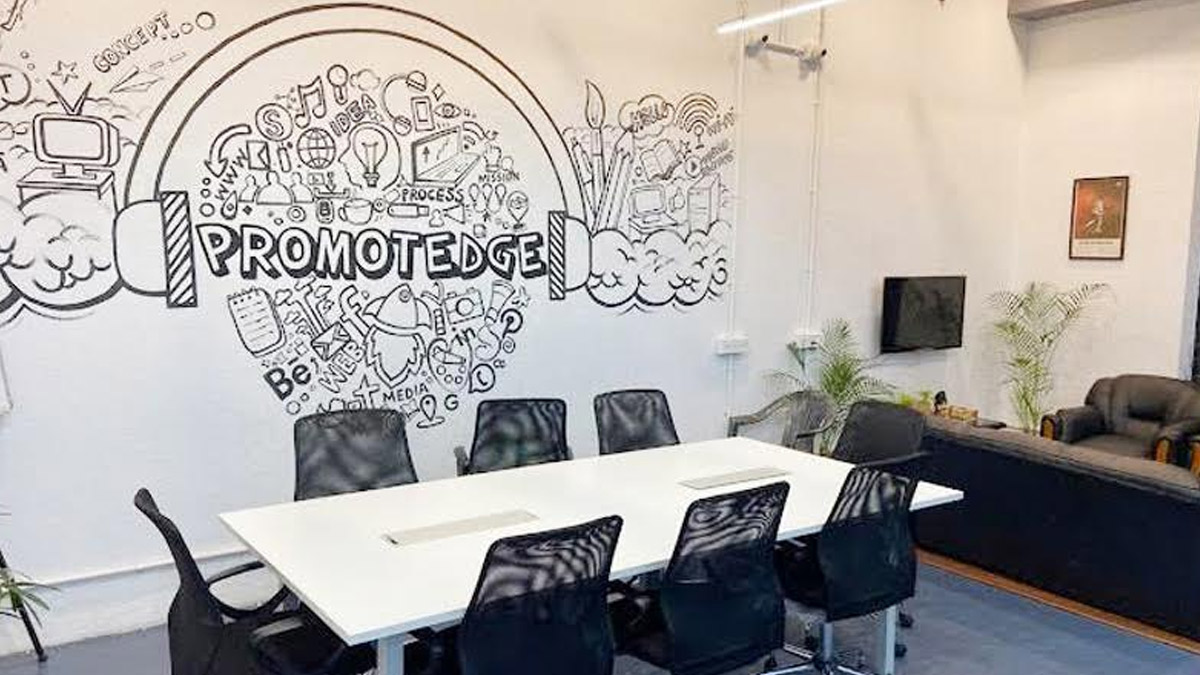
MUMBAI: Promotedge has spent 11 years quietly building momentum and now it’s ready to take a much bigger leap. The Kolkata-based integrated marketing and branding agency, founded in 2015, has completed 11 years of steady growth, evolving from a local creative firm into a full-service marketing partner with a growing international presence. With operational hubs in the US and Canada through its platform PromotEdgeDigital, the agency now serves clients across India, the US, Canada, Australia, and the Middle East.
Over the past 11 years, Promotedge has partnered with more than 200 businesses across diverse industries. Guided by its “Digitally Desi” philosophy which blends cultural insight with data-driven execution, the agency offers end-to-end services including web solutions, digital marketing, creative design, brand planning, and audio-visual production.
In its eleventh year, the agency made significant strides by developing branded IPs and content series for the automotive and industrial sectors, creating audio-visual content for international sporting bodies like the Fédération Internationale de Volleyball, and strengthening its performance marketing capabilities, particularly on quick-commerce platforms such as Zepto, Blinkit, Flipkart, and Swiggy Instamart.
To further boost its D2C focus, Promotedge has integrated the operations of Fizzle Digital into its performance marketing division, now led by founders Avi Saraf and Jhalak Agarwal. The agency continues to serve B2B clients in sectors like steel, energy, engineering, and infrastructure.
Beyond traditional services, Promotedge has introduced new platforms. DesiMachines is an online marketplace for heavy engineering and construction equipment, supported by two financial institutions and six top OEMs. The agency also launched Pexora, a joint venture with Prodigy focused on workspace design, branding, experiential marketing, and Digital Out-of-Home (DOOH) solutions in Eastern and North Eastern India.
Additionally, Promotedge nurtures The Trip Space, a boutique travel brand that curates personalised, luxury journeys for high-net-worth travellers.
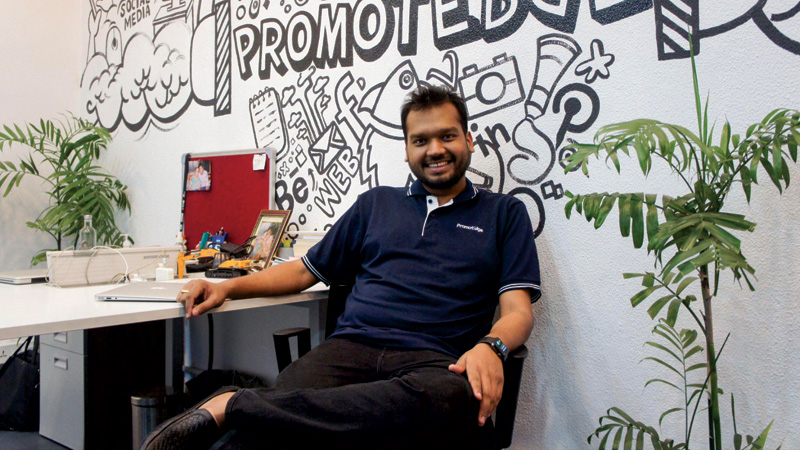
Promotedge CEO Saurav Agarwal said, “PromotEdge has always been built with a long-term vision. Our goal is to develop capabilities that provide long-term value to our clients.”
As it approaches its 12th year, the agency plans to expand its global clientele, deepen D2C and performance marketing capabilities, invest in AI-enabled solutions, and strengthen its platform-led initiatives.
From a modest start in Kolkata to building platforms and partnerships across borders, PromotEdge is proving that smart, culturally rooted marketing can travel far and deliver real impact. The agency is clearly gearing up for an even bigger chapter ahead.

AD Agencies
Omnicom posts $6.2 bn Q1 revenue, EBITDA margin rises to 14.8 per cent
AI push and cost synergies lift margins in first full quarter post-merger
NEW YORK: Omnicom has reported a robust first quarter following its acquisition of Interpublic Group, signalling early gains from integration, cost efficiencies and a sharper focus on AI-led services.
The results mark the first full quarter with Interpublic’s operations included, offering a clearer view of how the combined entity is shaping up. Revenue from core operations stood at $5.6 billion, up $345 million year on year on a combined basis, while organic growth came in at 3.9 per cent. Adjusted EBITDA margin rose sharply by 240 basis points to 14.8 per cent, reflecting early synergy benefits.
“We’ve seen momentum and cohesive growth across the organisation,” said Omnicom chief executive officer John Wren. “Our results demonstrate the benefits of realigning our portfolio and moving decisively on integration.”
A key part of that realignment involves shedding underperforming assets. Omnicom has identified businesses worth roughly $3.2 billion in annual revenue for disposal, with about $1 billion already exited in the first quarter. The company expects to complete most of the remaining divestments over the coming quarters, sharpening its focus on higher-growth, higher-margin operations.
On the bottom line, adjusted earnings per share rose 11.8 per cent to $1.90, underlining the financial impact of cost discipline and integration. The company is targeting $900 million in cost synergies by 2026, rising to $1.5 billion by mid-2028.
“We are realising significant cost reduction synergies while continuing to invest for growth,” said Omnicom chief financial officer Philip Angelastro.
Beyond the numbers, the strategic pivot is becoming clearer. Omnicom has restructured its business around “core operations”, stripping out assets earmarked for sale to highlight the segments driving future growth. More than half of its revenue now comes from integrated media, which includes data, commerce, CRM and content automation, areas that are growing faster than traditional advertising.
Indeed, integrated media led growth in the quarter with high single-digit gains, while PR and experiential businesses delivered mid-single-digit growth. Healthcare posted modest gains, while traditional advertising lagged, reflecting a broader industry shift towards performance-driven and tech-enabled marketing.
Central to this transformation is Omni, the company’s AI-powered marketing and sales platform. Rolled out across the organisation during the quarter, the system connects data, talent and services while enabling AI-driven workflows.
The platform is already delivering tangible results, improving media performance, speeding up campaign execution and enhancing measurement capabilities. Integration with partners such as Adobe and Amazon is further expanding its reach.
“We’ve put the latest agentic AI tools in the hands of all our employees,” said Wren, highlighting the company’s push towards automation and data-led decision-making.
The shift is also reshaping client relationships. Omnicom reported new business wins with major brands including IBM, GSK and John Deere, while expanding engagements with existing clients such as Unilever and Exxon. Increasingly, clients are opting for consolidated partnerships, relying on a single provider for end-to-end marketing and sales services.
“There’s a clear trend of clients choosing one partner to manage most of their needs,” said John Wren. “Our integrated model makes that easier.”
Geographically, the US remains the largest market, contributing 61 per cent of revenue, followed by Europe and the UK at 21 per cent. Growth was strongest in the US, with other regions posting modest gains.
The balance sheet remains solid despite increased debt following the acquisition. Long-term debt stood at $10.2 billion at the end of the quarter, while liquidity was supported by $4.3 billion in cash and a $3.5 billion revolving credit facility. The company is also returning capital to shareholders, repurchasing $2.8 billion worth of shares in Q1 as part of a planned $5 billion buyback programme.
Looking ahead, Omnicom remains optimistic but cautious. While the company expects double-digit EPS growth for the year, it acknowledged ongoing geopolitical uncertainties, particularly in the Middle East, though the region accounts for less than 2.5 per cent of revenue.
The integration of Interpublic is still in its early stages, but the initial signs point to a business that is not just bigger, but structurally different. With AI at its core, a streamlined portfolio and a growing tilt towards integrated services, Omnicom is betting that scale, simplicity and smart technology will keep it ahead in an increasingly complex marketing landscape.
If the first quarter is anything to go by, that bet is already starting to pay off.