MAM
PRN drives in-store HDTV viewership in US


MUMBAI: In-store media network creator Premier Retail Networks (PRN) has announced the results of its recent survey conduced in the US. This shows that PRN’s Home Electronics Network (HEN) delivers a growing number of entertainment and consumer electronics enthusiasts.
Nielsen Media Research conducted the entertainment-focused survey.
Based on Nielsen Media Research results, PRN estimates there is an average of 7,889 viewers per store per flight for HEN. With PRN’s HEN in more than 2,100 Best Buy, Circuit City and Sears stores, the Network delivers approximately 16.7 million gross impressions. This representing a 40 per cent increase over last year’s study.
Nielsen also reported that the duration of time each viewer spent watching the network has increased to 9.1 minutes in 2003 from 7.6 minutes last year, an increase of 20 per cent. PRN’s customised programming segments about High Definition Television (HDTV) were even stronger, with a viewer duration time of 10.8 minutes among those aware of HDTV segments.

In addition, Hen continued to deliver a strong message that its viewers remember, maintaining a high recall of 52 per cent. This number recalled one or more (unaided/aided) of the theatrical programming trailers. 46 per cent who recalled one or more (aided) of the HDTV custom programming elements.
HEN viewers are also likely to buy an HDTV set, the study says. 94 per cent of those surveyed ranked the in-store HDTV experience as the most important information source when deciding on a purchase of an HDTV. 72 per cent of them rely on friends and family. PRN’s HEN broadcasts high definition programming and advertising on high-impact TV walls consisting of 75-140 monitors in more than 2,100 Best Buy, Sears and Circuit City stores across the US.
HD programming is shown on PRN’s HEN to enable consumers to do their own side-by-side comparison of HDTVs and analog TVs in stores. The total combined sales for retailers in which PRN’s HEN is broadcast reached over $70 billion last year. PRN’s HD programming content partners include Discovery Channel, NBC, HBO, Showtime and The Tennis Channel.
The survey was conducted from 1-30 August 2003 via in-store polling by Nielsen Media Research within the US. PRN partners with retailers and advertisers to create in-store television and interactive networks that broadcast news, product information, entertainment and advertising to viewers while they shop.
By creating customised programming for retailers and advertisers, PRN builds brand equity, customer satisfaction and shopper loyalty. PRN claims that its programming is shown in more than 5,500 stores located in every state in the US. The San Francisco based company claims that its Nielsen-measured television and interactive networks deliver more than 170 million gross impressions each month.






Brands
Raj Cooling Systems launches Agreyas appliances brand
Emraan Hashmi named brand ambassador for consumer appliance push.
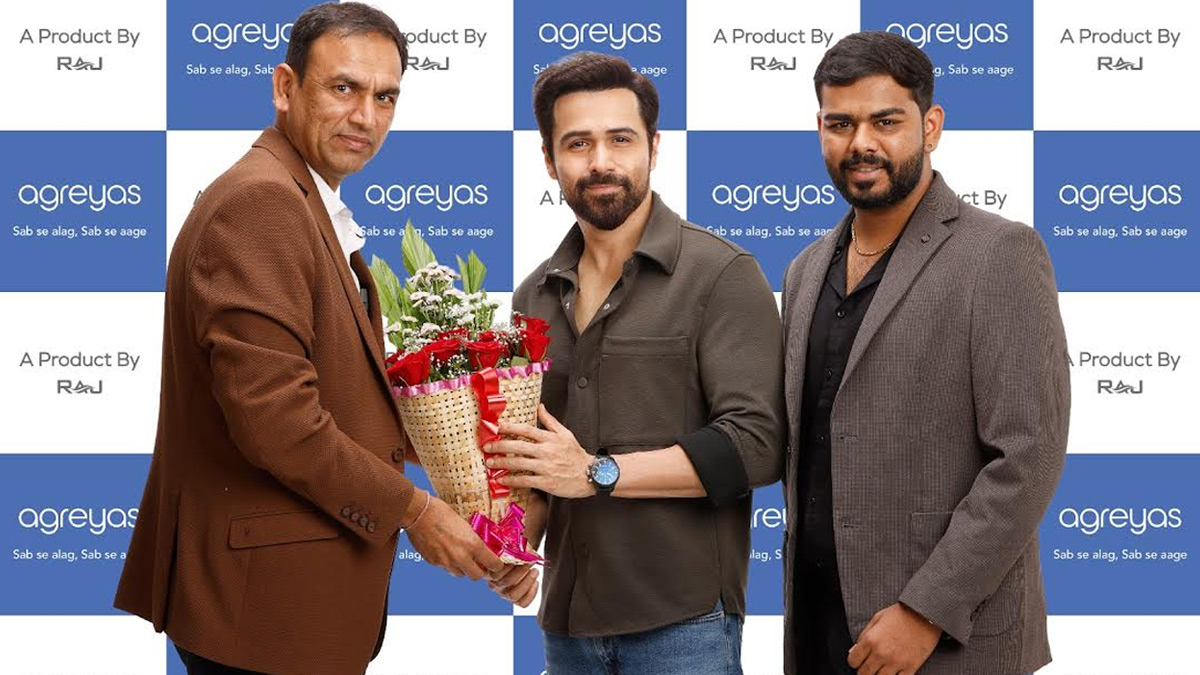
MUMBAI: A company known for cooling solutions is now heating up its ambitions in the home appliances market. Raj Cooling Systems Pvt. Ltd. has launched a new consumer appliances brand, Agreyas, marking its entry into India’s rapidly expanding home appliances sector valued at more than Rs 1.5 lakh crore. The move represents a strategic diversification for the company, which has traditionally focused on cooling solutions for residential, commercial and industrial applications. Through Agreyas, the firm plans to tap into growing consumer demand for energy efficient and technology driven household appliances.
To build brand visibility, Agreyas has appointed Emraan Hashmi as its brand ambassador. The campaign has been developed under the banner of Zoommantra Productions, with actor and filmmaker Rohit Roy contributing to the creative direction.
The brand’s initial portfolio will include mid premium air conditioners, washing machines, geysers and other white goods designed to cater to modern Indian households seeking efficient and reliable appliances.
Raj Cooling Systems, founder and chairman Kalpesh Ramoliya said the launch aligns with the company’s broader expansion plans.
“The launch of Agreyas is in line with our vision to build a strong presence in India’s consumer electronics and home appliances market. The brand has been developed as a standalone identity to meet the evolving needs of Indian consumers,” he said.
Hashmi said the collaboration comes at a time when Indian buyers are increasingly looking for innovative and functional home solutions.
“I’m looking forward to working with Agreyas at a time when consumers are seeking more innovative and efficient home products. The brand reflects changing consumer behaviour around functionality, innovation and ease of use,” he said.
Raj Cooling Systems plans to invest around 10 million dollars in developing the brand, with an additional 5 million dollars earmarked over the next three to five years for product development and distribution expansion.
Agreyas will follow a multi channel distribution approach, selling through online platforms, retail outlets and dealer networks aimed at both urban and semi urban markets across India.
With the launch, the company is positioning Agreyas as a standalone consumer facing brand while continuing to leverage its existing manufacturing, engineering and research capabilities built through its core cooling solutions business.