Ad Campaigns
Prioritizing employee safety & well-being, Hike goes Remote-First for 2020

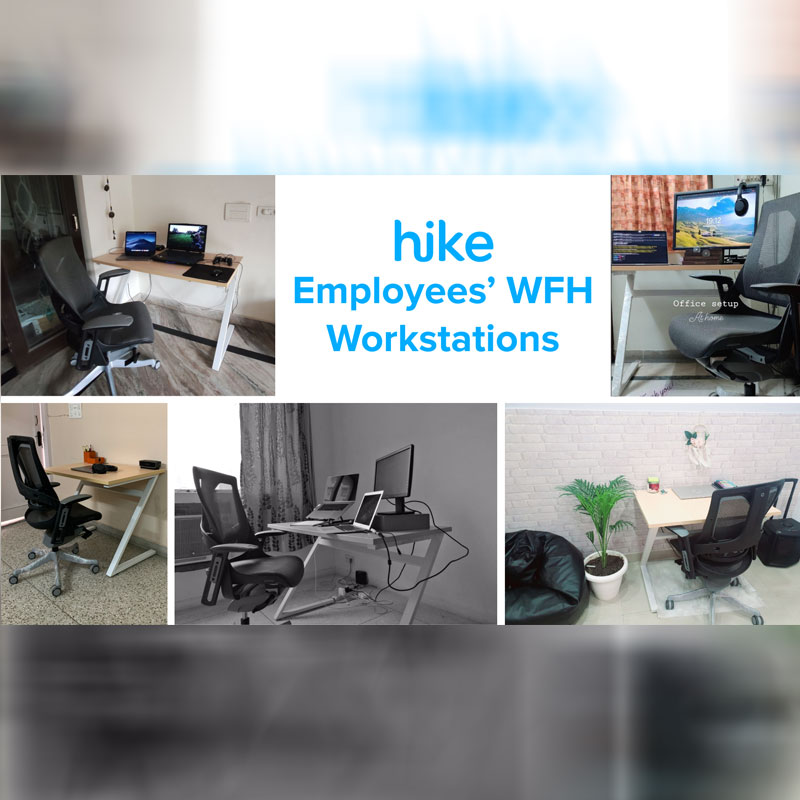
Hike, India’s homegrown social products & internet company today announced adopting a Remote-first approach for the rest of 2020. Aligned with Hike’s culture of valuing employee wellbeing over everything else, Hike’s move to a Remote-First culture would make working remotely their default modus operandi. However, for those looking to come to the office, it will remain an option with strict guidelines to ensure social distancing and sanitation.
To facilitate a seamless transition to ‘Remote-First’ and ensuring everyone is comfortable and productive when working from home, Hike has also announced multiple arrangements to help employees create a workspace at home. Hike would be delivering an ergonomic office chair & a brand new compact office table to its employees residing in Delhi/NCR. For employees presently outside of Delhi/NCR Hike has announced a reimbursement of up to INR 10,000/- for the purchase of their own chair & table to set up their workstation at home. Additionally, Hike would also be supporting its employees for any internet and IT accessories requirements. These include accessories such as Monitors, USB Converters, Laptop riser & more, adding up to INR 40,000 per employee.
As a tech-focused organisation, Hike has always invested in tools for efficiency gains and continues to leverage multiple of them to enable effective remote communication between teams. Some of them include Basecamp, Asana, Figma, Notion, Slack, Tableau, Office vibe, Google Suite, MIRO.

Hike has also introduced some unique ‘Remote-First’ initiatives like no-meeting hours, Remote All-hands, and virtual recognition programs. Over and above logistics and processes, Hike has also introduced a manager’s handbook internally aligned to its values to sustain their cultural priorities focusing on the following pillars:
Setting Expectations: As a manager, it's important to clearly convey your expectations. Be as specific as possible while using simple and concise language. “New normal” isn’t necessarily a business world without working in an office, it’s just a world where we focus on work instead of the office
Trust: Emphasizing on the act of leading with trust as opposed to micro-management as can be the temptation in the absence of face to face interaction with the team
Empathy: People that work remotely shouldn’t feel like they need to be in the office to be fully informed. Flexibility and empathy are key. This is new for a lot of people, and these are without a doubt extenuating circumstances
Hiring: The key to developing a thriving remote culture that is built on trust starts with finding the right people and setting the right expectations
Hikers looking work from office have to comply with the following mandatory guidelines aligned to statutory requirements:
No one above 99 temp would be allowed in the office building
Everyone has to wear a mask all day long
Physical/social distancing
Lunches won’t be together
Not more than 3 people in the washroom at a time (original capacity: 10)
Meeting rooms will no longer accommodate to capacity:
2-3 seater will be for 1 person
5-6 seater will be for 2 people
8-10 seater will be for 3-4 people
Work stations to maintain 6’ distance
No Gym
Social distancing while walking in the hallways
Hike has been operating remotely for over 5 months and has also launched the world’s first mobile-first virtual world, HikeLand, remotely, recently. Starting March 6th, 2020, Hike had implemented Work From Home (WFH), organization-wide to ensure employee well-being ahead of the lockdown announcements by state and national authorities.

NATIONAL: Amazon Ads has laid out a sharply tech-led vision for the advertising industry in 2026, arguing that artificial intelligence, streaming TV and creator partnerships will combine to turn brand building into a more precise, performance-driven business.
At the heart of the shift, the company says, is the fusion of AI with Amazon’s vast trove of shopping, browsing and streaming signals, allowing advertisers to move beyond blunt reach metrics to campaigns designed around real customer behaviour.
“The future of advertising is not about reaching more people, but the right people with messages that resonate,” said Amazon Ads India head and vice president Girish Prabhu. “By combining AI with deep customer insights, we help brands move from broadcasting campaigns to having meaningful conversations wherever audiences spend their time.”
One of the biggest changes, according to Amazon Ads, will be the collapse of the wall between media planning and creative development. Retail media, powered by first-party data, is increasingly shaping everything from brand discovery to final purchase, pushing marketers to design campaigns around audience insight rather than internal instinct.
AI is also moving from a support tool to a creative engine. Agentic AI, which automates and accelerates production, is expected to make high-quality creative accessible even to small businesses, compressing weeks of work into hours and giving challengers the ability to compete with larger brands on speed and scale.
Behind the scenes, AI-driven analytics will take on a bigger role in campaign optimisation, identifying patterns, spotting opportunities and recommending actions that would previously have required teams of analysts.
Streaming TV is another big battleground. With India’s video streaming audience now above 600 million and connected TV users at 129.2 million in 2025, advertisers are set to treat streaming not just as a branding channel but as a performance engine, measured increasingly by sales, sign-ups and bookings rather than just reach.
Finally, Amazon Ads sees creators and contextual advertising reshaping how brands tell stories. Creators will act less like influencers and more like long-term partners, while scene-aware ads on streaming platforms will allow brands to insert hyper-relevant offers into the flow of what viewers are watching.
Taken together, Amazon Ads argues, these shifts mark a move towards advertising that is both more human and more measurable, where AI handles the complexity, and creativity does the persuading.






