Connect with us

MAM

Print Media: The undeniable edge for engaging parents in marketing higher-education programs

Published

on

Mumbai: The Print Media industry in India has been an example of resilience and growth, defying global trends and showcasing consistent year-on-year success. Alongside Germany, India stands out as one of the few markets where print media has flourished despite the digital revolution. This remarkable growth can be attributed to several factors that hold significance from both the advertiser’s and the consumer’s perspectives.

In the education industry, connecting with students and their parents presents a unique challenge. While online media undoubtedly provides an excellent platform to engage with students, Print media plays a crucial role in capturing the attention of parents, particularly in non-English reading markets. Regional newspapers, renowned for their focus on local news and events, have garnered immense popularity among readers in the 40 plus age group. By strategically featuring educational institutes alongside such localised content, there is a tremendous opportunity to enhance visibility and resonate with parents.

The recent report by CRISIL reaffirms the positive trajectory for the print media industry in India. According to CRISIL, the revenue of print media is expected to jump by 13 to 15 per cent this year, reaching an impressive Rs 30,000 crore. According to the report, this surge in revenue is primarily driven by higher spending on advertisements by corporates and the government, particularly due to the upcoming elections. This positive outlook translates into increased profitability for the sector, with an expected growth rate of 10 to 14.5 per cent.

Advertisement

The CRISIL report also highlights that customers in India continue to have a preference for print media. Over the past two years, physical newspapers have witnessed an impressive growth of 8 to 10 per cent in subscription revenue. This year, the sector is expected to witness a 5 to 7 per cent jump in subscription revenue, largely driven by moderation in prices. This growth underscores the enduring value that print media holds for Indian readers.

This is in fact great news for the education sector where print media plays a pivotal role in engaging parents and conveying the value proposition of educational institutions. While online media provides an excellent channel to connect with students, print media holds a unique position in capturing the attention and trust of parents. With their localised content and readership in non-English reading markets, regional newspapers present a valuable opportunity for educational institutes to gain visibility among parents and foster meaningful connections.

I firmly believe that print media offers a distinctive avenue to engage with parents and convey the value proposition of educational institutions. The enduring appeal of physical newspapers and their localized content creates a unique bond with readers, enabling educational institutes to forge meaningful connections. By leveraging print media’s credibility and trust, institutions can effectively communicate their offerings and showcase their commitment to academic excellence.

Advertisement

In a country as diverse as India, print media plays a vital role in reaching out to a broad spectrum of readers. While online media caters to the digital-savvy generation, print media acts as a bridge that connects with a more traditional audience. This is especially important when it comes to parents who often rely on print media as a trusted source of information and guidance for their children’s educational journey.

Moreover, print media’s prominence in non-English reading markets cannot be underestimated. In these regions, where a significant segment of the population prefers regional languages, regional newspapers play a crucial role in disseminating news and information. By strategically aligning educational content with regional newspapers, educational institutions can tap into this vast and often untapped market, capturing the attention of parents and fostering a sense of familiarity and trust.

While digital media continues to evolve and offer new avenues for engagement, the resilience and consistent growth of print media in India present an undeniable opportunity for the education sector. By embracing print media as an integral part of their marketing strategy, educational institutions can effectively engage with parents, showcase their unique strengths, and stand out in a competitive landscape.

Advertisement

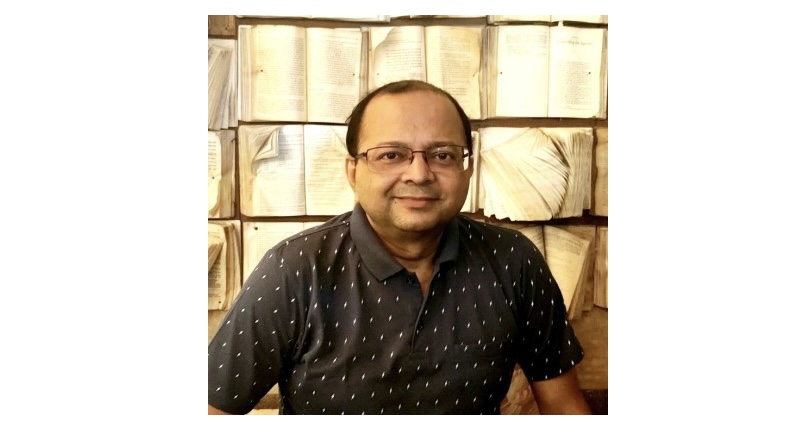
The author of this article is Narsee Monjee Institute of Management Studies (NMIMS) director of marketing & PR Burzeen Bhathena.

 

Click to comment

Leave a Reply

Your email address will not be published. Required fields are marked *

Brands

GUEST COLUMN: Beyond layoffs, India emerges as creative-tech hub

Shift in hiring and AI-led workflows is reshaping global media and marketing

Published

on

Sanjil Zaveri

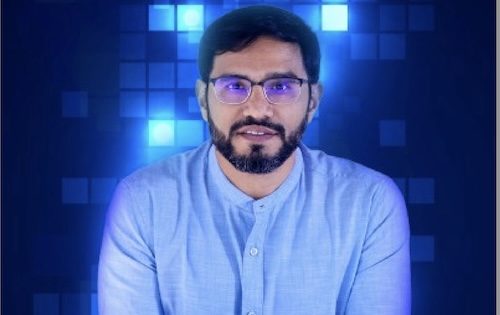
MUMBAI:The global narrative around layoffs in media and technology may suggest contraction, but a deeper transformation is reshaping how creative and tech capabilities are built and deployed. For Sanjil Zaveri, general manager – India at Brandtech+, this shift is less about decline and more about redistribution, one that is positioning India at the centre of a new global operating model. In this piece, Zaveri explores how integrated workflows, AI-powered production, and evolving talent demands are redefining the creative-tech ecosystem, why India is emerging as a strategic hub for global content and innovation, and what this means for the future of media, marketing, and talent.

The global headlines around layoffs in technology and media continue to dominate industry conversations. From platform restructuring to reduced marketing spends, the narrative suggests a slowdown across the creative and digital ecosystem.

But beneath these headlines, a different shift is underway, one that is quietly redefining how creative and technology work is delivered globally.

Advertisement

Hiring is not disappearing; it is being redistributed. And India is increasingly at the centre of this transition.

A structural shift in the creative-tech ecosystem

The media and marketing landscape is undergoing a fundamental reset. Brands today are moving away from fragmented agency models and siloed teams toward more integrated, agile structures.

Advertisement

Creative, technology, and media are no longer operating in isolation. Campaigns are now built through connected workflows, where ideation, production, and optimisation happen simultaneously.

This shift is forcing organisations to rethink where and how teams are built. Increasingly, the focus is on capability, speed, and scalability, rather than geography alone.

India’s emergence as a creative-tech hub

Advertisement

India’s role in this evolving ecosystem has expanded significantly.

Traditionally positioned as a backend execution market, India is now playing a far more central role in global campaign delivery. Teams based here contribute not just to production, but also to strategy, content development, and performance optimisation.

This is particularly relevant in a market where content velocity has increased dramatically. With the rise of digital platforms, OTT, and always-on marketing, brands require high volumes of creative assets without compromising on quality.

Advertisement

Industry insights from Ernst & Young point to India’s growing strength as a global content hub, while NASSCOM continues to highlight the scale and depth of the country’s digital talent pool. Together, these factors create a compelling case for India as a foundation for more efficient, integrated content ecosystems serving global markets.

A global company’s perspective on India

At Brandtech+, this shift is already shaping how we operate.

Advertisement

As a global organisation working across creative, marketing, and technology, our talent strategy is increasingly driven by capability rather than location. India has therefore become a key market for both scale and strategic talent.

In the first quarter of this year, we have significantly accelerated hiring in India across creative, technology, and operations roles, moving well ahead of plan and continuing to build strong momentum. We are actively hiring across multiple functions, with India playing a central role in delivering integrated creativetech solutions for global brands.

These signals reflect a broader change in how global companies view India, not as a delivery centre, but as a hub for connected creative, data, and technology capabilities.

Advertisement

“While much of the global narrative is centred on contraction, what we are seeing in India is a different kind of growth,” says Sanjil Zaveri. “As a global company, we are investing in talent that can work across creative, data, and technology, because that is where the future of marketing is headed.”

AI and the new content economy

Artificial intelligence is playing a critical role in enabling this transformation.

Advertisement

In today’s media environment, the demand for content has scaled exponentially. Brands are expected to create, adapt, and optimise creative assets across multiple platforms in real time. The scale of this demand would be difficult to sustain through traditional production models alone.

AI is helping make this possible.

Rather than replacing roles, AI is streamlining workflows, automating repetitive tasks, accelerating production timelines, and enabling faster experimentation. This allows creative and strategy teams to focus on higher-value outputs.

Advertisement

“AI removes the mundane and elevates the meaningful,” says Zaveri. “It allows teams to focus on ideas and storytelling, while technology drives efficiency.”

For media platforms and advertisers, this is redefining how campaigns are built, moving from linear production cycles to continuous, data-driven content creation.

What this means for media talent

Advertisement

For professionals across media, advertising, and digital, this shift is redefining skill requirements.

The traditional boundaries between creative, media planning, and technology are blurring. Content creators are expected to understand performance metrics. Media professionals are working more closely with data, platforms, and automation. Collaboration across disciplines is becoming a core skill.

This is creating demand for hybrid talent, professionals who can operate across disciplines and adapt to rapidly changing workflows.

Advertisement

India’s talent ecosystem is particularly well suited to this environment. With strong capabilities across content, design, engineering, and analytics, the market offers a unique combination of scale and versatility.

Importantly, global exposure is no longer tied to relocation. Professionals in India are increasingly working on international brands and campaigns, collaborating with teams across markets in real time.

Looking ahead: India at the centre of the reset

Advertisement

What we are witnessing today is not a temporary phase; it is a structural reset in the global creative-tech ecosystem.

Layoffs may continue to shape short-term narratives, but they do not capture where long-term growth is being built. That growth lies in new operating models, integrated workflows, and markets that can deliver both scale and innovation.

India is firmly at the centre of this transformation.

Advertisement

As global media and marketing organisations continue to evolve, India’s role will only become more critical, not as a support market, but as a strategic hub for content, creativity, and technology-led innovation.

The future of creative-tech will be defined by collaboration, speed, and adaptability. And increasingly, it will be shaped from India.

Note: The views expressed in this article are solely the author’s and do not necessarily reflect our own.

Advertisement
Continue Reading

Advertisement News18
Advertisement
Advertisement Whtasapp
Advertisement Year Enders

Indian Television Dot Com Pvt Ltd

Signup for news and special offers!

Copyright © 2026 Indian Television Dot Com PVT LTD