MAM
“Premiumization is a rapidly growing trend in the consumer landscape in the alcobev space”: Anant Iyer

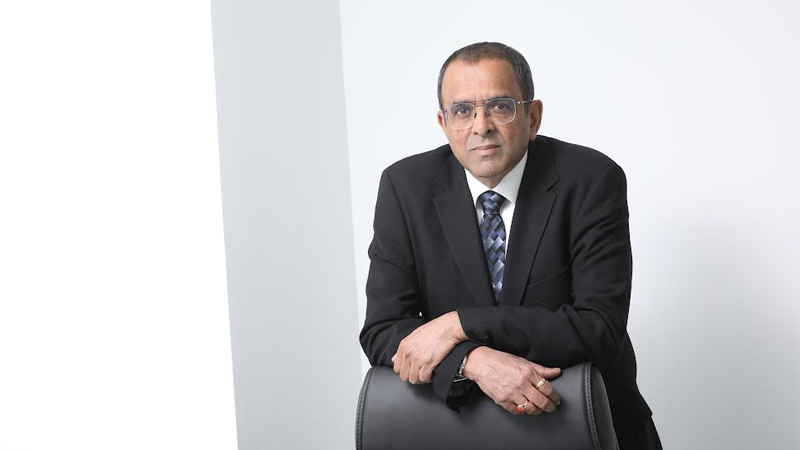
Mumbai: The alcoholic drinks market continues to thrive and expand, reflecting both evolving consumer preferences and economic dynamics. With a substantial share of revenue generated at home and a significant portion coming from out-of-home consumption, the market presents a comprehensive picture of growth and opportunity. In 2024, the combined revenue from both sectors in the alcoholic drinks market is poised to reach a staggering $56.5 billion, highlighting the robust demand and market potential.
Alcobrew Distilleries Pvt. Ltd has carved a niche for itself in the highly competitive Indian alcohol market. With a commitment to quality and innovation, the company has steadily built a reputation for excellence and reliability.
Alcobrew Distilleries Pvt. Ltd CCO Anant S. Iyer is a seasoned leader who stormed into the market years ago and has always succeeded in his endeavors. With over 33 years of experience in myriads of positions, he is accountable for day-to-day operations, from sales and marketing to supply chain management, elevating Alcobrew to new heights.
As COO of Alcobrew, Anant plans to grow both the portfolio and the geographic scope of operations. His business approach relies around the key premise of “pay more for better,” acknowledging Indian consumers’ changing demands. In fact, “Premiumization” is more than just a phrase for him; it is a major driver in Alcobrew’s path to long-term development and profitability.
Indiantelevision.com had the opportunity to speak with Iyer. In an engaging conversation, he shared his journey of establishing Alcobrew, the challenges faced, and the insights gained along the way.
Edited excerpts
On the early days of your professional journey and your diverse experiences have shaped your leadership style
My early years were largely a journey of learning. I was keen to learn new processes, functions, roles and very open to new ideas. These early years I was also witness to the changing landscape in corporate India which moved from its legacy style to one where Personal Computers and IT made their entry. This was both anxiety filled and exciting at the same time. Cross functional movement and working across geographies also helped me understand diverse departmental roles as well as cultures. All of this has allowed me to have an inclusive approach to my management and leadership style.
On your time at United Spirits Limited & Diageo India and Jagatjit Industries Limited prepare you for your role as COO at Alcobrew
With over 33 years of experience in the Alcobev industry, I have assumed various challenging roles in Managing P&L, Sales, Marketing, Business Strategy, Corporate Affairs and Business Development, both in India and abroad. I have supervised large teams, by implementing efficient processes, setting performance metrics, and spearheading transformative business initiatives. This vast experience has allowed me to develop an intricate understanding of the industry’s workings, relationships, and processes.
As the COO of Alcobrew, I assume the responsibility for the company’s overall business operations-sales, marketing, supply chain management amongst others leading to efficiencies in P&L management while spearheading growth initiatives.
On elaborating more on “Premiumization” and its meaning for the company and its consumers
Premiumization is a rapidly growing trend in the consumer landscape in the alcobev space. The category is witnessing consumers moving up the price ladder to consume better even if it is lesser, or Quality over quantity. This trend would only continue and is leading to an increase in volumes of existing premium segments as well as potentially creating new segments.
For Alcobrew Distilleries our Founder, the Chairman & Managing Director Mr. Romesh Pandita envisioned the organization as a “premium only” company as early as 2006, with the manufacturing and marketing tie-up with Gruppo Campari, Italy for Old Smuggler Scotch Whisky. Subsequently the launch of White & Blue Whisky in 2012 and Golfer’s Shot Whisky in 2014 firmly established this vision. From 2020 onwards despite the pandemic we expanded our portfolio further with a continuous process of launches of new brands in the potential segments in the alcobev industry that existed.
We conceived a Vodka brand during lockdown and launched it just after the opening up of liquor vends, namely One More Vodka which was a semi-premium Vodka. Immediately after we launched flavour variants namely One More Green Apple Vodka and Orange. Towards the end of 2022 we launched Alcobrew Single Oak Whisky in the Semi-Premium Plus segment, and this brand has also been received well by consumers. In the first half of 2023 we launched Golfer’s Shot 18 Hole Whisky in the Premium Plus price points, one notch below the standard scotch whisky segment in the North and Western markets and are in the process of launching the same in UP.
We will continue to premiumize our portfolio and are looking at launching our Single Malt in 2025 from our Gamber Valley Malt distillery situated at Gamberpul, Solan District, Himachal Pradesh. This unit has been conceived and set up prior to the pandemic. The unit operations are spearheaded by Ms. Vanessa Pandita, our Director- Strategy & Business Development.
All our recent launches and further portfolio expansion in the premium space will assist in growing the company’s Top-line and Bottom-line.
On unique strategies you bring to boost sales and brand presence
I have used my experience to steward the organization under the guidance of our CMD, Mr. Romesh Pandita along with the support of our Deputy Managing Director Mr. Arvind Kaul and together as a team we have ensured that growth has been in the mid-teens. This growth would not have been possible without the backing of our people in the organization whether in sales, marketing, manufacturing, supply chain, HR and F&A.
We have consistently launched brands to make our portfolio more robust. We have entered newer markets and are now making inroads in the West, East and some markets of the South.
Our brand marketing efforts focus at the point-of-sale at both retail and on-trade through visibility and brand activations (liquid to lips). Given the fact that we are working in a media dark market we avoid conventional ATL marketing. We are looking at boosting our on-trade presence given our growing portfolio and the ability to help build lasting memories and experiences for our brands with consumers in the on-trade.
The use of Market Research to help guide decision making, use of ERP to build efficiency across functions, Sales Force Automation to help improve distribution effectiveness are some of the practices brought in. We have become a Public Limited Company moving from a Private Limited one and continue to follow all compliances mandated by the State and Central Govts.
On approaching the challenge of building brand loyalty in a highly competitive market like the alcohol industry
As you are aware the alcohol industry is a media dark market. The focus of all players is at the point-of-sale or L3F (last 3 feet). It is indeed a crowded market but I guess “we work harder”! We build strong relationships with the retail and encourage them to ensure good displays and shelving of our brands that leads to better visibility and sales. We do look at permanent brand visibility at retails in key markets.
As a company, we have been very product focused and that has helped us win consumers. We are consistent with our Limited Edition Packs which we introduce during the festive season such as that of Golfer’s Shot Whisky. Finally, our blends are truly best in class and if tried by consumers they normally stick with our brands.
On any successful marketing campaigns or initiatives that you have led at Alcobrew
As we are operating in a media dark market, our efforts have been to focus on Limited Edition Packs during the festive season to increase the buzz around the brand. We also up the ante at the point of sale through shelf displays, rack branding, gondolas and liquid to lips promotions in the on-trade.
On technology playing a role in your business transformation and operational efficiency at Alcobrew
Technology has been a driver for us across all functions in the organization. It has helped build efficiency in the back end supply chain, assisting sales teams through sales force automation, optimizing marketing spends, helping HR & Admin to effectively execute necessary support functions and the streamlining of all our Accounting processes. The organization is always eager to adopt newer ideas that increase efficiency across deliverables of process optimization, value engineering etc.
On anticipating consumer preferences in the Indian spirits market evolving
We are in constant touch with our consumers through Brand Equity monitoring and various qualitative researches conducted by us. We are also a part of the industry body CIABC (Confederation of Indian Alcoholic Beverage Companies).
As mentioned earlier, the premiumization trend is something that we have taken cognizance of, and our near launches are all a part of this trend. Younger Gen Z and millennials over the Legal Drinking Age (LDA) are also looking at newer experiences and we have kept track of this too. We are an organization that has its eyes and ears close to the market.
Our vision is to be a part of people’s everyday lives, be it in moments of indulgence, deliberation or exploration.






