Connect with us

Brands

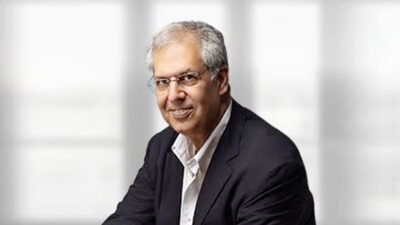
Pramit Jhaveri to step down from Sir Dorabji Tata Trust, declines re-appointment

Published

on

Mumbai: A quiet but significant exit is underway at one of India’s most influential philanthropic institutions. Pramit Jhaveri has decided to move on from the Sir Dorabji Tata Trust and will not seek re-appointment when his term ends on February 11, 2026, according to sources familiar with the matter.

Jhaveri has written to Tata Trusts chairman Noel Tata informing him of his decision, effectively closing the door on another term at the powerful trust that anchors much of the Tata Group’s philanthropic architecture. The move, while orderly, signals a notable change in the upper echelons of the trust’s governance.

In his letter, Jhaveri described it as “an honour to serve as a trustee of the Tata Trusts” and conveyed his “best wishes to the Tata Trusts and the Tata Group,” people aware of the communication said. The tone was courteous, the message unequivocal.

Advertisement

Sources added that a Tata Trusts board meeting is likely to be scheduled in the coming weeks, a gathering that could set the stage for succession discussions and wider governance recalibrations. The Sir Dorabji Tata Trust remains one of the most consequential pillars within the Tata Trusts ecosystem, which collectively holds significant stakes across the Tata conglomerate.

Jhaveri brings with him a long banking pedigree. A career Citibanker, he served as chief executive officer of Citibank India from 2010 to 2019 before retiring in November 2019 after 32 years with the firm. He joined Citi in 1987 and, prior to his India chief role, held the position of vice chairman – banking, Asia Pacific, overseeing regional responsibilities during a period of rapid financial expansion.

Academically, Jhaveri holds a bachelor of commerce degree from Sydenham College, Mumbai University, and an MBA from the Simon School of Business at the University of Rochester. His trajectory from global banking boardrooms to one of India’s most prominent charitable trusts underscored a career shaped as much by finance as by institutional stewardship.

Advertisement

For now, the exit appears measured rather than abrupt, but its timing ensures attention. With a board meeting on the horizon and a term end date fixed, the transition clock has started ticking. In the rarefied world of trust governance, departures seldom roar. They arrive quietly, letter in hand, and leave a noticeable silence behind.

 

Click to comment

Leave a Reply

Your email address will not be published. Required fields are marked *

Brands

Godrej clarifies ‘GI’ identifier after logo similarity debate

Says GI is not a logo, will not replace Godrej signature across products.

Published

on

MUMBAI: In a branding storm where shapes did the talking, Godrej is now spelling things out. Godrej Industries Group (GIG) has issued a clarification on its newly introduced ‘GI’ identifier, addressing questions around its purpose and design following a wave of online criticism. At the centre of the debate were two concerns: whether the new mark replaces the long-standing Godrej logo, and whether its geometric design mirrors other corporate identities.

The company has drawn a clear line. The Godrej signature logo, it said, remains unchanged and continues to be the sole logo across all consumer-facing products and services. The ‘GI’ mark, by contrast, is not a logo but a corporate group identifier intended for use alongside the Godrej signature or company name, and aimed at stakeholders such as investors, media and talent rather than consumers.

The need for such a distinction stems from the 2024 restructuring of the broader Godrej Group into two separate business entities. With both continuing to operate under the same Godrej name and signature, the identifier is positioned as a way to differentiate the Godrej Industries Group at a corporate level.

Advertisement

The rollout, however, triggered a broader conversation on design originality. Critics pointed to similarities between the GI mark’s geometric composition and logos used by companies globally, raising questions about distinctiveness.

Responding to this, GIG said its intellectual property and legal review found that such overlaps are common in minimalist, geometry-led design systems. Basic forms such as circles and rectangles appear across dozens of brand identities worldwide, the company noted.

It added that the identifier emerged from an extensive design process and was chosen for its simplicity, allowing it to sit alongside the Godrej signature without competing visually. While acknowledging that elemental shapes may appear less distinctive in isolation, the group emphasised that the mark is part of a broader identity system that includes a custom typeface, sonic branding and other proprietary elements.

Advertisement

Following legal and ethical assessments, the company said it found no impediment to using the identifier, reiterating that the GI mark is a corporate tool not a consumer-facing symbol.

In short, the logo isn’t changing but the conversation around it certainly has.

Advertisement
Continue Reading

Advertisement News18
Advertisement
Advertisement
Advertisement
Advertisement Whtasapp
Advertisement Year Enders

Indian Television Dot Com Pvt Ltd

Signup for news and special offers!

Copyright © 2026 Indian Television Dot Com PVT LTD

This will close in 10 seconds