MAM
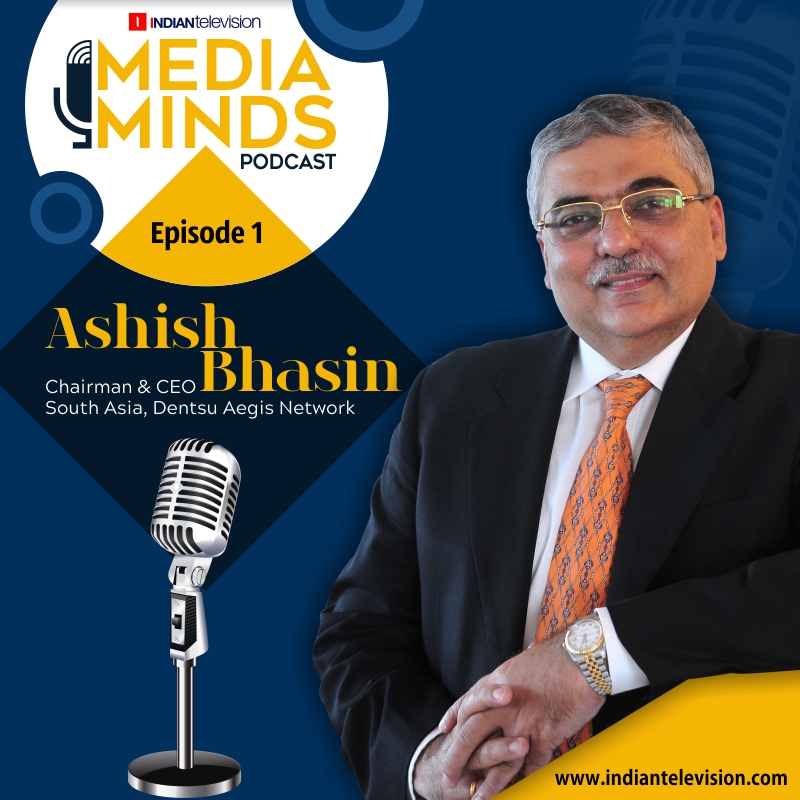
[Podcast] Media Minds: Dentsu Aegis Network’s Ashish Bhasin talks about everything digital
MUMBAI: As one of the biggest digital marketing agencies in India, Dentsu Aegis Network has been at the forefront of leveraging the digital content sphere and also establishing a robust ecosystem for this fast-growing industry. For the past two years, it has also been releasing a comprehensive Digital Advertising in India 2018 report that gives an insight into the numbers, trends and the general ecosphere of the industry.
The third edition of the report was launched earlier this year. On the occasion, Indiantelevision.com spoke to DAN South Asia chairman and chief executive officer Ashish Bhasin for the first-ever episode of our podcast: Media Minds.
We talked to Bhasin about the report and why it is important for brands to use the digital medium smartly and responsibly. Talking about the launch, Bhasin proudly says, "We are very excited and very happy with the way the whole report has come out. What's very clear to us at DAN is that there is no business that is not going to be affected by digital. And as leaders of digital communication and advertising in India, we see it as our responsibility to make sure that authentic research on that is available, which, unfortunately, has not been revealed in India so far."
He also shared how government intervention has helped the digital ecosphere to boom, the implications of the growth of programmatic advertising, the efficient use of video platforms, and the general perception of the brands and agencies towards digital in 2019 and beyond.
Listen to the complete interaction on the first episode of ‘Media Minds’ here:

Digital
India leads global adoption of ChatGPT Images 2.0 in first week
From anime avatars to fantasy covers, users turn AI visuals into culture
NEW DELHI: India has emerged as the largest user base for ChatGPT Images 2.0, just a week after its launch by OpenAI, underlining the country’s growing influence on global internet trends.
While the tool was introduced as an advanced image-generation upgrade within ChatGPT, Indian users are quickly reshaping its purpose. Instead of sticking to productivity-led use cases, many are embracing it as a creative playground for self-expression, storytelling and online identity.
From anime-style portraits and cinematic headshots to tarot-inspired visuals and fictional newspaper front pages, the model is being used to create highly stylised, shareable content. Features such as accurate text rendering, multilingual prompts and the ability to generate detailed visuals with minimal input have helped drive rapid adoption.
What sets the latest model apart is its ability to “think” through prompts, generating multiple outputs and adapting to context, including real-time web inputs. But the bigger story lies in how users are engaging with it.
In India, trends are already taking shape. Popular formats include dramatic studio-style lighting edits, LinkedIn-ready headshots, manga-inspired avatars, soft pastel “spring” aesthetics, AI-led fashion moodboards, paparazzi-style visuals and fantasy newspaper covers. Users are also restoring old photographs, creating tarot-style imagery and experimenting with futuristic design concepts.
Local flavour is adding another layer. Prompts such as cinematic portrait collages and Y2K-inspired romantic edits are gaining traction, blending global aesthetics with distinctly Indian internet culture.
The surge reflects a broader shift in how AI tools are being used in the country, moving beyond utility to creativity. As younger users, creators and social media enthusiasts experiment with new visual formats, AI-generated imagery is increasingly becoming part of everyday digital expression.
If early trends hold, ChatGPT Images 2.0 may not just be a tech upgrade but a cultural moment, giving millions a new visual language to play with online.