MAM
PHD Appoints Monaz Todywalla as CEO for India


Mumbai: PHD, part of Omnicom Media Group, has roped in Monaz Todywalla as its new chief executive officer for India. Prior to joining PHD India, Monaz held the role of VP of growth & strategy at Wavemaker India.
PHD APAC CEO James Hawkins said, “We could not have asked for a more experienced, skilled and innovative thinker to lead the India team. With Monaz’s strong emphasis on cross-functional, multi-disciplinary work, and her focus on creating an inclusive work environment, I am absolutely confident that Monaz will lead PHD India to greater heights.”
Monaz comes with close to two decades of extensive experience in the field of media, marketing and communications, with an in-depth understanding of planning, buying, strategy and execution across industries such as FMCG, Telecom, BFSI, Retail and Confectionary. Her diverse experience is best illustrated by the sheer range and number of clients she has worked closely with. From L’Oréal, Vodafone, Kotak, HDFC Life and Starbucks, to Tata Cliq, Asian Paints, MDLZ, Amul and Marico – her varied expertise has led to her being recognised as a top media and marketing professional in India.

Todywalla said, “I am excited about working with the talented and diverse team at PHD India, fostering creativity and inclusiveness in a space that is already abuzz with innovative thought. Coupled with a solution-oriented and richly-curious ethos at PHD, I am looking forward to leveraging my experience and helping our clients make the leap in a rapidly changing business landscape.






MAM
Lego brings Messi, Ronaldo, Mbappé, Vinicius together
Campaign clocks 314 million views ahead of FIFA World Cup 2026 buzz.
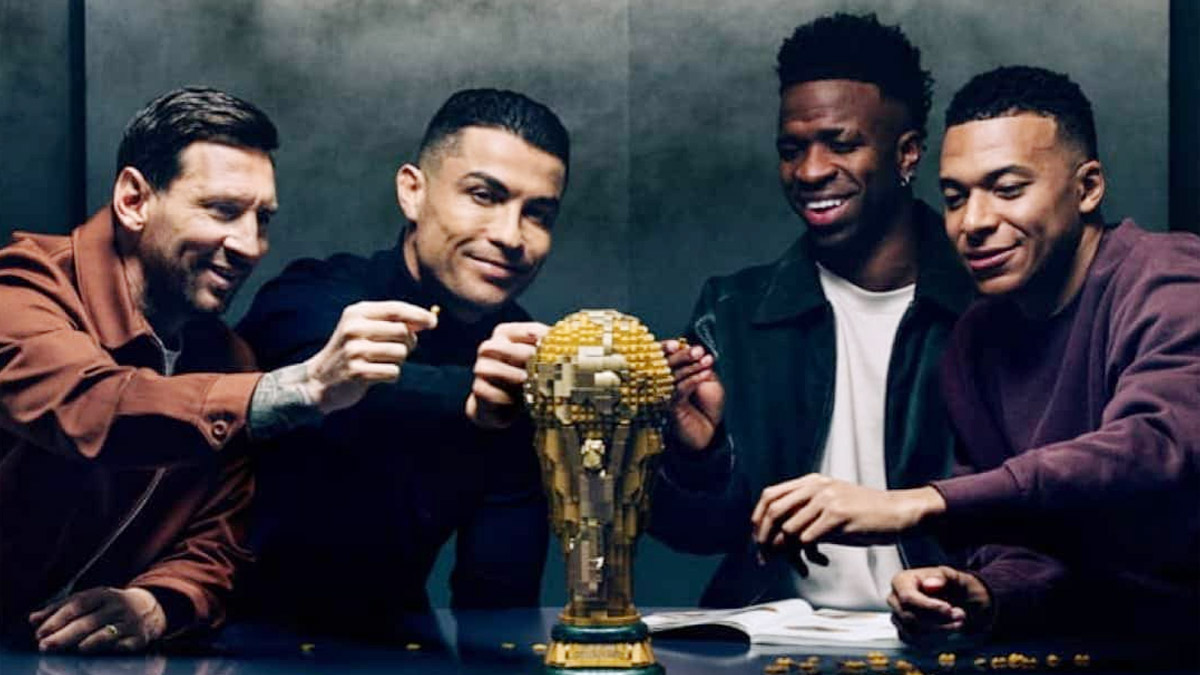
MUMBAI: Four legends, one frame and not a single tackle in sight. Lego has pulled off a crossover few thought possible, uniting Lionel Messi, Cristiano Ronaldo, Kylian Mbappé and Vinícius Júnior in a single campaign ahead of the FIFA World Cup 2026 only this time, they’re building dreams brick by brick.
Titled “Everyone wants a piece”, the campaign features the quartet assembling a Lego version of the World Cup trophy, before placing miniature versions of themselves atop it, a playful nod to football’s ultimate prize. Shared widely across social media, the ad carries a pointed disclaimer: it is not AI-generated, a subtle but telling signal in an era where even reality is often questioned.
The numbers tell their own story. The campaign has already crossed 314 million views on Instagram across the players’ accounts, with fans hailing it as a rare, almost nostalgic moment particularly for the reunion of Messi and Ronaldo, whose last shared campaign ahead of the 2022 World Cup became one of the platform’s most-liked posts.
Beyond the film, Lego is extending the play with exclusive, player-themed sets tied to each of the four stars, part of a broader football-led programme designed to ride the global momentum building towards 2026. The idea, as echoed by the players themselves, leans into the parallels between football and play experimentation, creativity, failure, and triumph.
Messi described the sets as a way to bring on-pitch moments into an imaginative, hands-on world, while Ronaldo called the transformation into a Lego figure a rare honour, blending sport with storytelling. Vinícius, meanwhile, struck a more personal note, recalling childhood moments of building with Lego and framing creativity as a universal language that transcends borders.
The timing is no accident. With the 2026 World Cup set to run from June 11 to July 19 across the United States, Canada and Mexico, and featuring an expanded 48-team format, global anticipation is already building. Argentina, led by Messi, will enter as defending champions, adding another layer of intrigue.
For Lego, the campaign does more than celebrate football, it taps into its mythology. Because when icons become figurines and rivalries turn into play, the beautiful game finds a new kind of pitch. one built, quite literally, by hand.






