Brands
Pepperfry raises Rs 250 cr for expansion
MUMBAI: Pepperfry, a furniture and home marketplace, has raised Rs 250 crore in a fresh round of funding from State Street Global Advisors, the asset management business of State Street Corporation, an investment management company with $ 2.78 trillion in assets under management (AUM).
The fresh funds will be deployed to expand Pepperfry’s experience centres in tier II towns, invest behind developing AR/VR technology for virtual touch and feel, and enhance the private brand franchise in preparation for its next financial milestone of an IPO.
Pepperfry founder and CEO Ambareesh Murty considers the company as fortunate to have partners who believe in Pepperfry’s business and are aligned with their strategy.
Including this current round, Pepperfry has raised over Rs1200 crore of capital since it began operations six years ago.
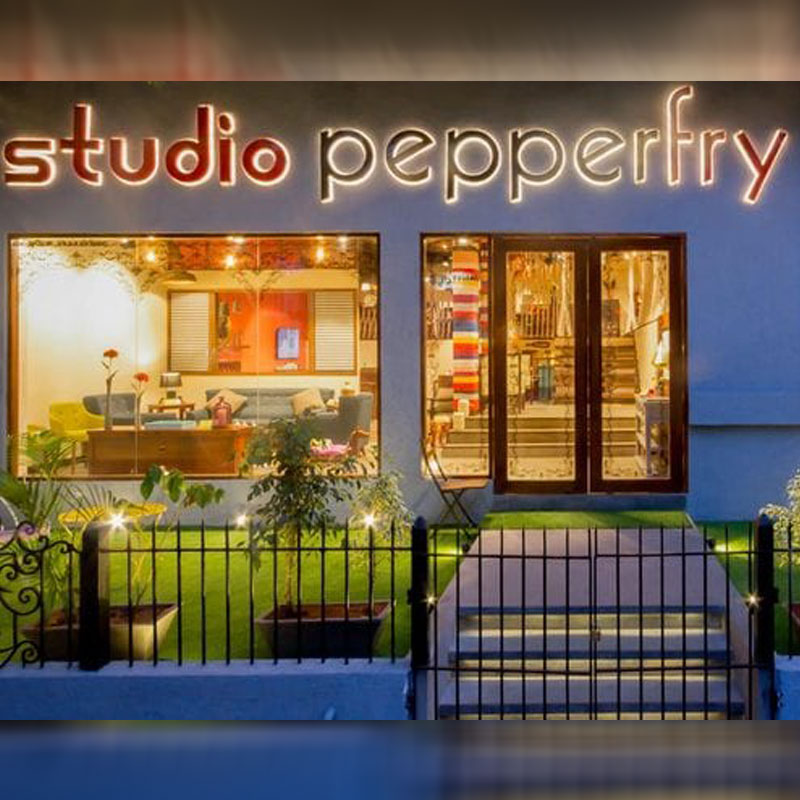
Home furniture and decor is amongst the largest consumption categories in India, expected to reach Rs 350,000 crore in market size by 2020. Leveraging this opportunity, Pepperfry aims to differentiate across the value chain, build supply and demand side differentiation by working with thousands of small manufacturers, develop an extensive portfolio of private brands, establish an omnichannel footprint of over 25 Pepperfry experience centres and build India’s largest consumer-facing big-box supply chain serving customers in 500 Indian cities.
In the last five years, the company’s revenue has grown at a compounded annual growth rate of over 83 per cent, and with this fresh round of investment, aims to accelerate past the break-even point and become a profitable business over the next 12-18 months.

Brands
Godrej clarifies ‘GI’ identifier after logo similarity debate
Says GI is not a logo, will not replace Godrej signature across products.
MUMBAI: In a branding storm where shapes did the talking, Godrej is now spelling things out. Godrej Industries Group (GIG) has issued a clarification on its newly introduced ‘GI’ identifier, addressing questions around its purpose and design following a wave of online criticism. At the centre of the debate were two concerns: whether the new mark replaces the long-standing Godrej logo, and whether its geometric design mirrors other corporate identities.
The company has drawn a clear line. The Godrej signature logo, it said, remains unchanged and continues to be the sole logo across all consumer-facing products and services. The ‘GI’ mark, by contrast, is not a logo but a corporate group identifier intended for use alongside the Godrej signature or company name, and aimed at stakeholders such as investors, media and talent rather than consumers.
The need for such a distinction stems from the 2024 restructuring of the broader Godrej Group into two separate business entities. With both continuing to operate under the same Godrej name and signature, the identifier is positioned as a way to differentiate the Godrej Industries Group at a corporate level.
The rollout, however, triggered a broader conversation on design originality. Critics pointed to similarities between the GI mark’s geometric composition and logos used by companies globally, raising questions about distinctiveness.
Responding to this, GIG said its intellectual property and legal review found that such overlaps are common in minimalist, geometry-led design systems. Basic forms such as circles and rectangles appear across dozens of brand identities worldwide, the company noted.
It added that the identifier emerged from an extensive design process and was chosen for its simplicity, allowing it to sit alongside the Godrej signature without competing visually. While acknowledging that elemental shapes may appear less distinctive in isolation, the group emphasised that the mark is part of a broader identity system that includes a custom typeface, sonic branding and other proprietary elements.
Following legal and ethical assessments, the company said it found no impediment to using the identifier, reiterating that the GI mark is a corporate tool not a consumer-facing symbol.
In short, the logo isn’t changing but the conversation around it certainly has.