MAM
Paint it posh Birla Opus adds luxury strokes to Indian wall finishes

MUMBAI: Why just colour your walls when you can couture them? Birla Opus Paints is bringing the runway to the living room with its new Designer Finish range, two luxe collections that aim to give Indian interiors a high-fashion upgrade, one wall at a time.
Unveiled by Aditya Birla Group’s Grasim Industries, the Dream and Timeless collections are part of a bold push to make walls more than just backdrops. Think high-definition 3D textures, metallic shimmers, and artisanal finishes inspired by nature and Italian craftsmanship, all underpinned by eco-friendly innovation.
The Dream Collection leans into drama, offering 14 nature-themed designs across 140 permutations. Whether you fancy a wall that evokes the sea or the shimmer of clouds at dusk, the collection comes with water-resistant, long-lasting shades made to impress. Bonus: it’s not just beautiful, it’s built to last.

Meanwhile, the Timeless Collection keeps things earthy and elegant. With lime-based finishes that mimic the raw textures of stone, clay and marble, it’s made for those who like their luxury with a little rustic soul. And both ranges walk the green talk, with low-VOC formulations that keep indoor air quality breathable and healthy.
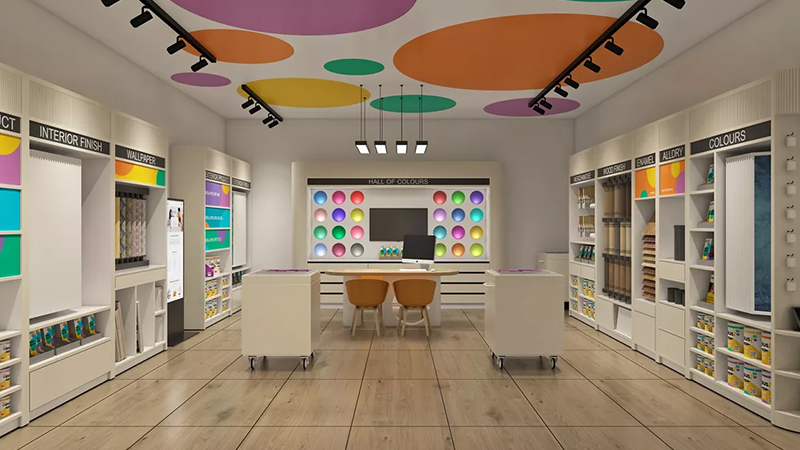
But the real flex? Experience-led retail. Birla Opus is not just selling paint; it’s selling inspiration. The brand is rolling out Paint Studios in cities like Mumbai, Gurugram and Lucknow immersive spaces where customers can see and touch the new finishes before committing to a makeover. These studios, along with a growing network of franchise stores, are part of the brand’s ambitious plan to make upscale design feel personal and accessible.
Commenting on the launch Birla Opus Paints CEO Rakshit Hargave said, “At Birla Opus Paints, we understand that today’s consumers are seeking more than just products; they desire experiences and products that reflect purpose and value.Our aim is not only to redefine creativity with advanced design technology and sustainable solutions, but to also set new standards in interior luxury.At the back of our Paint Studio and franchisee stores launches across India, we’re now presenting consumers with these exquisite finishes inspired from nature’s beauty and Italian artistrythat will definitely adda taste of luxury to your home.”
With plans to expand into more metros including Bangalore, Delhi, Hyderabad and Kolkata, Birla Opus is aiming for national saturation and wall domination.
Because in 2025, walls don’t just wear paint. They wear personality.







MAM
WPP appoints Estée Lauder’s Anne-Isabelle Choueiri as chief transformation officer
Former Estée Lauder executive to lead operations, technology and culture overhaul under WPP’s three-year growth plan

LONDON: WPP has appointed Anne-Isabelle Choueiri as chief transformation officer in a newly created role tasked with delivering the group’s Elevate28 strategy.
Choueiri joins from The Estée Lauder Companies, where she led enterprise-wide strategic initiatives, including the “One ELC” operating model and major upgrades to enterprise marketing, data and analytics capabilities. She also led the redesign of enterprise technology teams and served on the company’s AI taskforce, driving AI strategy, adoption and value realisation across the business.
At WPP, she will be responsible for designing, implementing and embedding the operating model behind Elevate28, the company’s three-year growth plan unveiled in February 2026. She will lead efforts to improve innovation, efficiency and integration across WPP’s client offerings, with a focus on delivering agile, outcome-driven solutions and measurable growth.
Choueiri will oversee organisational transformation across the group, working closely with product and enterprise technology teams to deploy AI, data and technology to build new capabilities and improve operational performance. She will also work with the people function to embed cultural change, strengthen an agile performance mindset and support talent development across the organisation.
Before joining Estée Lauder, she held senior roles across consulting and digital agencies, including at Accenture, Masaï (a Bain & Company spin-off), and Kearney, with experience spanning strategy, data and digital marketing transformation.
Cindy Rose, chief executive officer of WPP, said Choueiri brings a strong track record of leading large-scale transformation across operations, technology and culture, adding that her appointment will help accelerate the group’s next phase of growth under Elevate28.
Choueiri said WPP’s strategy represents an ambitious opportunity to reshape how the company operates and delivers for clients, adding that she looks forward to building integrated solutions and fostering a culture of innovation and change.
She will be based in New York and will join WPP’s executive committee.







