MAM
Over three decades, marketing has seen a paradigm shift


MUMBAI: On a long trip, the mode of travel may encompass an assortment including air, train, road, boat. Even within these legs, the experience could differ significantly, for example driving on a mountain road, versus regular old ride through the city.
Similarly, a marketer’s journey over the last three decades has seen multiple metamorphoses, entailing a continuous need for change and adaptation.
Those were the days, when planning media spends was a simple matter of allocating monies between Ramayana, Hindi feature films, and Chitrahaar on DD, with the option of throwing in Krishi Darshan for the adventurous rural marketer. The satellite TV boom, bringing in hundreds of channels and programmes, added complexity to media planning, and forced marketers to slice and dice the communication target group in terms of multiple demographic parameters. “Focused communication” really took shape in the nineties.

And then the internet explosion, along with the advent of smartphones, dramatically changed the rules of the game. Digital marketing and social media are the buzzwords now. Engaging the viewer is paramount. Communication can now be targeted at a specific age group, even at a micro level of a city. Youth today interact with the world through their devices. TV viewing and print media are almost skipping this generation. Even a few years ago, advertising on live sports telecasts was a sure-fire way of reaching the youth. Today, even that is transitioning to the Hotstar and Cricbuzz of the world.
This is having a significant impact on consumer buying behaviour, and the purchase decision-making process. The erstwhile classical marketing’s five step process – spanning problem identification, information search, evaluation of alternatives, purchase decision and post-purchase behaviour – is passé. The three Moments of Truth (MOT) theory has been flipped on its head.
As per traditional theory, the first MOT is when the consumer interacts with the brand for the first time, say, on a supermarket shelf, and decides to pick up a brand, over others. The second MOT is when she experiences the brand, which may be once (for example, in a restaurant), or maybe multiple times (like a shampoo). A few proceed to the third MOT, and become advocates (positive) or critics (negative), based on their individual experiences. This journey has now been collapsed to what is termed the Zero Moment of Truth (ZMOT). Thanks to the explosion in internet usage, every new brand or product is now researched, where consumers are vicariously exposed to the entire journey at one shot, through others’ experiences. Managing social media is critical now. For example, while evaluating options to buy a car, if one comes across half a dozen negative comments about a specific brand, it is very likely that this brand will drop out of one’s consideration set.
A few decades ago, there was allegedly a thumb rule across the world – that a happy consumer will tell five others, while a dissatisfied consumer will crib to 21 people. Today these numbers have magnified manifold, and are probably in thousands, if not millions, thanks to the power of viral posts in social media.
30 years ago, fashion and lifestyle trends in the western world would take their own sweet time, maybe two to three years, to catch on in India. Today all brands need to keep pace with global innovations, since consumers are constantly exposed to these. Discerning powers of consumers, thanks to the plethora of information available, have taken quantum leaps. Earlier, ‘value-for-money’ was the key for mass marketing. Today’s informed consumer is willing to pay for value-added features, leading to the ‘money-for-value’ concept.
Changes, and the necessity to adapt to these, will be keeping marketers on their toes. From print/radio/cinema, to TV (single channel to hundreds), to the internet with its multiple social media platforms, to live streaming and OTT – the milestones and the route map keeps evolving. It’s perhaps foolhardy to even attempt to predict what’s coming next.
(The author is Navneet Youva stationery division chief strategy officer. The opinions expressed here are his own and Indiantelevision.com may not subscribe to them.)







MAM
Joy Personal Care launches Hydra Refresh Gel summer campaign
Sanya Malhotra fronts TVC promoting 48-hour non-sticky hydration.
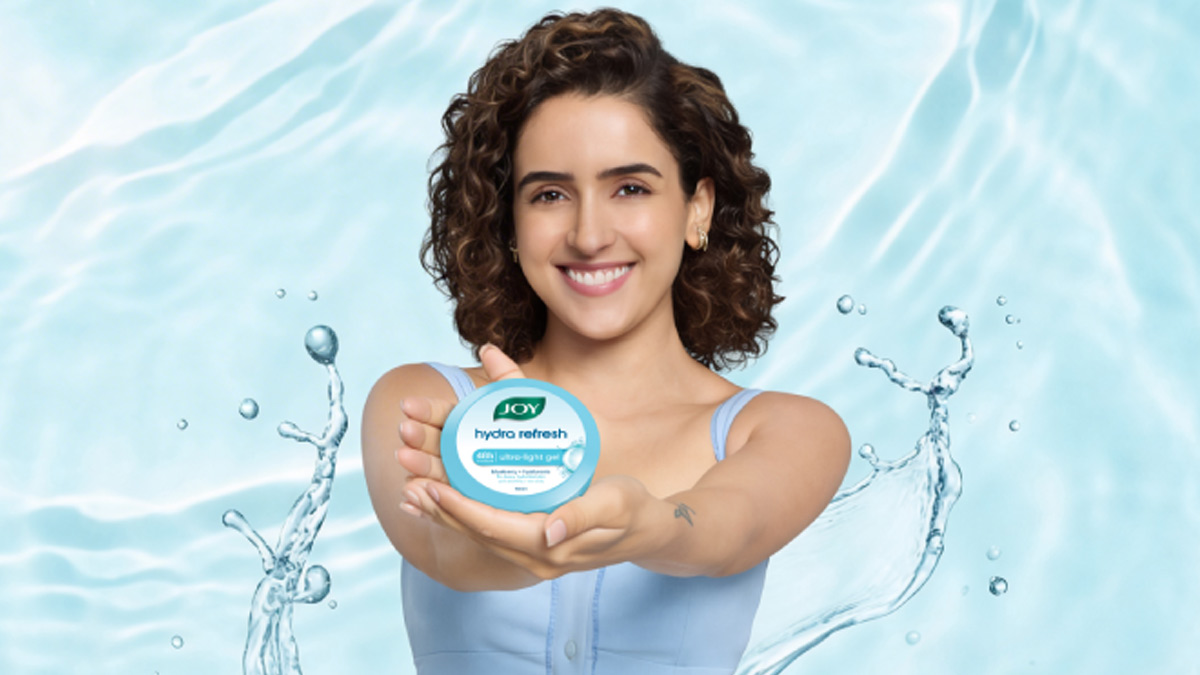
MUMBAI: Joy Personal Care just gave summer a cool new twist because when the heat is on and your skin is begging for relief, even the gel knows how to stay refreshingly light. Joy Personal Care, part of RSH Global, has rolled out a new summer television campaign for its Hydra Refresh Gel, featuring brand ambassador Sanya Malhotra. The campaign positions the lightweight, non-sticky formula as the perfect everyday solution for intense heat and fast-paced lifestyles, promising up to 48 hours of moisture.
The TVC depicts a relatable moment of heat-induced skin fatigue on a sweltering day. Sanya Malhotra appears with a refreshing presence, introducing the gel as a quick, comfortable fix that transforms discomfort into a feel-good experience. The narrative blends humour and realism, reinforcing the product’s ease of use and relevance during summer.
RSH Global co-founder and chairman Sunil Agarwal said, “As India braces for soaring temperatures and an intense summer ahead, the need for skincare that delivers effective, non-sticky hydration becomes even more relevant. Hydra Refresh Gel is designed to meet this need with a lightweight formulation that fits seamlessly into everyday routines.”
RSH Global chief marketing officer Poulomi Roy added, “While drinking more water is important, it doesn’t always translate into visible results on the skin. This campaign builds on that insight, bringing the product’s effectiveness to the forefront in a relatable way.”
Sanya Malhotra shared, “Working with Joy Personal Care has always been a truly enjoyable experience. What I really enjoy about the product is how effortlessly it fits into everyday routines, especially during the summer when your skin needs hydration without feeling heavy.”
The campaign, marking the product’s television debut, will be amplified across digital and social platforms to drive wider engagement during the summer season.
In a season where the sun shows no mercy, Joy Personal Care isn’t just selling a gel, it’s offering a cool, dependable companion that keeps skin happy without the sticky aftermath, proving that sometimes the best way to beat the heat is to keep things refreshingly simple.








