MAM
OpenAI ropes in George Osborne to steer global Stargate push

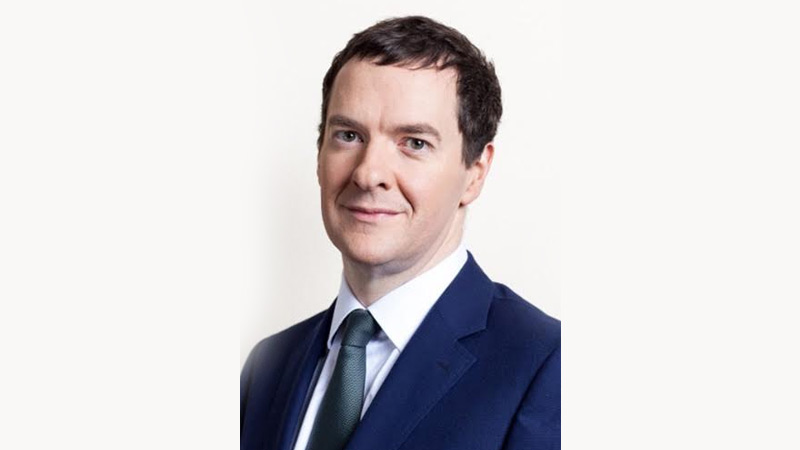
London: OpenAI is bringing politics into its AI playbook. The ChatGPT maker has appointed George Osborne, Britain’s former finance minister, to spearhead its global expansion strategy, underscoring how artificial intelligence is fast being treated as national infrastructure rather than a private tech bet.
Osborne will take charge as managing director and head of the company’s OpenAI for Countries initiative, a programme designed to work with governments on national AI strategies. He is set to assume the role in January, focusing on overseas expansion and public-sector partnerships.
The initiative is an international extension of OpenAI’s ambitious $500 billion Stargate programme to build data centres in the United States, signalling a push to export both computing muscle and governance frameworks. OpenAI says the effort aims to ensure AI systems are built on democratic values while strengthening local innovation ecosystems, education and infrastructure.

Osborne, who served as chancellor of the exchequer from 2010 to 2016, is expected to represent OpenAI at the World Economic Forum in Davos next month, placing the company squarely in global policy conversations.
The appointment reflects rising geopolitical stakes around AI, where influence now hinges not just on algorithms, but on who writes the rules. OpenAI is betting that power, like data, scales best when governments are on side.







Brands
ZEEL transfers syndication business, invests Rs 505 crore in IP push
Restructuring, stake buy and FCCB moves signal sharper content strategy
MUMBAI: In the content economy, owning the story is half the battle monetising it is the real game, and Zee Entertainment Enterprises is doubling down on both. The company has approved the transfer of its syndication and content licensing business to its wholly owned subsidiary ZI-IPR Enterprises, alongside an investment of Rs 505 crore aimed at strengthening its play in content intellectual property (IP) acquisition, management and monetisation. The move, effective April 1, 2026, will see the business transferred on a slump sale basis at book value, including all associated assets, liabilities and commercial rights effectively consolidating IP operations under a more focused structure.
At its core, the restructuring signals a strategic shift. As content consumption increasingly fragments across digital and global platforms, the value of IP lies not just in creation but in how efficiently it can be distributed, repackaged and monetised across markets. By housing its syndication engine within ZI-IPR Enterprises, ZEEL appears to be building a more agile and scalable ecosystem, one that can better extract value from its vast content library while adapting to evolving distribution models.
But the company’s ambitions are not limited to restructuring. ZEEL has also approved an investment of up to Rs 20.09 crore in Culture of Real Experiences (CORE), acquiring a 51 per cent stake in the entity. The move expands its footprint into the broader creative and experiential space, suggesting a push beyond traditional broadcasting into areas where content, culture and immersive experiences intersect.
At the same time, ZEEL has moved to tidy up its financials, approving the redemption of $23.9 million in outstanding foreign currency convertible bonds (FCCBs) and cancelling an unused $215.1 million commitment. The twin steps are expected to ease pressure on its treasury, freeing up capital and improving financial flexibility as the company invests more aggressively in its IP strategy.
Taken together, the decisions reflect a company in recalibration mode streamlining legacy structures, sharpening its focus on content ownership, and exploring new avenues for growth. In a market where the lines between television, streaming and experiential entertainment are increasingly blurred, ZEEL’s latest moves suggest it is not just creating content, but building a system to make that content travel further and pay better.






