Brands
On National Croissant Day, know how Indians are turning a French classic into a spicy snack

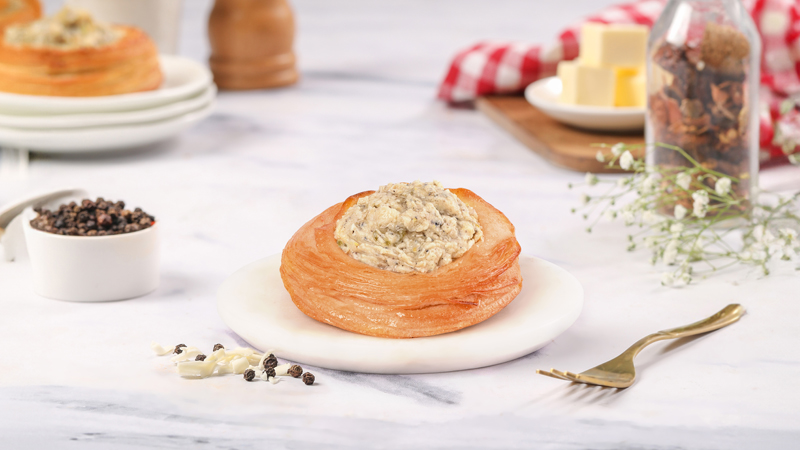
MUMBAI & BENGALURU: The croissant is shedding its café-only reputation in India—and picking up spice along the way. Fresh data from ITC Sunfeast Baked Creations and Swiggy shows the flaky French staple rapidly becoming an all-day Indian snack, with orders surging nearly 20 per cent year-on-year and more than 1.5 million croissants ordered across major metros in the past year alone.
Nearly one in three croissants ordered in India’s big cities now comes from ITC Sunfeast Baked Creations, underlining how quickly the category is scaling. To mark National Croissant Day on January 30, the brand has partnered with Swiggy to launch CroissantVerse, a curated discovery experience offering 18 sweet and savoury variants, available through Swiggy’s health-focused EatRight category.
The biggest shift is not just volume, but behaviour. Croissants are no longer waiting for brunch. They are showing up at chai breaks, post-work snack runs and midnight hunger pangs, competing directly with burgers, wraps and puffs in the same hunger window—just flakier.

Indian preferences are also rewriting the flavour rulebook. While croissants globally skew sweet, 56 per cent of croissant orders in India are savoury. In Mumbai and Pune, savoury demand crosses 60 per cent, driven by fillings such as chicken, egg and cheese, mushrooms and sandwich-style combinations.
Formats are evolving fast. ITC Sunfeast Baked Creations has pushed beyond the classic crescent with pinwheel croissants inspired by thecha-style peanut, chilli and garlic flavours, and CroPies—croissant shells filled with hearty savoury fillings. Options range from paneer bhurji and chicken béchamel to chicken tikka and mutton keema, blurring the line between snack and meal.
“Croissants are no longer an occasional café indulgence,” said Rohit Bhalla, business head – food tech at ITC Limited. “Our goal is to make them a regular, everyday choice for Indian households. Formats like CroPies and pinwheel croissants have been instant hits, reflecting the growing preference for snack-meal hybrids, while classics like the French butter croissant, frangipane almond croissant and dark fantasy chocolate loaded croissant continue to see strong repeat demand.”
Geographically, croissant culture is clustering in metros. Bengaluru, Chennai, Hyderabad, Mumbai and Pune are driving demand, with ITC Sunfeast Baked Creations emerging as the most preferred croissant brand in Bengaluru, Chennai and Hyderabad, while steadily scaling up in Mumbai and Pune. Among classics, almond croissants remain the top choice, with ITC Sunfeast’s frangipane almond croissant ranking among the most ordered across cities.
Swiggy’s data shows croissants now cutting across eating moments. “What’s interesting is how croissants are being chosen across very different occasions—from evening snack cravings to late-night dessert runs,” said Sidharth Bhakoo, chief business officer at Swiggy Food Marketplace. “Consumers are clearly treating them as full-fledged snack options rather than café accompaniments.”
Once a brunch indulgence, the croissant is now India’s anytime bite—and it’s not just butter that’s driving demand, but spice, speed and scale.






Brands
ITC Sunfeast Farmlite launches Sugar Free Cookies range
New variants offer guilt-free indulgence for health-conscious snackers.
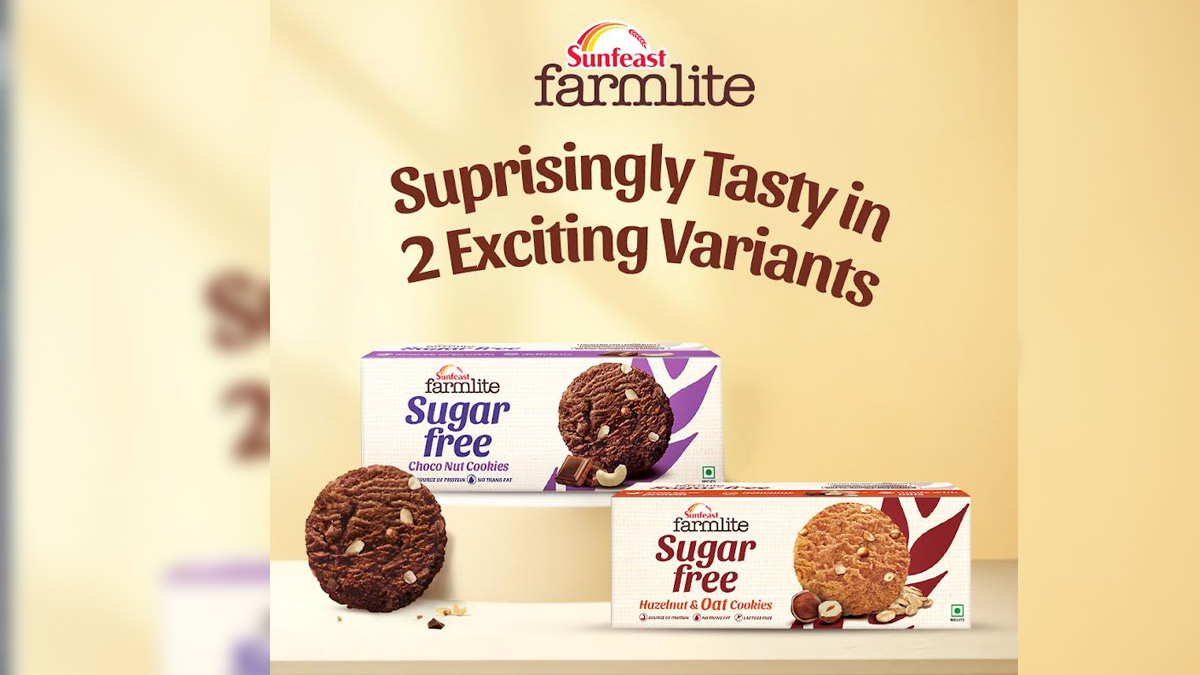
MUMBAI: ITC Sunfeast Farmlite is sweetening the deal for biscuit lovers who want to have their cookie and eat it too without the sugar. The better-for-you biscuits range from ITC Foods has expanded its portfolio with the launch of an all-new Sugar Free Cookies line, aligning with the company’s vision of ‘Help India Eat Better’. The range is designed for consumers who are rethinking sugar in their daily snacking but refuse to compromise on taste and indulgence.
The collection debuts with two tempting variants: Choco Nut Cookies and Hazelnut & Oats Cookies. Both are a source of protein and contain no trans-fat, while the Hazelnut & Oats variant is also lactose-free.
ITC Ltd. vice president (marketing), biscuits, foods division, Suraj Kathuria said, “At Sunfeast Farmlite, we believe mindful snacking should never come at the cost of indulgence. With this launch, we are catering to the growing need for guilt-free snacking while delivering a rich, satisfying cookie experience.”
ITC Ltd. vice president & head of food sciences for foods division Dr Shantanu Das added, “We have applied robust food science to develop cookies that are sugar-free while preserving the taste and texture consumers love.”
Each cookie comes in convenient single-serve packs to maintain texture and freshness. Both variants are available in 100g packs priced at ₹100 and can be found on quick-commerce platforms including Blinkit, Swiggy Instamart, and Zepto.
In a market increasingly leaning towards healthier choices, ITC Sunfeast Farmlite’s new Sugar Free Cookies prove that cutting sugar doesn’t mean cutting joy. For the health-conscious yet indulgent snacker, this could be the perfect bite-sized solution.






