MAM
O&M’s polio television ads triumph at EFFIES

MUMBAI: A Unicef -supported television and radio campaign to fight polio won a silver medal at this year’s EFFIE Awards given by the advertising industry. The ceremony took place a few days ago.
The media campaign, developed by Ogilvy & Mather and featuring Amitabh Bachchan, came first in the services category at the annual awards.
According to a official release, Unicef’s India reprsentative Maria Calvis said, “This award is a credit to the hard work of the Government of India and its polio immunisation programme. The television and radio campaign has made an important contribution in raising awareness and motivating families to get their children protected from polio.”

The release informs that the media blitz was launched in January 2003 for National Immunisation Day. A research study in UP commissioned by Unicef found that more than 94 per cent of respondents reported that they came to a polio booth after seeing the spots on television.
The campaign coincided with the immunisation of an additional six million children at polio booths across the state between November 2002 and February 2003.
Calivis added, “This final push to beat polio is on track, thanks to the efforts of the government and its partners. We will continue to rely on the media to get the message home that no child is safe from polio until the disease is totally eradicated.”
About 112 polio cases have been reported so far in India this year, compared with 1600 cases in 2002. The next polio round is set for 14 September in 10 states covering northern India, Gujarat and West Bengal.





MAM
One Hand Clap acquires Agenseed to enter distribution space
Creative agency expands into full-stack services with strategic buyout.
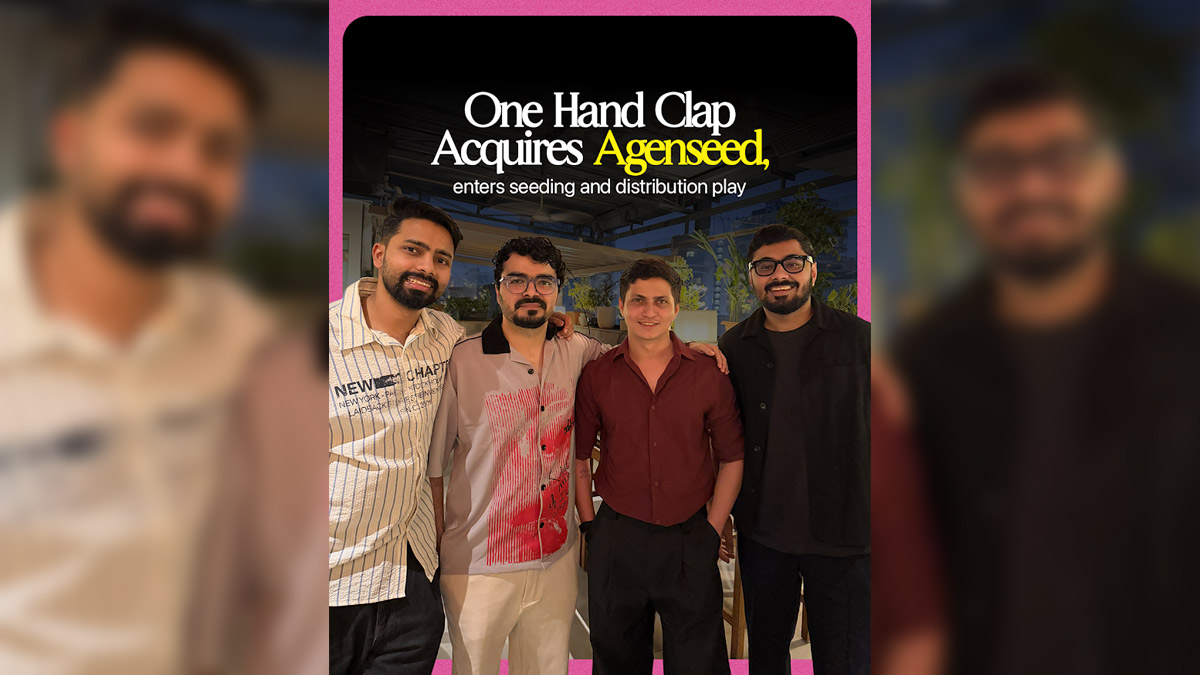
MUMBAI: One Hand Clap has decided to stop just clapping for great ideas now it wants to make sure they actually travel. The leading new-age creative agency and production house has acquired Agenseed, a seeding and distribution firm, marking its formal entry into the distribution segment. The move is aimed at expanding its role across the entire marketing value chain and unlocking new growth opportunities.
One Hand Clap expects the new distribution vertical to contribute up to 15 per cent of its overall revenues over the next 12–18 months, signalling a clear strategic shift beyond pure creative services.
Agenseed, founded by Monish Hardasani and Akram Malik, will function as the agency’s dedicated distribution arm. This acquisition strengthens One Hand Clap’s position as it aims to become a full-stack creative and distribution company in India’s rapidly growing digital advertising market.
With over 90 million posts shared daily on Instagram and brands allocating 25–35 per cent of their digital budgets to distribution and creator-led reach, amplification has become critical to campaign success. By integrating distribution early into the creative process, the agency hopes to help campaigns gain stronger cultural traction and momentum.
One Hand Clap founder Aakash Shah said, “The future of advertising is not just about executing great ideas, but about placing them intelligently. By owning both storytelling and distribution, we can drive greater impact for brands while opening up new revenue streams.”
Agenseed co-founder Monish Hardasani added, “The future belongs to ideas designed to travel. This partnership allows us to integrate distribution thinking at the source.”
Founded in 2019 by former AIB leaders Aakash Shah and Naveed Manakkodan, One Hand Clap has worked with major brands including Swiggy, Google, Netflix India, Crocs, Duolingo, CRED, Bumble, BGMI and Chetak. The agency also secured investment from Zerodha co-founder Nikhil Kamath last year.
In an increasingly fragmented attention economy, this acquisition reflects a broader industry shift where agencies are building end-to-end capabilities to stay competitive. One Hand Clap is clearly clapping louder and ensuring its ideas now reach much further.






