
Brands
Ola Electric revenue falls 50 per cent as margins and cash discipline improve
Revenue halves, but stronger margins, lower costs and battery expansion reshape the business


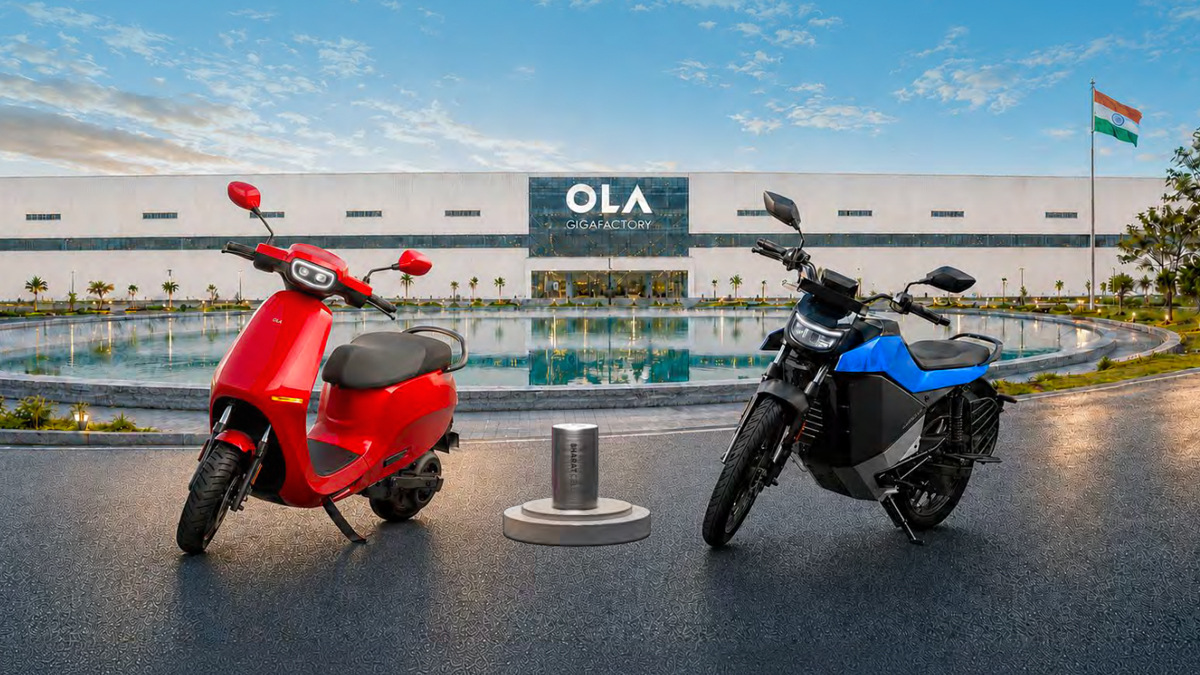
MUMBAI: Ola Electric spent FY26 rewriting its growth playbook, trading a high-spend expansion strategy for tighter costs, stronger unit economics and greater control over its battery supply chain.
The Bangalore-based electric two-wheeler maker saw operational revenue fall 50.1 per cent to Rs 2,253 crore in FY26 from Rs 4,514 crore a year earlier. Deliveries also dropped to 173,787 units from 359,221 units, leaving the company with an 11.61 per cent share of India’s electric two-wheeler market.
Yet, beneath the weaker top line, the company made progress on margins and cash discipline. Consolidated gross margin reached a record 38.5 per cent in Q4 FY26, taking the full-year figure to 30.6 per cent from 17.9 per cent in FY25.
The company also generated positive operating cash flow in the fourth quarter, while its full-year operating cash outflow narrowed sharply to Rs 775 crore from Rs 2,391 crore. Free cash flow outflow fell to Rs 1,492 crore from Rs 3,367 crore.
The improvement came alongside a broad operational reset, with service recovery becoming one of Ola Electric’s key priorities.
Network rationalisation, automated governance and tighter workforce management helped bring operating expenses down to Rs 383 crore in Q4, compared with Rs 779 crore in the same quarter a year earlier.
The company also reported a significant improvement in vehicle service metrics. Warranty costs fell 89.4 per cent to Rs 59 crore from Rs 555 crore in FY25, while average service turnaround times dropped by around 88 per cent.
Ola attributed the improvement in part to the maturity of its Gen 3 vehicle architecture, as it sought to address earlier execution and service-related challenges.
The tighter operating model also helped reduce consolidated net losses to Rs 1,833 crore in FY26 from Rs 2,276 crore in FY25. Standalone loss stood at Rs 113 crore.
While its core electric two-wheeler business remains central, Ola Electric is increasingly positioning itself as an integrated energy company.
The company completed installation of its 6 GWh Gigafactory platform in Tamil Nadu, with 2.5 GWh of capacity operational. It also commercially deployed its proprietary 4680 Bharat Cell as it works to bring more of the battery value chain in-house.
The company has launched Shakti home and commercial battery systems and outlined plans for its industrial-scale Mahashakti energy storage platform.
It has also identified a non-binding supply pipeline of more than 35 GWh. This includes a proposed deal of up to 20 GWh with Axis Energy extending through 2032.
The strategy is aimed at capturing more value across the energy ecosystem while reducing dependence on external battery suppliers.
Ola is also trying to reduce its exposure to supply-chain volatility, particularly around rare-earth materials.
The company accelerated development of an in-house ferrite motor and has been working on proprietary technologies spanning anti-lock braking systems, dry-electrode manufacturing and artificial intelligence-led operations.
Its AI systems are handling around 200,000 connected calls a day, adding another layer of automation to its service and operating infrastructure.
Research and development remained a significant investment area, with consolidated R&D spending at Rs 461 crore during FY26. The company’s intellectual property portfolio now includes more than 428 patent filings.
Its product portfolio has also expanded beyond scooters through the Roadster motorcycle range, as Ola looks to build a broader electric mobility offering.
The operational reset was accompanied by efforts to strengthen the balance sheet.
Ola Electric ended FY26 with total assets of Rs 7,788 crore and total equity of Rs 3,351 crore. Total borrowings fell to Rs 2,476 crore from Rs 3,043 crore a year earlier.
The company further raised Rs 780.23 crore through a Qualified Institutions Placement on 4 June 2026. It issued 217.57 million shares at Rs 35.86 each, with the proceeds intended for debt reduction and organic growth.
The capital raise gives Ola additional room to fund its next phase while keeping a closer watch on its cash position.
The reset has not been entirely smooth.
The company’s statutory auditors issued a qualified opinion on internal financial controls relating to a delay in year-end physical inventory verification at subsidiary Ola Electric Technologies.
Management said the delay did not result in inventory misplacement or financial loss and that the inventory position was subsequently validated through the company’s enterprise resource planning system.
Ola also filed a settlement application with the Securities and Exchange Board of India (SEBI) following an April 2026 show-cause notice concerning earlier disclosures.
The company is separately contesting insolvency applications filed by vendors before the National Company Law Tribunal, without admitting liability.
Ola’s latest product push includes bookings for the S1Z electric scooter, priced at Rs 79,999 and featuring indigenous lithium iron phosphate cell technology.
The product comes as Ola attempts to balance volume growth with the financial discipline that has become central to its FY26 strategy.
The numbers show a business still operating under pressure, with revenue and deliveries significantly below the previous year. But stronger margins, lower warranty costs, reduced cash burn, lower borrowings and growing battery capabilities suggest that Ola Electric is emerging from FY26 as a leaner operation.
The next test will be whether that improved cost structure can support sustainable growth as Ola moves beyond electric scooters and deeper into batteries, energy storage and the wider electric mobility ecosystem.






