MAM
Nvidia should have benched Jensen Huang, not sacked him
The founder broke the rules and had to answer for it. But a board in a blind panic has turned a scandal into a crisis


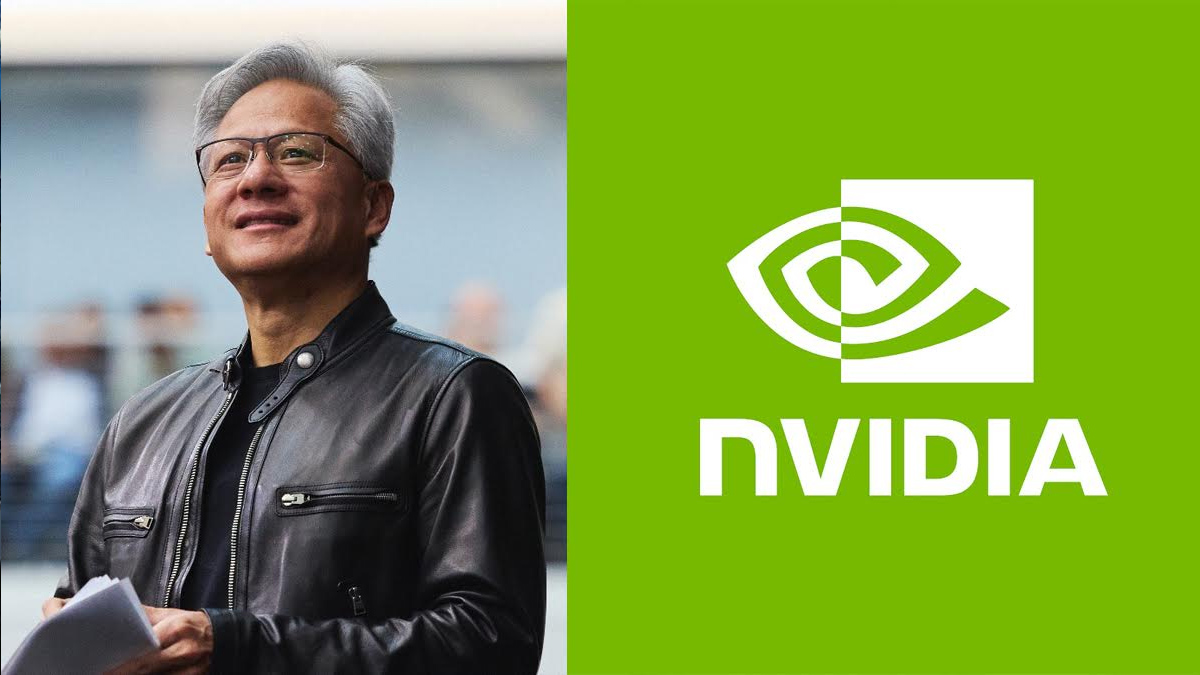
Mumbai: The leather jacket has left the building. I am not sure it needed to.
Jensen Huang, the man who turned Nvidia from a maker of gaming graphics cards into the engine room of the AI boom, quit on Thursday. He gave up the posts of president and chief executive officer and walked off the board too. Effective immediately. No notice period. No farewell lap. The board’s release gave no reason.
Barely three weeks earlier he was the toast of Europe. He held court with German chancellor Friedrich Merz in Berlin, dropped in on French president Emmanuel Macron in Paris and then packed Berlin’s Tempodrom with some 3,000 people for his GTC keynote. On LinkedIn he joked that he had been “the opening act for a family of ducks”.
By this week the swagger had gone. Bloomberg, quoting a person familiar with the situation, reported that Huang ended his fight looking spent, shrugging off questions with “whatever” and “I don’t care”. That is not the voice of a man who chose to go. That is the voice of a man who was told to.
So let us ask the questions everyone is asking, and try to answer them honestly.
Why did he really go? Not because of the first affair. When The New York Times reported in late October that US intelligence suspected Alice Huang, an executive at Singapore cloud firm and Nvidia customer Megaspeed, of being a Chinese asset who had grown close to Jensen, the board stood by him. Over the weekend he admitted in a memo to staff that he had been unfaithful to his wife Lori. The board ordered an independent probe, reportedly led by law firm Wachtell Lipton, and said it still trusted him. He pledged to carry on.
What sank him came on Wednesday. Reports surfaced of a second relationship, this time with an Nvidia employee. The board met that evening. The Wall Street Journal reported directors were preparing to oust him. By Thursday morning he had resigned. Hours later Reuters reported yet another intimate relationship with a staffer.
That sequence matters. One affair with an outsider is a family matter wrapped in a security question. A relationship with someone inside the company is a governance matter, full stop.
Should an affair cost you your job? On its own, no. Amazon’s Jeff Bezos survived his affair and divorce. As did Bill Gates. As have many other CEOs in the past. Bill Clinton survived Monica Lewinsky, an impeachment and a Senate trial, and finished his term. Voters judged the man on the economy. Business ethics experts told Axios much the same about Huang: the affair with Alice Huang was probably not a sacking offence because she was not on the payroll.
But there have been others who did not survive. Intel pushed out Brian Krzanich in 2018 and McDonald’s sacked Steve Easterbrook in 2019 for consensual relationships with employees. Neither ran a company worth trillions. Every large American company now has a rulebook on this, because a boss sleeping with a subordinate exposes the company to harassment claims, favouritism rows and lawsuits from everyone passed over for promotion.
Was he a security risk? This is where the hysteria outran the evidence.
Nobody has shown that Huang handed anything to anyone. US officials reportedly do not believe he knew of Alice Huang’s intelligence activities. He was never given a defensive briefing, the warning American counter-intelligence gives people it thinks are being targeted. If the spooks were that worried, surely somebody would have tapped him on the shoulder. Nvidia says customers like Megaspeed get ordinary business information and nothing relevant to national security. The board says it has no reason to believe secrets were compromised. Inspections by the US Commerce Department, Malaysian authorities and Nvidia, the company says, found no evidence of chips being smuggled into China.
Yet the smoke is thick. A classified US memo reportedly names Alice Huang as a recruit of China’s Ministry of State Security. Megaspeed’s Malaysian sister company bought at least $4.8 billion worth of kit containing Nvidia chips between June 2024 and February 2026, and a Commerce official found Nvidia gear still sitting in boxes at a Malaysian site. The Justice Department’s national security division is now investigating Megaspeed over possible export violations. And, awkwardly, Nvidia’s general counsel Tim Teter wrote to the Commerce investigators probing Megaspeed in 2025. Nvidia says Teter knew nothing of the relationship.
The real risk was never pillow talk about GPU roadmaps. Nvidia’s chip designs are not whispered over dim sum in Taipei. The risk was leverage. Huang was the loudest voice in Washington lobbying to sell chips to China. A chief executive in that seat who is close to a suspected Chinese asset, and who is hiding things from his own family, is a man someone could squeeze. That is a legitimate worry. It is also, so far, a hypothetical one.
So my answer: he was a reputational risk and a potential blackmail target. Whether he was an actual leak is unproven, and the board’s own words suggest he was not.
Did Nvidia suffer while he strayed? Not that anyone can see. Nvidia was worth about $4.5 trillion when the scandal broke. He took the company from a $600 start-up in 1993 to the most valuable firm on the planet. At GTC Berlin he was still rolling out new products, from Vera Rubin modular AI factories to an agent toolkit and a personal AI push on Windows PCs with Microsoft.
One analyst said Huang had left the company set up so well that there would be no hit to revenue or earnings estimates through at least 2028. Whatever Jensen was doing after hours, the day job was getting done.
The stock is another story, but even that needs context. Nvidia had already slipped in a post-midterm sell-off on fears that the US data-centre build-out was slowing. The scandal piled on top. Shares fell more than 5 per cent on Monday, dived as much as 14 per cent on Thursday morning and closed that day down 4.34 per cent. The stock has shed more than a fifth of its value in a month and some $1.8 trillion since its October peak. Bernstein halved its price target from $400 to $200.
Why the overreaction? Two things collided. First, the word ‘spy’. Put China, chips and sex in one headline and Washington goes into orbit. Three House committee chairmen wanted a closed-door briefing from Huang on 18 November, and Democrats want written answers from the Commerce Department by 1 December. No board wants its chief executive in front of Congress on that ticket.
Second, the board’s own exposure. Georgetown University business ethics professor Peter Jaworski is already asking what directors knew and when. A board that looks like it protected a founder becomes the next target. Cutting Huang loose fast was as much about protecting the directors as protecting the company.
Pile on the market’s key-man fear. Huang was Nvidia’s only chief executive in 33 years and never groomed an heir. When there is no plan B, every rumour feels like a cliff edge.
Plenty of serious people think the board flinched. Nvidia’s own staff certainly do: a Blind survey found 88 per cent of them wanted Huang to stay, with just 1 per cent wanting him removed. President Donald Trump called him an “honorable man.” Ruby on Rails creator David Heinemeier Hansson told the board to “have some proportionality.” Binance co-founder Changpeng Zhao called the exit a mistake. Investor Jason Calacanis argued shareholders, not the press or online mobs, should decide once the probe is done.
What should the board have done? Benched him. Put Huang on leave, installed Colette Kress as acting chief, and let Wachtell Lipton finish its work. If the probe found he had favoured Megaspeed or abused his power over a subordinate, show him the door with the facts in hand. If it cleared him of the security charge, the board could have handed down a public reprimand and docked his pay.
That route would have respected due process, kept the rulebook intact and saved the company from a leaderless week before earnings. Instead the board took an unconditional surrender from a man who, by Bloomberg’s account, had stopped fighting. That is a resignation in name and an ousting in practice.
To be fair to the directors, the second and third relationships changed the maths. A board that kept a chief executive accused of sleeping with staff, while the FBI circled a customer, would have had shareholder lawsuits on its desk by Monday. They were damned either way. They chose the damnation that is easier to defend in court.
What happens to Nvidia now? The bull case is simple. Hyperscalers still need GPUs and Nvidia still makes the best ones. The chip roadmap was set long ago and a deep bench of engineers reported to Huang. Some proffer that his exit will not change demand for chips. Others have questioned the idea that the AI world revolves around one man.
The bear case is about what you cannot see on a spreadsheet. Huang did not just run Nvidia, he sold it. He sold it to Microsoft, to Meta, to sovereign governments in Paris and Berlin, and to the White House. Kress is a superb finance chief who joined in September 2013 after nearly 25 years at Cisco, Microsoft and others. Some like her for continuity but note she has no record of setting technology roadmaps or striking cross-industry R&D deals. Others went further and called a company with no succession plan “uninvestable”.
Harvey Jones, an Nvidia director since 1993 and a former chief executive officer of Synopsys, becomes the company’s first-ever board chair and will lead the hunt. Names doing the rounds include Nvidia’s own Ian Buck and Arm chief executive officer Rene Haas.
Then there is China. Export curbs had already all but shut Nvidia out of that market. With its founder gone under a cloud tied to a Chinese suspect, any successor will find it far harder to argue in Washington for easing those curbs. That is a door that has just slammed.
And do not write Huang off entirely. He still owns about 3.6 per cent of the company, though no special voting shares. Founders have come back before. Steve Jobs returned to Apple. Sam Altman was back at OpenAI within days in 2023. If the probe clears him on the security front, the clamour for a return will start the next morning.
For now, nobody has to wait long for the next act. Nvidia reports third-quarter fiscal 2027 results on Tuesday, 17 November, at about 1.20 pm PT, with the earnings call at 2 pm PT.
Kress has read out Nvidia’s numbers on plenty of those calls. On Tuesday she reads them again. Only this time the whole street will be reading her.