MAM
nurture.farm kickstarts its Sustainable Rice Program for Rabi’23

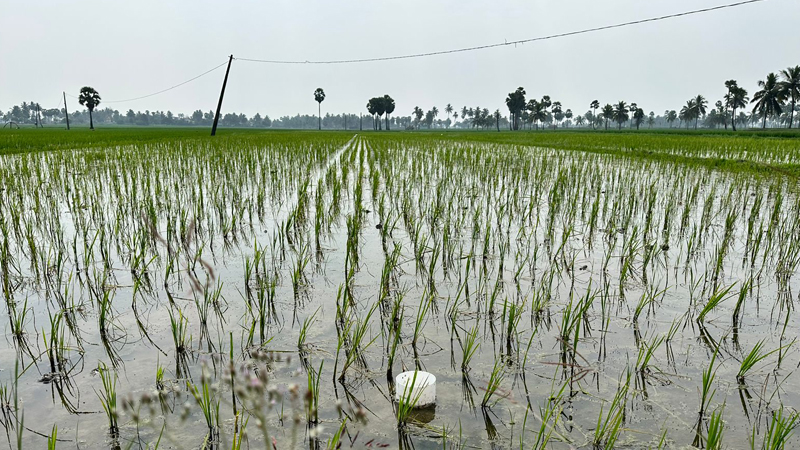
Mumbai: nurture.farm, India’s leading Agtech startup has rolled out its Sustainable Rice Program for the Rabi’23 season. Hundreds of farmers have pledged & joined the program to lead the change by transforming the way they cultivate rice. The program aims to make the rice value chain sustainable by implementing techniques that streamline cultivation practices, leveraging artificial intelligence & water conserving technologies to help farmers cultivate more from less, creating traceable data sets, improving soil health, and boosting farm productivity to deliver sustainable outcomes for the farmer, the buyer, and the environment.
The implementation of the program is being monitored with the help of agri-industry experts & researchers from Regional Agriculture Research Station, Marateru under the leadership & guidance of Dr M Bharatalakshmi, Associate Director at the Institute. In addition to the institute partnership, leading ag-industry leaders like Mr Ashish Dobhal, CEO UPL SAS, are lending their support, guidance, and committing their resources to help make the program a success.
UPL SAS CEO Ashish Dobhal said, “India is the largest producer and consumer of rice, accounting for 21 per cent of the world’s total rice production. The rice cultivation alone contributes to 1.5% of total GHG emissions. Furthermore, rice cultivation requires a lot of water; flooded fields lead to the anaerobic decomposition of soil organic matter, which leads to methane emissions and impacts the soil quality, often leading to the leaching of nutrients and soil erosion resulting in reduced farm productivity. Thus making the transition to sustainable cultivation practices a necessity.
The Sustainable Rice Program is a testament to the core mission of building a resilient and sustainable agriculture ecosystem for a brighter, inclusive and more abundant tomorrow. The program is unique and ambitious as it promises to deliver end-to-end implementation, helping improve yield quality, soil health, acreage, optimize input usage and water consumption, shorten crop cycles, boost farm productivity, and reduce the cost of cultivation while ensuring profitability and measurable sustainable impact on GHGs.”
nurture.farm head of sustainability Harshal Sonawane said, “We are proud to launch the initiative as it is an opportunity to make history & contribute to the larger narrative of sustainable agriculture, helping usher in a new era of growth in harmony with nature. The program differentiates itself from other sustainable rice programs owing to its unique sustainability framework & the number of verifiable interventions we plan to deploy.
Farmers are on boarded to the program via physical & digital touch points on the nurture.farm app. We ensure that participating farmers are extensively trained on good agricultural practices and sustainable rice cultivation techniques and consistently monitor the implementation of the practices at the ground level. Furthermore, participating farmers will receive competitive financial incentives, learn about yield optimization techniques, gain insights on soil health and receive timely advisory & support from our fleet on ground to ensure profitable & sustainable cultivation of rice.
The sustainability impact on the ecosystem, be it water savings, implications for preservation of biodiversity, carbon sequestration, etc, will be measurable, verifiable & traceable. These data sets can be compared pre & post-implementation to test the efficacy of the program. The program will help mitigate up to 50% of methane emissions, reduce water usage in rice cultivation by 30%, reduce input costs for farmers by INR 500 /acre and improve yield by up to 10%.”
With a focus on driving change at the grassroots level, nurture.farm’s Sustainable Rice Program aims to educate and train smallholder farmers, improve their access to technology and know-how, and help them cultivate profitably without compromising yield, soil health and the environment. The pilot is being implemented in AP & Telangana to the tune of 10,000 acres, with more than 5,000 farmers already signed up for the program, and it is set to scale to more than 1 million acres by 2030. The program is designed to make the entire rice value chain sustainable, ensuring fair value for farmers on a large scale.