MAM
Nuberg EPC spearheads Chlor-Alkali project for Adani Group
Mumbai: Nuberg EPC, a Global EPC and turnkey project management company, is to announce its latest undertaking – Chlor-Alkali project, commissioned by Mundra Petrochemical Ltd. (MPL), a subsidiary of the esteemed Adani Enterprises. This pioneering project is poised to make a significant impact in the industry with a capacity of 2200 TPD, utilising a 100 per cent NaOH process.
Strategically located in the vibrant Mundra zone of Gujarat, the project stands as a testament to innovation and engineering excellence in providing Engineering, Procurement & Construction Management (EPCM) services including a review of a balanced Basic Engineering Package (BEP) of technology.
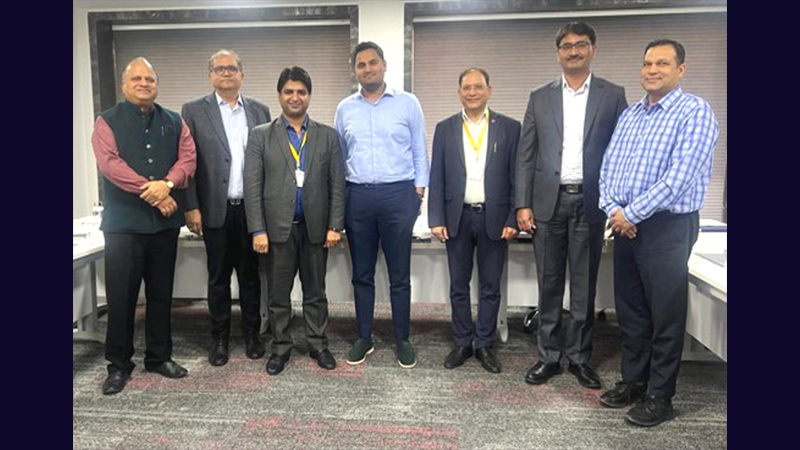
The project was signed off with a high-profile meeting in Mumbai, graced by the presence of Adani Enterprises’ dignitaries, including Adani, vice president, Jayant Parimal, CEO, Jagan Kishore, project director, Upendra Varmora, techno-commercial head, and Nimai Charan, VP project manager, as well as Nuberg EPC’s luminaries, Amit Tyagi, director, and Rakesh Verma, chief business development officer.
Nuberg EPC chairman and managing director (CMD) A. K. Tyagi, expressed gratitude upon being awarded the project, highlighting the company’s commitment to delivering projects punctually and with unparalleled quality, notwithstanding industry challenges.
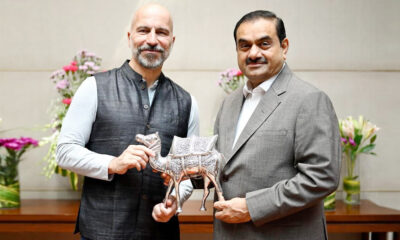
Tyagi underscored Gautam Adani, the founder and chairman of the Adani Group, as emblematic of entrepreneurial success, illustrating how dedication and strategic vision can lead to remarkable achievements. Adani’s journey, from modest beginnings to becoming a leading business magnate in India, exemplifies the transformative power of diligence and innovation. Adani’s legacy, characterized by significant milestones such as the establishment of Mundra Port in Gujarat, reflects his dedication to global expansion, innovation, sustainability, and social responsibility through the Adani Foundation.
Adani’s journey offers valuable lessons for aspiring entrepreneurs, emphasizing perseverance, strategic vision, innovation, and social responsibility. His enduring commitment to growth and ethical practices serves as a testament to the importance of resilience and determination in achieving success, inspiring businesses and entrepreneurs worldwide.
Committed to a swift 15-month delivery timeline, Nuberg EPC’s project scope encompasses the entire spectrum of EPCM services. This encompasses meticulous Detail Engineering across all disciplines (Process & HSE, Piping, Mechanical, Electrical, Instrumentation, Civil & Structural, Rotatory & Static Equipment, etc.), Technical Assistant services for procurement, Supervision Services throughout Construction, erection, Pre-commissioning, Commissioning, Performance Guarantee Tests, and technical review services for Other Contractors’ documents and inspection. The project entails EPCM services for a 2200 TPD Caustic Soda (100 per cent NaOH) Plant within the 1 MMTPA Green PVC Project in Mundra, Gujarat, India.
“As we undertake this monumental Chlor-Alkali project, our endeavour extends beyond mere construction; we are establishing the groundwork for a greener, more sustainable future. Our dedication to technological excellence and extensive global execution experience form the cornerstone of our success, making this upcoming project India’s largest Chlor-Alkali Project upon completion. Executing the 250 TPD EPCM Caustic Soda Plant Project alongside Chemfab Alkalis Ltd., our participation in the 2200 TPD Caustic Soda Plant Project with Adani Group showcases our steadfast dedication to engineering excellence and our substantial role in propelling India’s industrial progress,” remarked AK Tyagi, CMD, Nuberg EPC.
Nuberg EPC boasts a distinguished track record, having completed over 25 Caustic Soda turnkey projects worldwide, showcasing robust in-house capabilities and a commitment to pioneering technology-driven endeavours. Recognized as the World’s No. 2 EPC Company for Chlor-Alkali, we uphold our responsibility as a global corporate citizen by leading innovation in top-tier technologies and processes.
Our contributions extend across various sectors, including the establishment and operationalisation of multiple plants such as Sulfur Recovery Units (SRU) in chemicals & fertilisers, Hydrogen Fueling Station in energy & infrastructure, Den-sac Plant in nuclear & defence, and Sulphuric Acid Plant in steel industries. Leveraging our expertise, we actively engage in global projects promoting hydrogen-green, grey, and blue initiatives, 2G & 3G ethanol, water electrolysis, water-soluble fertilisers, and next-generation nutrients, solidifying our leadership in the international arena.

MAM
Worldwide Travel Insurance for Indian Travellers: How to Find a Plan Without Geographic Gaps in Your Protection
Travelling to more than one country can make insurance selection more complex, because a policy that looks broad at first may still leave certain destinations, transit points, or regions outside its scope. For Indian travellers, this can lead to gaps in cover during a medical emergency or travel disruption abroad.
Here’s a guide to understanding how worldwide coverage works, which plan types to review, and how to check for geographic exclusions before choosing a policy.
Why Geographic Coverage Matters in Travel Insurance
When travellers look for the best travel insurance, medical cover and premium often get early attention, but geographic scope matters just as much. A policy may appear broad while still limiting cover in certain countries, regions, or travel routes.
This can affect hospital access, emergency support, evacuation terms, and non-medical benefits. For Indian travellers visiting more than one destination, checking where the policy applies is an important way to avoid gaps in protection.
Types of Worldwide Travel Insurance Plans Available to Indians
Worldwide travel insurance may be available in different formats, and each one should be reviewed based on the route, trip pattern, and list of destinations.
Single-Trip Travel Insurance
This type of policy is generally chosen for one overseas journey with fixed departure and return dates. It may suit travellers visiting one country or more than one destination during the same trip. The policy still needs to be checked carefully to confirm whether every destination on the itinerary is covered during the full travel period.
Multi-Trip Annual Insurance
This type of plan may be suitable for travellers who visit different countries several times a year. It can be useful only when the policy’s covered regions match the countries included across those trips. Before choosing it, travellers should check trip duration limits, region-wise exclusions, and whether all intended destinations are covered under the annual plan.
Region-Specific Plans
Some policies are built for selected regions rather than for the whole world. These plans may be arranged by destination groups such as Asia, Europe, or broader international zones. They may be suitable in some cases, but they should be reviewed carefully if the journey includes stopovers, connecting countries, or travel beyond the listed region.
Comprehensive Worldwide Plans
These plans are usually reviewed by travellers who want broader international cover across multiple destinations. However, a plan described as worldwide may still have country-wise limits, separate terms for certain regions, or limits on healthcare access and emergency services. The wording should therefore be checked in detail before relying on the description alone.
Key Coverage Areas That Ensure Global Protection
A worldwide policy should be reviewed for the coverage points that matter when travel includes more than one country or a wider international route. These areas help show whether the plan is suitable for broader overseas travel and not limited to only a few listed destinations.
● Cover that applies to all countries listed in the itinerary, not only the main destination.
● Cover for transit stops and connecting countries that are part of the planned journey.
● Clear mention of excluded countries, restricted regions, or destinations not covered under the policy.
● Emergency medical and assistance support that remains available while travelling across different countries.
● Evacuation and repatriation terms that continue to apply during multi-country travel.
How to Check for Geographic Exclusions Before Buying
Geographic exclusions are often found in the detailed wording rather than in the headline promise of the plan. A careful review before purchase can help travellers understand whether the policy matches their travel route.
● Check the destination list in the policy schedule.
● Read whether excluded countries, sanctioned regions, or restricted zones are mentioned in the wording.
● Review whether transit stops and connecting destinations are mentioned as covered travel locations.
● Check if medical network access differs across countries even when the policy appears globally valid.
● Read whether adventure activities, cruises, or remote locations have separate geographic conditions.
● Review assistance and claim support terms to see if they apply equally across all covered destinations.
Conclusion
A travel insurance plan cannot be judged only by premium, destination label, or the word worldwide term alone. For Indian travellers, geographic scope needs close attention because exclusions and regional limits may affect how the policy works during the journey. A careful review of plan type, covered locations, medical support, and destination-specific terms may help reduce avoidable gaps.