MAM
“Need of the hour”- industry hails ASCI’s new guidelines

MUMBAI: Is the party over for influencer marketing in India? Or does it get bigger hereon? These are some of the questions playing in the minds of industry players and consumers as the Advertising regulatory body (ASCI) unveiled its long-overdue guidelines for influencer advertising, here on Thursday. The new rules come into effect on 14 June.
The Influencer advertising market in India is booming across social media platforms and is estimated to be worth $75-100 million, as per digital marketing agency AdLift. And, it’s only getting bigger. With people unable to indulge in retail therapy and check products & services in person, watching an influencer talk about the product or following the social media talk seems like the next best option for many.
Brands too have recognised its burgeoning potential and allocated a significant share of their digital ad spend on the segment. Needless to say, Influencer marketing does help a brand in multiple ways. Apart from product trials and reflections, it helps them bring out their brand’s story organically and establish trust with their target audience. In fact, as per Forbes 54 per cent of people have visited a website to purchase after seeing a product or service mentioned on Instagram.

However, there was no way for consumers to make a distinction between promotional content for a brand and genuine user-generated content- unless the influencer chose to make the disclosure. Well, all that is going to change now.
The new ASCI guidelines make it mandatory for social media influencers to label the promotional content they post: “All advertisements published by them on their accounts must carry a disclosure label that clearly identifies it as an advertisement.” And it is not limited to “monetary compensation”, but “anything of value given to mention or talk about the Advertiser’s product or service, like free or discounted products or service or other perks.”
So what does the industry have to say about these regulations in what was so far a free-for-all market?
“It is a step forward in the right direction,” says branded content marketplace Do Your Thng founder Ankit Agarwal. “The blurring of the line between ads and simple user-generated content needed to be corrected. Users not only have the right to know the difference between the two, but it was also their demand. Besides helping bolster the trust audiences were increasingly haemorrhaging in content creators, the guidelines will hold brands and marketers more accountable. I am gratified ASCI has moved the needle in organizing a niche where entropy was just about beginning to reign supreme.”
According to ClanConnect co-founder & COO Kunal Kishore Sinha, the guidelines will shape the future of sponsored posts and influencer-brand collaborations in India. “Going forth, consumers can expect much more transparency as they navigate through the social media universe. On our part, we are geared up to guide influencers through the intricacies of the newly-launched guidelines, helping them meet all the requirements so they can focus on what they do best – create impactful content,” he says.
Whoppl managing partner Jennifer Mulchandani says agencies now need to make sure brands & influencers still stand out by staying relevant and engaging their audience through content that resonates with them. “It’s important to pick the right influencer mix that caters to the specific TG that would benefit from the product in question, and not just result in a sale for the brand but also greatly positively impact the consumer, thereby using their power of influencer responsibly,” she adds.
According to SoCheers director Rajni Daswani, many brands are still averse to the whole #Ad & #Sponsored and may now start drawing parallel compared to paid media, which might see the investment in influencer marketing take a slight hit, after the phenomenal growth year that it had in last few years. “The guidelines could be like a double-edged sword for creators as influencers/creators who are doing a lot of branded content might see a hit in their engagement & reach numbers, but quality content will continue to win nonetheless,” adds Daswani.
Terming it as the need of the hour, OpraahFx founder Pranav Panpalia says it will also help elevate creators’ reputation and help brands to connect to their exact audience set while aiding consumers to make informed decisions. “Giving a disclaimer of a brand being promoted (prior to the content), helps viewers make an upfront choice about whether they want to continue to consume the said promotional content. Continuing to consume such content simply implies that s/he indeed is interested to listen to the brand’s promotional pitch,” he says.
However, industry experts also believe that there may be some teething issues during the initial days and the content creator also has to know in detail what they are marketing to their audience and exercise a sense of responsibility, says Divo founder and director Shahir Muneer.
Influencers, on their part, have also welcomed the move, albeit a tad cautiously. According to some influencers, the guidelines put more onus on the creator than on the brand and could lead to a disengagement of a section of their audience, once they realise its paid content. Some voiced their concern on social media, that even when they organically endorse a product or service, it could be misconstrued by their followers as a mere sponsored promotion.
Some like Nikunj Lotia, popularly known as BeYouNick told a publication that brands are often involved in specific parts of the content, instead of the entire, and labelling it may confuse the audience.
Allaying fears that it might restrict creativity, Grapes Digital founder & CEO Himanshu Arya says, consumers are smart enough to make a distinction between a material connection and an organic post. “It is the first step towards making transparency and trust the ethos of influencer marketing,” says Arya.






Brands
KKR sixes to power EV charger rollout under VIDA campaign
Cricket meets clean mobility as big hits spark India’s charging growth
NEW DELHI: VIDA, the electric mobility arm of Hero MotoCorp, has teamed up with Kolkata Knight Riders to launch a campaign that turns cricketing flair into real-world impact.
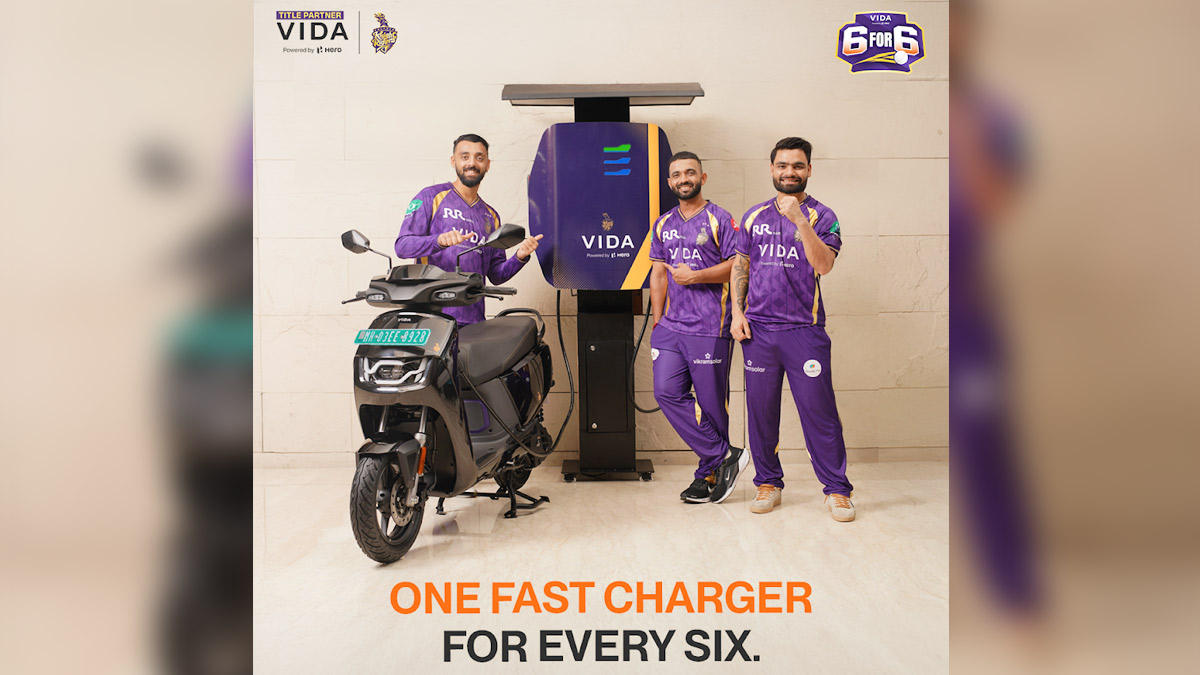
Titled ‘6 for 6’, the initiative promises to install a 6kW fast EV charger for every six hit by KKR during the ongoing Indian Premier League season. The idea is simple but powerful, as each big hit on the field contributes directly to expanding India’s fast-charging infrastructure.
The campaign builds on VIDA’s growing network, which already spans over 5,300 fast-charging points across more than 430 cities. With EV adoption gaining pace, the brand is using cricket’s mass appeal to accelerate both awareness and infrastructure growth.
Explaining the thinking behind the move, Hero MotoCorp emerging mobility business unit chief business officer Kausalya Nandakumar said, “Cricket has an incredible ability to unite and inspire millions across the country. With the ‘6 for 6’ campaign, we are turning every big hit on the field into a step towards a cleaner and a more accessible mobility future.”
She added that VIDA’s expanding fast-charging network and removable battery technology are designed to make EV ownership more convenient and practical for everyday users.
From the franchise’s side, the campaign is also about giving on-field moments a larger purpose. Kolkata Knight Riders chief executive officer Venky Mysore said, “The ‘6 for 6’ campaign exemplifies the potential of sport as a platform for meaningful, real-world impact. By linking every six to the expansion of EV charging infrastructure, this partnership transforms fan excitement into tangible progress.”
As part of the rollout, VIDA has introduced co-branded charging stations in KKR’s signature colours, with a flagship installation unveiled alongside team players. The chargers are designed for quick top-ups, powering VIDA scooters from zero to 80 percent in about an hour, while also being positioned along key highways to support longer journeys.
The initiative also taps into VIDA’s removable battery system, which allows users to charge using standard household plug points, adding flexibility to the charging ecosystem.
By blending the thrill of cricket with the urgency of clean mobility, VIDA and KKR have found a neat way to make every six count twice, once on the scoreboard and again on India’s road to an electric future.








