Brands
National Startup Day 2026: founders call for scale, trust and staying power

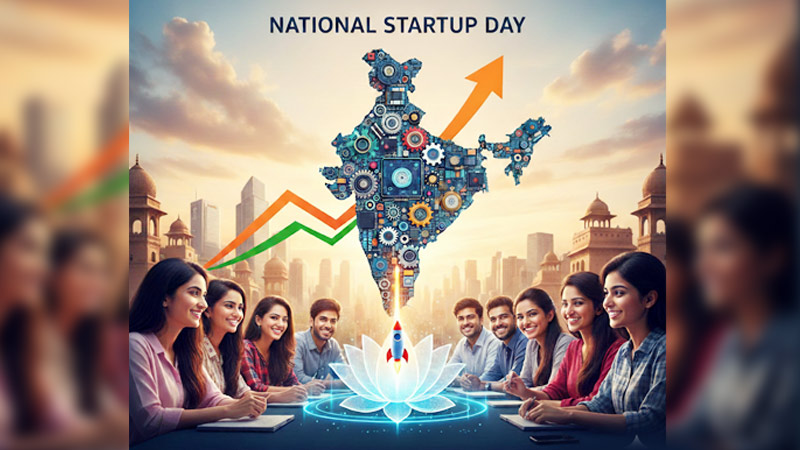
NATIONAL: India’s startup story is entering a more demanding phase, as founders, policymakers and investors signal a shift from rapid scale to durable value creation on National Startup Day 2026.
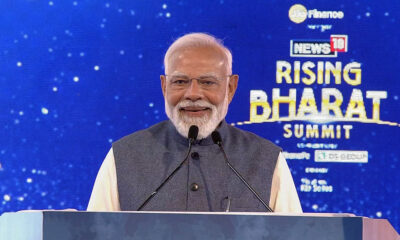
Prime minister Narendra Modi described the Startup India mission as a revolution, saying an ecosystem that began with just four startups in 2014 has expanded to more than two lakh ventures, including over 125 active unicorns. India is now the world’s third-largest startup hub, he said, with founders launching IPOs, creating jobs and normalising risk-taking once seen as fringe. Nearly 45 per cent of startups now have at least one woman director or partner, while entrepreneurs from tier-2, tier-3 and rural India are increasingly building companies beyond traditional comfort zones.
Union minister Jitendra Singh echoed that view, calling the rise in entrepreneurship transformational. Speaking at a startup camp in Jammu, he said India’s growth from a few hundred startups to more than two lakh reflected not a sudden surge in talent, but the creation of channels to nurture it. The country’s challenge, he said, had always been direction rather than ability.

Founders across sectors are striking a common note: the next chapter of the country’s startup story must be defined less by speed and valuation, and more by scale, trust and lasting impact.
EV charging platform Kazam co-founder and CEO Akshay Shekhar, said India’s ecosystem is at a pivotal stage where founders are no longer just building companies but shaping entire markets. In sectors still taking form, he argued, endurance will come from operational rigour, rapid learning and the ability to execute at scale while earning trust as unit economics evolve. For electric mobility, Shekhar said infrastructure alone is not enough. EV adoption will accelerate only when charging is predictable and friction-free, backed by deep collaboration across OEMs, charging networks, battery players and utilities to create interoperable, resilient systems.
A similar emphasis on purpose and fundamentals is emerging in healthcare and wellness. Awshad co-founder and CMO Richa Jaggi, said India’s startup ecosystem has evolved from a tech-led wave into a purpose-driven movement tackling everyday problems. She pointed to rising consumer awareness around wellness, preventive healthcare and science-backed alternatives as a sign of a maturing market. The future, she said, belongs to startups that prioritise sustainability, transparency and long-term impact over rapid expansion.
Rocket Health CEO & founder Abhineet Kumar echoed that view, warning against chasing short-lived trends. As the ecosystem matures, he said, founders must focus on building organisations that last, grounded in strong fundamentals and meaningful problem-solving. The next phase of growth, Kumar argued, lies in creating foundational infrastructure across sectors such as healthcare, education, climate, manufacturing and deep technology, with patient execution and teams aligned to long-term outcomes.
From the fintech world, crypto exchange platform WazirX founder Nischal Shetty, framed startups as instruments of nation-building. He said entrepreneurial conviction can be turned into economic momentum as India works towards becoming a $5 trillion economy. In emerging areas such as crypto, Shetty said the responsibility is greater still, with founders building cutting-edge technology that expands access, trust and opportunity at scale.
According to CNBC’s Inside India newsletter which was released in October 2025, India’s startup boom is increasingly being driven by founders outside the country’s largest cities, as entrepreneurship spreads rapidly across tier-2 and tier-3 urban centres.
The newsletter highlighted how smaller cities are emerging as powerful startup hubs, supported by lower operating costs, improving digital infrastructure and stronger access to national and global markets through e-commerce. Founders in these regions are building consumer brands rooted in local manufacturing strengths: from textiles and handicrafts to skincare and apparel, while selling directly to customers online.
CNBC noted that the pandemic years marked a decisive inflection point for Indian startups. Online shopping surged, venture funding hit record levels and entrepreneurship entered the mainstream. In 2021 alone, Indian startups raised a record $42 billion, the same year Shark Tank India debuted, helping make startup culture a household conversation across the country.
As of February 2025, the newsletter said, the Indian government had recognised around 157,000 startups, with more than 51 per cent based in tier-2 and tier-3 cities. Improved logistics, digital payments and social media-driven marketing have made it easier for founders in smaller cities to scale beyond local markets.
The newsletter also pointed to a broader shift in India’s wealth creation story. While metro cities still dominate, emerging urban centres such as Coimbatore, Surat, Indore and Lucknow are becoming important engines of entrepreneurship and consumption.
Another trend flagged by Inside India is the rise of brand-building among second- and third-generation business owners in traditional manufacturing hubs. Instead of remaining contract manufacturers, many young entrepreneurs are launching their own direct-to-consumer brands, aided by digital marketplaces and social media.
As these businesses scale, CNBC notes that many are moving offline, opening physical retail stores and taking up a growing share of mall space in tier-2 and tier-3 cities. Local and regional brands now account for nearly 30 per cent of mall retail space, up from just 3 per cent before the pandemic, according to industry consultants cited in the newsletter.
Together, the signals from policymakers, founders and market data point to a maturing ecosystem entering its next test. As India’s startup base deepens beyond metros and valuations give way to fundamentals, the challenge is no longer about proving ambition but sustaining it. On National Startup Day 2026, the message is clear: the future of Indian entrepreneurship will be shaped not by how fast companies grow, but by how long they endure and how responsibly they scale.





Brands
Burda Media sells BurdaLuxury to Jaipur Capital in Southeast Asia push
Deal hands regional media portfolio to Singapore investor eyeing luxury growth
MUMBAI: Burda Media has agreed to sell its Southeast Asia-focused business, BurdaLuxury, to Jaipur Capital, marking a strategic shift for both companies as they double down on their respective growth priorities.
The deal will see Jaipur Capital acquire BurdaLuxury’s media operations across Thailand, India, Singapore, Malaysia and Hong Kong. The portfolio spans content marketing and media brands in travel, luxury and aviation, giving the investor a ready-made regional footprint and a sizeable audience base.
Jaipur Capital plans to build on this foundation to create a premium media network in Southeast Asia, blending high-end editorial with scalable digital platforms. As part of the transaction, all BurdaLuxury employees, including its management team, will move to the new owner, ensuring continuity as the business enters its next phase.
For Burda Media, the sale is part of a broader strategy to sharpen its focus on core European markets while scaling investments in digital-first opportunities. The company will, however, maintain its interest in the region through Burda Principal Investments, its global growth capital arm.
“This transaction reflects our commitment to sharpening our international focus while ensuring that BurdaLuxury continues to thrive in Southeast Asia,” said Burda Media CEO Jan Wachtel, adding that Jaipur Capital recognises the strength of the brands and teams involved.
Jaipur Capital, meanwhile, is betting big on the region’s appetite for premium content. “This acquisition significantly strengthens our premium content ecosystem,” said Jaipur Capital director Vikas Johari. He highlighted the business’s strong digital tilt, with 46 per cent of revenues coming from online channels, alongside a diversified presence across five markets.
The numbers tell a compelling story. BurdaLuxury clocks 48 million annual page views and reaches more than 40 million followers on social media, with no single market contributing over a quarter of total revenues. Jaipur Capital now aims to expand these brands further into Indonesia, Vietnam and the Philippines, while also exploring opportunities in the Middle East, including the UAE and Saudi Arabia.
With this deal, Burda Media trims its global footprint to focus on depth over breadth, while Jaipur Capital steps onto a bigger stage in the premium content space. If execution matches ambition, this could be a defining chapter for luxury media in the region.






