Comment
“My life is all about ‘Leap of faith'” – Srinivasan Swamy

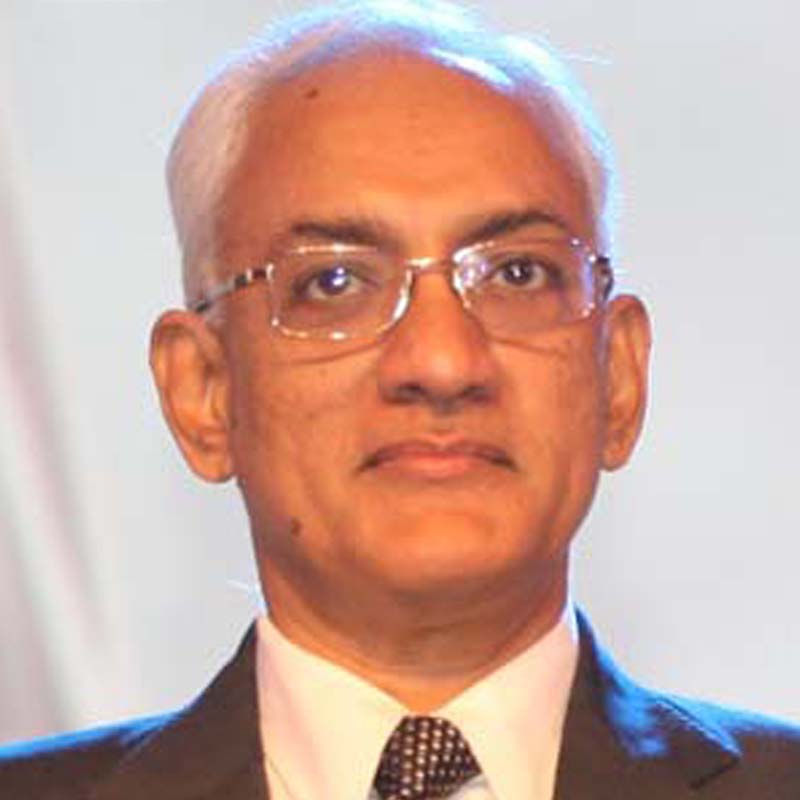
Indiantelevision.com is delighted to share RK Swamy and BBDO boss Srinivasan Swamy’s AAAI Lifetime Achievement Award acceptance speech. Read on to partake of his fine wit.
Sri Gurubhyo Namah: Salutations/pranams to all my Gurus.
There are many Gurus in this room who taught me numerous things about our profession, relationships with people, and nuances of our business. Similarly, I have learnt considerably from my colleagues, past and present, in many of our group Companies; from my colleagues from the various industry Associations and Chambers of Commerce, I have been involved in; from my many clients and friends who have encouraged me to make mistakes and learn from them; from my wife and other family members who allowed me to pursue my dreams but always shown me the right path. This Award – AAAI Lifetime Achievement Award, is therefore dedicated to each and every one of them, for if I stand today receiving it, you have all made this possible.

I am a great believer of fate. What is destined for one will happen. But that didn’t stop me in taking on many challenges. I am confident by nature, sometimes foolishly if I may add, but my life has been all about ‘leap of faith’. Every task I have taken on, I try to do full justice. My personal benchmark is to do better than all my predecessors and I have unfailingly delivered on this, to the best of my knowledge!
Many of you may not realize this, but I have served in the AAAI Executive Committee for 18 continuous years. That is half my working life, considering I have been in this profession for 36 years. I think only Nagesh Alai has served longer than I have at AAAI.
When I was elected into the Executive Committee of AAAI in 1998, I was an unwelcome addition. Our Agency had filed filed a case against AAAI when it proposed at an AGM that all its members should submit their Annual Report along with Client list, to determine the membership fee to be paid. Rightly or wrongly, we felt that AAAI may misuse what we felt was competitive information. The Court ruled in our favour and therefore, as mentioned earlier, I was seen as an intruder at the Executive Committee.
Hardly two years later, in 2000, AAAI decided to move a resolution to get it members to apply for accreditation with Indian Broadcasting Foundation (IBF) much on the lines of what we had with INS. Our Agency felt that this was a wrong move, since AAAI members had a bilateral and equal relationship as an agency with every TV channel. Why would AAAI want its members to subject themselves individually to a collective body called IBF, was beyond our comprehension. Communications to AAAI on our objection to the proposal was ignored and therefore we collected adequate proxies and defeated this resolution on the floor of the house. Subsequently we got the next President to see merit in our proposition and finally got AAAI to sign an Agreement with IBF which provided an equal status with them. .
However, both these episodes clearly implanted in the minds of many industry people that we are difficult people and we don’t toe the line on industry matters. This was so strongly entrenched, that when someone suggested in 2009 that I should join the IAA Mancom, the concern was whether I would be a difficult person to have in the Committee! Frankly, neither AAAI nor IAA, or any industry body for that matter, have found in me a unreasonable person, even if
I have to say so myself! It would be impossible to have been Chairman/President of various Associations, Chambers of Commerce, Charitable Trusts and Registered Societies, if I were not an affable person.
As mentioned earlier, the IBF-AAAI Agreement came about in 2000 and we were on an equal footing with IBF. In about a year, I was made the Chairman of this Joint Industry Body. For an agency person, this job was akin to running with the hares and hunting with the hounds. For 7 years when I was heading this joint working committee comprising heads of many agencies and channels, we had a great time. We combined work and had fun in different parts of the world – Australia, Germany, Sri Lanka, Malaysia and of course in many Indian locations. My faith was, if we bonded well as friends, we could be fair to each other. I am told, that was the golden era of IBF-AAAI relationship.
When I become President of AAAI in 2004, I did what I thought was an obvious thing to do. An industry association is for all members and if anyone wanted to serve the industry they should be allowed to. So based on interest levels of members, I expanded the Executive Committee with many invited members – and made what was an exclusive club, a place anyone can participate and contribute for the industry. In hindsight it appears a normal thing to do, but at that time it was a leap of faith. Of course having invited members in the Executive Committee is the norm from then onwards. We also did many new things at that time. We celebrated the Diamond Jubilee of the association very well, we changed the logo to be in line with current trends, renamed AAAI Premnarayen Award to AAAI Lifetime Achievement Award, helped start the Confederation of Asian Advertising Agency Associations and of course our own Goafest.
Before Goafest, AAAI had something called AAA Awards. It was an Award which no one had serious respect for. Abbys from Ad Club was seen as the most coveted and it attracted over 1500 people on their Awards night when AAAI would struggle to get 200 to 300. And the President of the day stood there all by himself and ditched out these Awards to the winners. After my first and only AAA Awards night in 2005 as President, I decided that this would be my last. AAAI represents the industry. Its members send entries and if we can’t make our Award the most coveted one, then we are doing something wrong. A small group started to think through what we can do to differentiate us and make it the most coveted. Thus was born Goafest – an advertising festival, combined with industry conclave, knowledge seminars, fun events and of course Awards. To be fair, I did invite Ad Club to join us to be part of Goafest from the first year, but they rebuked it, for their own reasons.
In our own AAAI Executive Committee, there were doubting thomases as to whether we will get our members to participate and the whole episode will lead to financial mess for AAAI. We were looking at about Rs.2 Cr commitment and AAAI had never taken projects or events of this scale. And to top it, AAAI did not even have the financial resources to pay advances for event companies and travel agents. My faith in our idea egged me on, and my company lent substantial money to AAAI to start on the execution of the event. Fortunately there was enough goodwill when I went and met Vineet Jain in Delhi, Aveek Sarkar in Kolkata, Peter Mukerjea at Star, Subhash Chandra in Zee etc. The very first year of Goafest in 2006 had over 1200 delegates for the two-day event. Fortunately for me, we did cover our costs and made a small contribution to AAAI coffers as well. My leap of faith, paid off.
After 2 years, Ad Club decided to team up with AAAI and now Goafest is firmly established as a destination to go to, for Creative, Media, Digital, Publisher and Broadcaster Awards.
In 2014, Goafest was on a slide for a variety of reasons and many felt that Goafest should be skipped for a year. I felt that once it gets stopped and the momentum lost, it will be difficult to rebuilt the festival. Again with a leap of faith, I took on the Chairmanship when asked by the then President and did all that was necessary to do a festival, including broad-basing the appeal for a wider audience. Incidentally, that year turned out to be most profitable year until then for Goafest.
I wish to give just two more instances that I was a part of, in two other Associations.
All India Management Association conducts National Management Convention and this is the high point in any President’s Calendar. 2009 was the worst year economically in India after the economic melt down in 2008 in the western world. As President, I was to conduct this Convention. I chose Chennai, my home town, and we delivered a Convention with some of the best speakers and raked in record surplus as well, which hitherto is unsurpassed in AIMA.
Similarly, it was just a leap of faith that I felt Kochi would be good destination for IAA Silver Jubilee Summit. Many in the IAA Mancom warned me that it may be difficult to get delegates to come there. But our speaker line up was so good that we had over 600 delegates from outside Kerala and 600 were from Kerala including some 300 students. This was the biggest event ever for IAA in India.
My leap of faith is equally true in the businesses I lead. From a stand alone advertising agency about 15 years ago, we are amongst the most diversified marketing services group in the country today. Our cumulative revenue we believe will place us at No.3 or No.4 in India. We have about 25 business verticals across 4 of our companies in India and two in the US – R K SWAMY BBDO, Hansa Vision, Hansa Research and Hansa Customer Equity in India and Hansa Marketing Services and Hansa GCR in the US. Again the reason for this success is easy to comprehend. We identify a candidate with the right skill and more importantly the right attitude and empower him/her to take the business forward. I believe in total delegation and my task is to see that any hindrance posed by finance people based on budget constraints is removed for the person to perform and to take on new challenges and risks to grow faster. This has served us well.
When we started BBDO India in 2007 as our second agency it was another, major leap of faith. We were told that we were cutting the ground under our own feet. The last 9 years have proved that our two-brand strategy has worked well and our overall market share and market presence have improved.
Moving on to some other aspects, I thought I would reflect briefly on my relationship with my father, R K Swamy. I worked with him from 1978 to 2003 – 25 years. He is one of the coolest bosses one can have. He is thorough in whatever he does, but at the same time he empowers people. He is generous with his praise and quite happy to review and offer comments on anything you put in front of him. You do learn a lot by observing and I think some of his qualities have rubbed off on me, though not once he has told me what I should do.
He was President/Chairman of all industry bodies in India other than only IAA that was not in his orbit then. May be instinctively I followed his path. He has said a few times to me that any amount of time we spend on industry matters in fine since it the hand that feeds us.
He passed away in June 2003. If he is observing the institution he created now, I am sure he will be more than happy as to where we have taken it. In this context, I am reminded of a couplet in Tirukural:
Eendra Pozhudhin Perithuvakkum Thanmakanai Chaandron Enak ketta Thaai.
Loosely translated it says – the mother who hears her son being called a ‘wise-man’ will rejoice more than when she did, at the time of his birth.
I am sure, in the same vein, my father will be mightily pleased that his son has this recognition today, as much as my mother.
Before closing, I want to thank a few people:
Ramesh Narayan has been a terrific support for me in IAA without whose help and constant prodding, IAA would not be what you know it to be. I am also grateful to him for all the kind words he spoke about me.
My wife Sudha, She is a very bright lady, a MBA and had a thriving career. But she gave up much of this to support my children, me and my parents. She is here to share my happiness with me today, as she has always done in the past.
And of course the President and the Executive Committee of AAAI for having considered me for this honour. Thank you all for what you did. But let me warn you all – this lifetime achievement award doesn’t mean retirement for me. I am not going away anywhere yet – I have a long journey ahead.
Thank you!



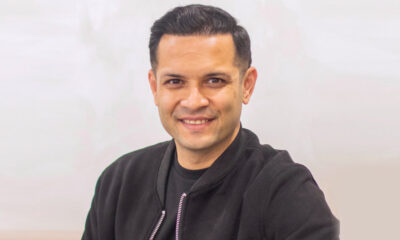



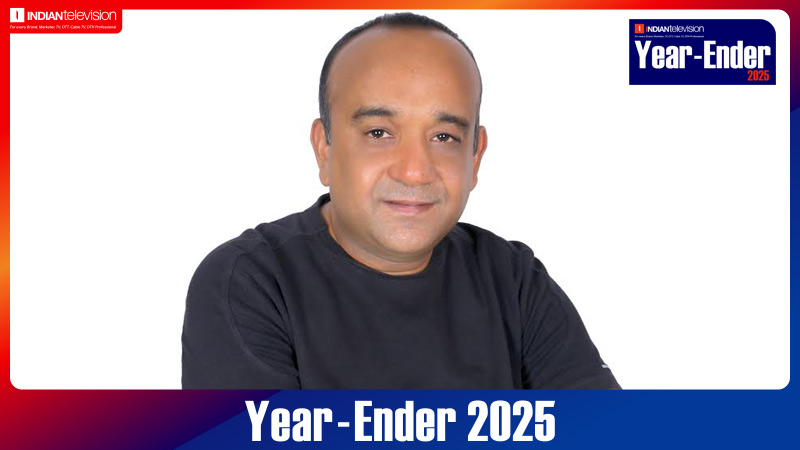
MUMBAI: 2025 will be remembered as the year India’s OTT industry stopped chasing scale for its own sake and began reckoning with how audiences actually consume content. Completion rates fell, patience wore thin and the limits of long-form excess became impossible to ignore. In this guest column, Pratap Jain, founder and CEO of ChanaJor, traces how micro-drama moved from the fringes to the centre of viewing behaviour, why short-form fiction emerged as a retention engine rather than a trend, and how platforms that respected time, habit and emotional payoff were the ones that truly grew up in 2025.
If there is one thing 2025 will be remembered for in the Indian OTT industry, it’s this: the industry finally stopped pretending.
Stopped pretending that bigger automatically meant better.
Stopped pretending that viewers had endless time.
Stopped pretending that scale without retention was success.
What began as a quiet reset in 2023 and a cautious correction in 2024 turned into a very visible shift in 2025. Business models matured. Content strategies tightened. And most importantly, platforms started aligning themselves with how Indians actually watch content, not how the industry wished they would.
At the centre of this shift was micro-drama—not as a trend, but as a behavioural inevitability.
When OTT finally understood the time problem
For years, long episodes were treated as a marker of seriousness. A 45–60 minute runtime was almost a badge of credibility. Shorter formats were pushed to the margins, labelled as “snack content” or “mobile-only.”
That belief quietly collapsed in 2025.
What platform data showed very clearly was not a drop in interest—but a drop in patience. Viewers weren’t rejecting stories. They were rejecting commitment.
Across platforms, the same patterns appeared:
* First-episode drop-offs on long-form shows kept increasing
* Completion rates continued to slide
* Viewers were sampling more titles but finishing fewer
At the same time, shows with episodes in the six to 10 minute range started showing the opposite behaviour: higher completion, higher repeat viewing, and stronger daily habit formation.
Micro-drama didn’t win because it was short. It won because it respected time.
Micro-Drama didn’t arrive loudly. It took over quietly.
There was no single moment when micro-drama “launched” in India. It crept in through dashboards and retention charts.
By mid-2025, it was clear that viewers were happy watching four, five, sometimes six short episodes in one sitting—even when they wouldn’t finish a single long episode. Romance, relationship drama, slice-of-life conflict, and grounded comedy worked especially well.
This wasn’t disposable content. It was compressed storytelling.
In shorter formats, there was no room for indulgence. Every episode had to move the story forward. Weak writing was punished faster. Strong writing was rewarded immediately.
Micro-drama raised the bar instead of lowering it.
Where ChanaJor naturally fit into this shift
ChanaJor didn’t pivot to micro-drama in 2025 because the market demanded it. In many ways, the platform was already built around the same viewing behaviour.
From the beginning, ChanaJor focused on short-to-mid-length fictional stories that felt close to everyday Indian life—hostels, rented flats, office romances, small-town relationships, young people figuring things out. Stories that didn’t need heavy context or cinematic scale to connect.
What worked in ChanaJor’s favour in 2025 was clarity:
* A clearly defined audience
* Tight episode lengths
* Storytelling that prioritised emotion and pace over spectacle
While several platforms rushed to copy global micro-drama formats, ChanaJor stayed rooted in familiar Indian settings and conflicts. That familiarity mattered. Viewers didn’t have to “enter” the world of the show—it already felt like theirs.
Why audiences started responding differently
One of the biggest misconceptions going into 2025 was that audiences wanted shorter content because their attention spans had reduced. That wasn’t entirely true.
What viewers actually wanted was meaningful payoff per minute.
On platforms like ChanaJor, episodes didn’t waste time setting the mood for ten minutes. Conflicts arrived early. Characters were recognisable within moments. Emotional hooks landed fast.
A typical consumption pattern looked like real life:
* One episode during a break
* Two more before sleeping
* A few the next day
This is how viewing habits are built—not through marketing spends, but through comfort and consistency.
Viewers came back not because every show was a blockbuster, but because they knew what kind of experience to expect.
2025 was also the year OTT faced business reality
The other big change in 2025 was on the business side. Subscriber growth slowed. Discounts stopped hiding churn. Customer acquisition costs rose.
Platforms were forced to ask harder questions:
* Are viewers finishing what they start?
* Are they returning without reminders?
* Is this content worth what we’re spending on it?
This is where micro-drama began outperforming expectations. A well-written short series could deliver sustained engagement without massive budgets. It didn’t peak for one weekend and disappear—it stayed alive through repeat viewing.
Platforms like ChanaJor benefited because they weren’t chasing inflated launch numbers. The focus was on consistency and retention, not noise.
Failures Became Visible Faster
2025 also exposed weaknesses brutally.
Several platforms assumed micro-drama was a shortcut—short episodes, quick shoots, instant traction. What they discovered was that bad writing fails faster in short formats than in long ones.
Viewers dropped off within minutes. Episodes were abandoned mid-way. Weak stories had nowhere to hide.
Micro-drama didn’t forgive laziness. It amplified it.
The platforms that survived were the ones that treated short storytelling with the same seriousness as long-form—sometimes more.
OTT Stopped Chasing Prestige and Started Chasing Habit
Perhaps the most important shift in 2025 wasn’t technical or creative—it was psychological.
OTT stopped trying to look like cinema. It stopped chasing validation through scale and awards alone. It began behaving like what it actually is in people’s lives: a daily companion.
Platforms like ChanaJor found their space here because that mindset was already baked in. The goal wasn’t to dominate a weekend launch. It was to quietly become part of someone’s everyday viewing routine.
That shift changed everything—from release strategies to how success was measured.
What 2025 Ultimately Taught the Industry
By the end of the year, three truths were impossible to ignore:
* Time is the most valuable thing a viewer gives you
* Retention matters more than reach
* Format must follow behaviour, not ego
Micro-drama didn’t take over because it was fashionable. It took over because it fit real life.
Looking Ahead
Micro-drama is not replacing long-form storytelling. It is redefining the baseline of engagement.
Longer shows will survive—but only when they earn their length. Short-form fiction will continue to evolve, becoming sharper, more emotionally confident, and better written.
Platforms like ChanaJor have shown that it’s possible to grow without shouting—by understanding the audience, respecting their time, and telling stories that feel real.
2025 wasn’t the year OTT became smaller. It was the year it became smarter.
Note: The views expressed in this article are solely the author’s and do not necessarily reflect our own.






