Brands
Motorola launches Edge 70 Pro with AI camera and 6500mAh battery
Triple 50MP cameras, 144Hz display, starts at Rs 36,999 sale from 29 April.

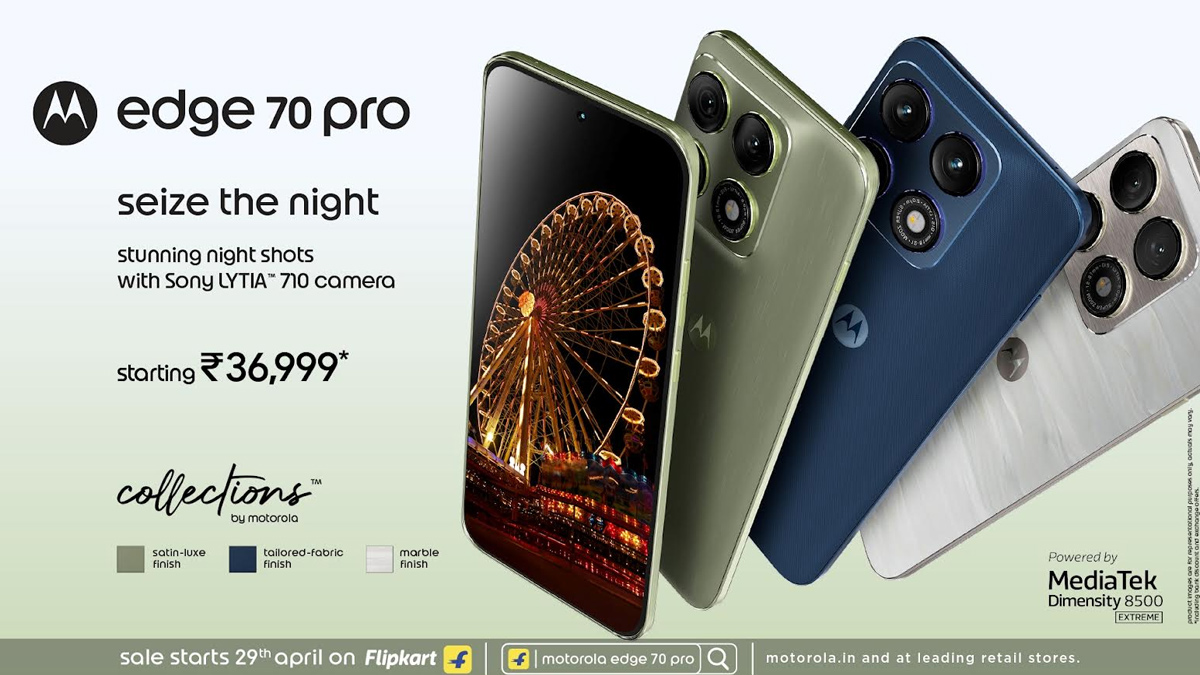
MUMBAI: When the lights go down, the specs step up that’s the pitch from Motorola as it unveils the new Edge 70 Pro, a device built to turn low light into a highlight reel. The smartphone arrives with a clear focus on imaging, headlined by a triple 50MP camera system powered by Sony Lytia 710 and on-device motoAI. The setup promises sharper night photography, improved dynamic range and blur-free captures, alongside 4K 60FPS video across all lenses. Supporting sensors include a 50MP ultra-wide and macro lens with a 120 degree field of view, and a 50MP front camera with autofocus.
Under the hood, the device runs on the MediaTek Dimensity 8500 Extreme chipset, delivering a 40 per cent CPU boost, 30 per cent GPU gains and a 65 per cent faster NPU. Paired with up to 12GB LPDDR5X RAM and 256GB storage, and backed by a 4600mm² vapour chamber cooling system, the phone is positioned for sustained performance across gaming and AI-heavy tasks. Connectivity includes support for 17 5G bands and Wi Fi 6E.
On the design front, Motorola introduces “Collections”, a new materials-led approach featuring satin luxe, tailored fabric and marble finishes in Pantone curated colours. The device measures just 6.99mm in thickness, paired with a quad curved form factor aimed at improving ergonomics.
The display is a 6.8 inch 144Hz 1.5K AMOLED panel with up to 5200 nits peak brightness, HDR10 plus support and 100 per cent DCI P3 colour gamut. Audio is handled by dual stereo speakers with Dolby Atmos.
Battery life is another headline feature. The device packs a 6500mAh silicon carbon battery, claimed to deliver up to 51 hours of usage, supported by 90W fast charging that can provide a day’s power in nine minutes.
Durability has also been emphasised, with MIL 810H certification across 16 tests and IP68 plus IP69 ratings for water and dust resistance, including submersion up to 1.5 metres for 30 minutes.
On the software side, the phone runs on Android 16 with Hello UI and promises three OS upgrades and five years of security updates. AI features include contextual suggestions, live transcription, AI image tools and integrations with multiple assistants including motoAI, Copilot, Perplexity and Google Gemini.
The Edge 70 Pro will go on sale from April 29, 2026, across Flipkart, Motorola’s website and retail stores. Pricing starts at Rs 36,999 for the 8GB plus 256GB variant, going up to Rs 39,999 for the 12GB version, with launch offers including up to Rs 2,000 bank discount or exchange bonus.
In a crowded premium segment, Motorola is betting that a mix of AI, design and battery endurance will help it stand out, especially when the lights are low and expectations are high.