Brands
Motorola announces Kriti Sanon as brand ambassador at the launch of Motorola razr 40 Ultra and razr 40

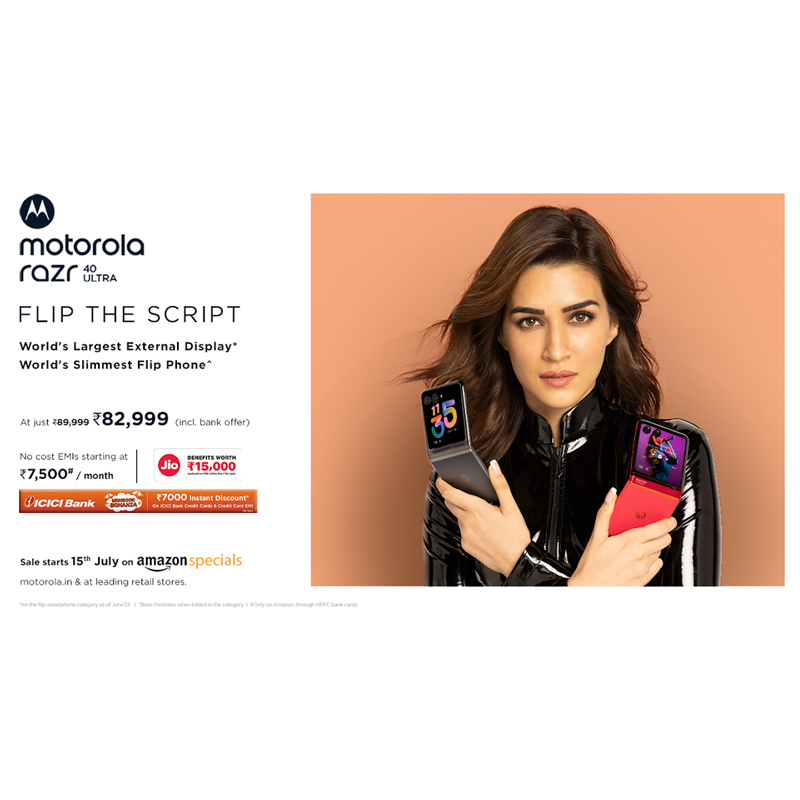
Mumbai: Motorola, India’s best 5G Smartphone, and a pioneer in the mobile phone industry, just announced Bollywood actress Kriti Sanon as its brand ambassador during the launch event of its latest smartphones, the Motorola razr 40 Ultra and razr 40, held in the city. The combination of Motorola’s innovative technology, its leadership in design and Sanon’s star power, promises an exciting journey ahead for both the brand and its customers.
Motorola launched the first razr in the early 2000, a phone that became an icon, proving that design-focused devices could drive smartphone desire. Backed by their strong innovative DNA, they re-invented this iconic design by bringing the world’s first foldable smartphone to market just a few years ago. And now, the all new razr 40 ultra and razr 40 prove once again that innovative design can re-define the smartphone experience.
The new razr 40 family leads with an intriguing proposition of ‘Flip the Script’, that stands for redefining the norms and challenging the status quo of the current smartphone industry through disruptive design and innovative features.
To commence their collaboration with Sanon, Motorola has worked on two exciting television commercials (TVCs) featuring Sanon, bringing alive the proposition ‘Flip the Script’ for the all new razr 40 ultra and razr 40.
The campaign showcases Sanon teaming up with Motorola to show off her flip side while exploring the many possibilities of the latest Motorola razr phones. The motorola razr 40 ultra TVC captures the essence of style, versatility, speed and seamless user experience that the smartphone offers in a high-octane action setting that flips the script. The ad showcases Sanon in a completely new avatar, delivering heart racing action while being at her stylish best – flipping the script not just as a character in the commercial, but also as an actor.
In the second TVC created for Motorola razr 40, Sanon is seen as a stylish commuter who casts a spell on all the others going through their mundane lives in a metro. The ad symbolizes the excitement of the incredibly stylish and flexible form of the razr over the standard candy bar phones. As Sanon flips the razr, she flips the script for everyone around her, bringing fun and joy in their mundane lives.
Commenting on the partnership, Motorola head of marketing APAC Shivam Ranjan stated, “We are targeting exponential growth in the Indian market, and were looking to partner with an ally, who represented our brand in its true spirit. Kriti’s charming and charismatic personality, diversity and innovation with her roles, relatability and strong connect with the youth, plus the challenger mindset made her the ideal choice to represent our brand. We are absolutely delighted to have Kriti Sanon as the face of Motorola in India. We believe that this partnership will help us reach newer consumers, allowing us to expand our base and make meaningful impact in their lives through our stylish and innovative smartphones.”
Commenting on the collaboration, Sanon, Bollywood actress and Motorola’s brand ambassador said, “I am thrilled to be a part of Motorola, an iconic brand that resonates with innovation, style, performance, and functionality that today’s consumers seek. I am excited to be a part of Motorola’s journey and look forward to creating exciting experiences with the brand.”
This collaboration signifies a commitment to delivering technology that seamlessly blends with the latest fashion trends, creating an unmatched smartphone experience.




