
Brands
Moneycontrol Startup Conclave 2026 explores AI, capital and India’s next growth phase
Founders, investors and policymakers debate the startup ecosystem’s ‘Big Reset’


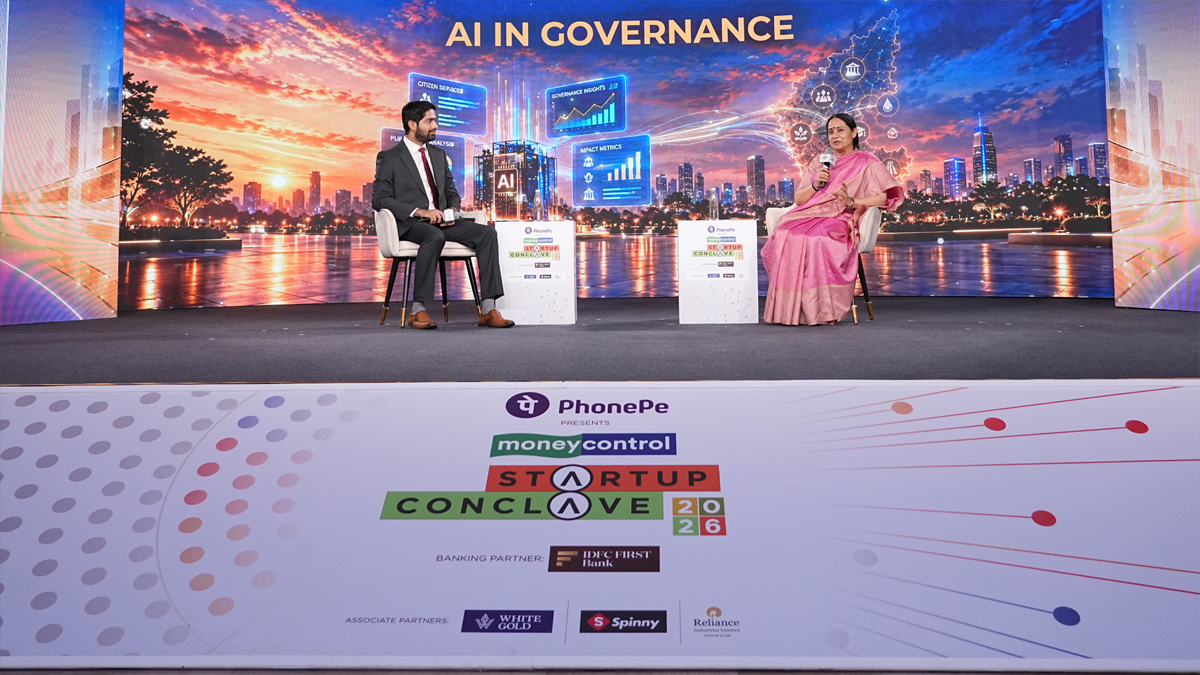
BENGALURU: India’s startup ecosystem is hitting the reset button, and AI, domestic capital and sustainable growth are emerging as the key themes shaping its next chapter.
The third edition of the Moneycontrol Startup Conclave, held in Bengaluru in September, brought together founders, investors, policymakers and technology leaders to debate the changing economics of entrepreneurship under the theme ‘The Big Reset’.
The conclave comes at a time when India’s startup ecosystem is navigating an AI-led transformation, shifting capital markets and greater scrutiny around profitability and valuations.
Opening the event, Nalin Mehta, managing editor at Moneycontrol and chief AI officer, editorial operations at Network18, examined how the ecosystem is entering a new phase.
The opening panel featured Pratyush Kumar, co-founder of Sarvam AI, and Mukund Jha, founder of Emergent, who discussed how AI is changing the economics of building a company and what that could mean for the next generation of Indian startups.
The wider programme covered the increasingly important link between growth and profitability, the role of domestic capital in India’s next expansion cycle and the rise of deep tech as a major frontier for Indian innovation.
A key session brought Karnataka’s policymakers into the conversation, highlighting Bengaluru’s position as one of India’s leading startup hubs and the state’s push to build a broader technology ecosystem.
Karnataka chief secretary Dr Shalini Rajneesh said AI should improve productivity rather than replace people, while stressing the need to make its benefits more inclusive.
“AI is certainly not going to replace human beings in any sector, whether government or private. It is only going to improve the quality and productivity,” she said.
Dr Rajneesh pointed to the state’s focus on nurturing innovation from an early age, noting that around 40,000 ideas have been contributed by schoolchildren from Classes 8 to 10.
She also highlighted the importance of extending AI beyond urban centres, particularly into agriculture, with Karnataka working with investors, startups, farmers and farmer producer organisations to track produce from the farm to the customer.
Karnataka State Electronics Development Corporation chairman and MLA Hosakote Sharath Kumar Bache Gowda argued that access to AI infrastructure must become more democratic.
“Technology is becoming ‘undemocratic’ as data centres and computing infrastructure increasingly become the preserve of large corporations,” he said, adding that Karnataka wants to take AI to the grassroots through an affordable computing ecosystem.
Meanwhile, Bengaluru South MP Tejasvi Surya pointed to the growing role of social media in shaping public discourse.
He said younger audiences are increasingly using digital platforms to bring previously separate issues into the same conversation, changing how politicians communicate through formats such as reels and other social media content.
The impact of AI on financial services was another major talking point.
IDFC FIRST Bank CEO and MD V Vaidyanathan said the technology could have a much bigger impact on banking than the digital transformation that preceded it.
“When digitisation came, it dramatically changed a lot of things in banking. AI is going to give an even bigger leap to that,” Vaidyanathan said.
He pointed to the combination of India’s demographics and growth, its digital ecosystem and AI as a major opportunity to expand financial services to underserved sections of the population.
But with that opportunity comes responsibility, he cautioned, comparing AI to a technology that can be used for both constructive and destructive purposes.
“The moral compass is super important when using AI,” Vaidyanathan said, adding that the key question for the bank is what a particular AI application ultimately does for the customer.
For PhonePe founder and CEO Sameer Nigam, the pace of India’s digital transformation has already surpassed expectations.
Looking back at the company’s journey, Nigam said few would have predicted a decade ago that PhonePe would become one of the world’s largest payments and real-time payments networks.
He acknowledged that AI valuations could be overstated, but argued that this does not diminish the technology’s underlying significance.
“AI valuations may be overstated, but AI is not overstated,” Nigam said, drawing a parallel with the dot-com boom. While the bubble eventually burst, the internet went on to become deeply embedded in everyday life.
Nigam said his ambition for the next decade is to see financial services reach a much larger share of India’s population, arguing that the country can accelerate its progress significantly.
The conclave also brought together leaders from some of India’s most prominent technology, mobility, space and financial services companies.
The speaker lineup included Groww co-founder and CEO Lalit Keshre, Rapido co-founder and CEO Aravind Sanka, Prism founder Ritesh Agarwal, Acko founder and CEO Varun Dua, Ather Energy co-founder Swapnil Jain, ICICI Prudential AMC CIO Sankaran Naren and investors including Accel partner Prashanth Prakash, Lightspeed partner Rahul Taneja and Elevation Capital partner Mridul Arora.
The deep-tech conversation featured Skyroot Aerospace co-founder Naga Bharath Daka, Pixxel co-founder Kshitij Khandelwal and The ePlane Company founder Professor Satya Chakravarthy.
The event also featured Dezerv co-founder and CEO Sandeep Jethwani, NPCI chief product officer Kunal Kalawatia and IndiaBonds co-founder Vishal Goenka, among others.
The broad mix of founders, investors and policymakers reflected the central question of the conclave: how can India’s startup ecosystem move from a period defined by rapid funding and valuation growth to one driven by durable businesses, technology-led productivity and wider economic impact?
Presented by PhonePe, with IDFC FIRST Bank as the Banking Partner and White Gold, Spinny and Reliance Industries as Associate Partners, the Moneycontrol Startup Conclave 2026 reinforced the growing importance of conversations around what comes after India’s first major startup boom.
The message from Bengaluru was clear: India’s next startup chapter may be less about chasing the biggest valuation and more about building businesses that can survive, scale and create lasting value.






