MAM
Mobile marketing to make a mark this year
MUMBAI: The year 2005 is projected to be a breakout year for mobile marketing, with spending spiking from virtually nothing to millions in pilot investments.
However, there will be a short period of disenchantment with wireless among the global marketing community in 2007.
Market research firm Research and Markets has come up with the report Mobile Marketing and M-Commerce: Global Spending And Trends.
The reasons for the disenchantment will be similar to the disappointment that accompanied the dotcom boom in the late 1990s. While many advertisers and companies threw money at the Internet only some succeeded in getting healthy returns.
This year spending on mobile is expected to spike from virtually nothing to millions in pilot investments. Though that sounds suspiciously like the online advertising hype of the 1990s Research and Markets notes that the Internet is now key to the marketing and sales strategies for most global companies.
The company is confident about the fact that wireless represents the next frontier. The report is aimed at helping industry people understand what is just beyond the horizon by constructing three potential scenarios that plot spending growth for wireless advertising and marketing over the next five years.
At this point in time, in percentage terms, wireless advertising is at roughly the same level relative to interactive advertising that online advertising was in relation to traditional ad spending in the mid-to-late 1990s.
Although spending on mobile will continue to climb, growth rates will dip briefly in 2007 before resuming upward momentum as the medium grows to maturity toward the end of the decade.
Mobile surpasses Internet reach in the US
Meanwhile Enpocket, a global mobile media company, has unveiled the latest findings from its flagship survey, the Mobile Media Monitor.
This quarterly study helps marketers keep up with the ever-changing patterns of consumer mobile phone usage.
US mobile phone adoption has grown by 25 per cent in the last nine months. Sixty five per cent of the population is now ‘mobile’. For the first time this is higher than the number of home Internet users (63 per cent).
Although voice communication is the main reason for using the phone, data and multimedia services are capturing the imagination and becoming a key usage driver. For example, almost 40 per cent of mobile owners are now regularly sending and receiving text messages.
But it is with picture messaging / MMS, text messaging’s younger and better-looking brother, where the most interesting movement has occurred over the last quarter. Twenty-two per cent of respondents took a photo with their camera phone and 12 per cent sent/ received MMS in the same period.
This represents an increase of 57 per cent for camera phone use in just 3 months, and 33 per cent increase in MMS use in the same period. This strongly suggests that the 2004-2005 holiday season saw significant purchase and gifting of camera phones.
Amid this market movement, a youth-led trend is emerging. 18-34 year olds are embracing non-voice services more than the whole base – effectively becoming mobile super users.
Thirty-four per cent used their camera phone and 21 per cent sent/ received an MMS. This segment also shows the greatest desire for enhanced cell phone services and are most likely to personalise their handsets with ringtone downloads.
While the US market is still playing catch-up with Europe in terms of penetration, it is as ‘market ready’ for next generation enhanced services and applications.
Video calling, music downloads, sports highlights, watching movie trailers and, especially picture sharing applications all have broad appeal, and have a natural home on the handset.
Meanwhile, another report notes that there are countless ways for an advertisers to segment a customer group on the mobile platform. For instance, a chemical company might notify its farming customers when to spray their crops according to the climate and weather of particular geographical pockets, and afterward, remind them to order more product.
A pharmacy can send SMS messages to senior citizens when they need to refill their prescriptions. CNet in the US already notifies consumers when the electronic items they want drop in price.

MAM
Lessons from global media markets on building enduring content franchises
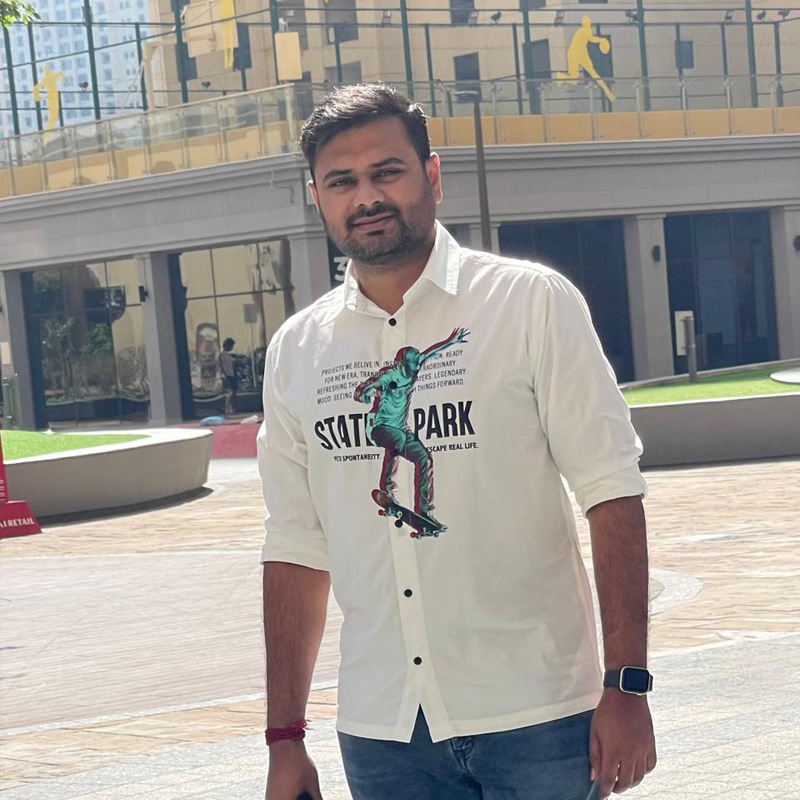
Rose Audio Visuals COO and CFO Mitesh Patel.
MUMBAI: The global media landscape has undergone a fundamental shift. Success today is no longer defined by a single hit show. It is defined by the ability to build intellectual property (IP) that travels, evolves, and compounds over time.
At Rose Audio Visuals, this shift is central to how we think about content pitching and creation. We are no longer in the business of just making shows. We are in the business of building IP ecosystems.
From Hits to Franchises
Globally, the most successful content is designed to extend beyond its first outing. It travels across: Seasons, Platforms (TV → OTT → Digital), Formats (series → spin-offs) Shows like Stranger Things and Money Heist are not just successful series they are multi-layered franchises with global recall, fan engagement, and long-term monetisation. The key learning is simple: If content cannot scale beyond one season or one platform, it remains a project not a franchise.
Local Stories, Global Impact
One of the most powerful global trends is the rise of culturally rooted storytelling. Platforms today reward local authenticity combined with universal emotion. Stories that are deeply regional are no longer limited by geography they are amplified by it. Consider the global impact of Squid Game or India’s own Sacred Games. The takeaway is clear: The more authentic the story, the greater its potential to travel if the emotion resonates universally.
Monetisation Begins After the First Window
A critical global learning is that the true value of content is not realised at launch, it is realised over time.
Strong franchises unlock multiple revenue streams: Licensing, International remakes, Brand integrations, Digital extensions , Events and immersive experiences
Global players like The Walt Disney Company have mastered this approach, turning content into long-term ecosystems that extend far beyond the screen.
The first window is just the beginning. The real value lies in what follows.
At Rose Audio Visuals, we increasingly evaluate projects not just on commissioning value, but on their long-term franchise potential.
The Rise of Creator-Led Franchises
An important global shift is the emergence of creator-led IP ecosystems.
Creators today are not just content producers they are building full-scale franchises across platforms, formats, and businesses.
A powerful example is MrBeast. What started as YouTube videos has evolved into: Multiple content formats, Global audience scale , Brand extensions and businesses, High-impact experiential content This is a fundamentally different model digital-first, audience-owned, and infinitely scalable.
This model is still in its early stages in Indian but it represents a massive opportunity.
The next wave of Indian content franchises may not come from traditional studios alone but from creators who think like media companies.
Balancing Data with Creative Instinct
Streaming platforms today are deeply data-driven. Data helps Identify emerging genres, Predict audience behaviour , Inform commissioning decisions However, global experience shows that data alone does not create hits. Data informs scale, but storytelling creates impact.
Talent is the Foundation of Franchises
Enduring franchises are rarely accidental they are built through long-term creative partnerships. Globally, there is a clear focus on nurturing Actors, Writter, Show runner and director. Franchises are not built on scripts alone they are built on creators. This is an area where we continue to invest deeply building long-term relationships with talent rather than project-based collaborations.
Multi-Platform Thinking from Day One
Content consumption today is inherently multi-platform. A successful show must be designed not just for its primary platform, but for: Short-form extensions, Social media amplification, Digital-first engagement. Every show today needs a second life beyond its original format.
India: A Market at an Inflection Point
India today stands at a unique moment in its content journey.
We are seeing significant opportunity in Regional markets (Telugu, Tamil, Marathi and others) Emerging formats such as micro-dramas, Scalable, franchise-driven fiction IP
India does not lack stories. What we have historically lacked is structured franchise thinking something that is now beginning to evolve.
The Way Forward
The biggest lesson from global markets is this: The future belongs to companies that do not chase hits, but systematically build franchises. Because while hits may deliver immediate success, franchises create long-term value, recall, and compounding growth.
At Rose Audio Visuals, this belief shapes how we develop, greenlight, and scale content across platforms.
For content companies today, the question is no longer “Will this show work?” It is: “Can this become a franchise?”
A Personal Note
Having worked across content, business, and strategy, one thing has become increasingly clear to me, the most valuable companies in our industry will not be those that create the most content, but those that create content that endures.
Building a franchise requires patience, conviction, and a long-term lens something that the industry is only now beginning to fully embrace.As we continue this journey at Rose Audio Visuals, our focus remains simple: to move from volume-driven creation to value-driven storytelling. Because in the end, stories may start conversations but franchises build legacies.