
MAM
MMA India’s 2027 growth brief: memory, margin and meaningful AI
At its final board meeting of 2026, MMA India tied creative effectiveness, financial fluency and practical AI together, with SMARTIES set to bring those conversations closer to the work


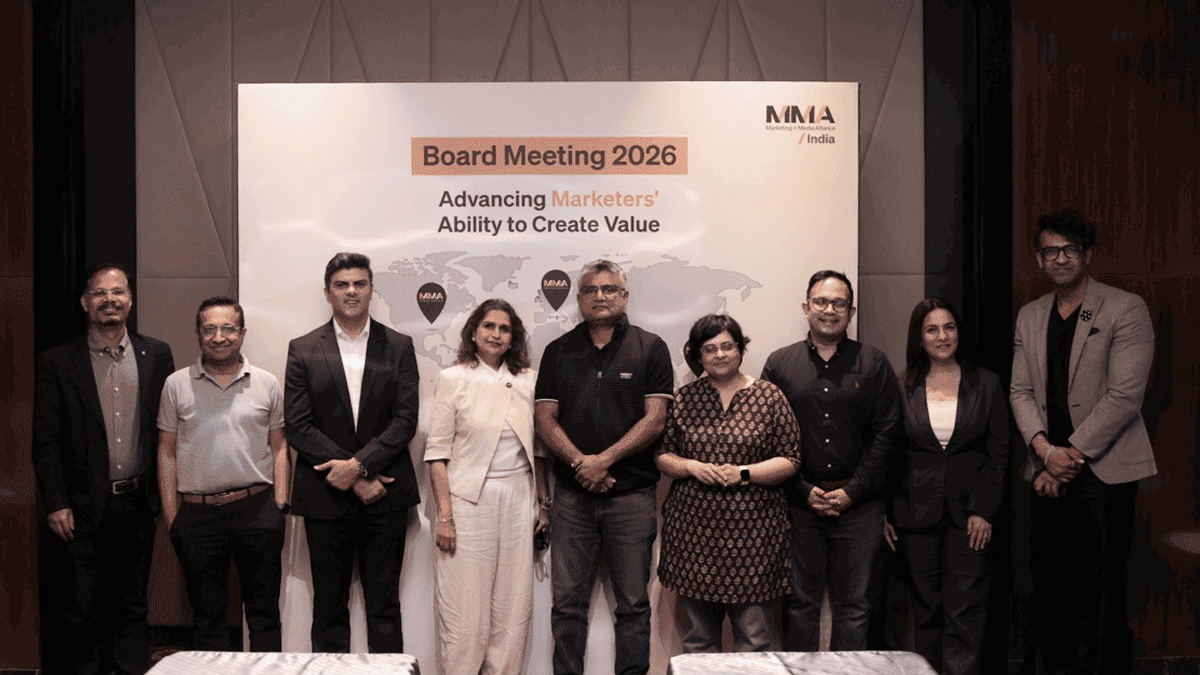
BENGALURU: A brand can win attention without becoming easier to remember. A campaign can report growth without saying what that growth is worth. Closing those two gaps is now a defining priority for Indian marketing. At the final board meeting of 2026, MMA India set the agenda for 2027: make creativity build lasting preference, make marketing’s value intelligible to finance, and make AI adoption useful beyond the demonstration.
The meeting was attended by Amit Jain, chairman of Sanofi Consumer Healthcare and chair of MMA India; Prasanth Kumar, chief executive officer for South Asia at WPP Media and co-chair of MMA India; Sunita Bangard, group head of consumer insights and brand development at Aditya Birla Group; Soumya Mohanty, managing director and chief client officer for South Asia, insights division, at Kantar; Deepali Naair, global head of brand, marketing and corporate communications at Biocon; Lalatendu Das, chief executive officer of Publicis Media, South Asia; Siddharth Shekhar, director of sales at Google India; Bhaskar Ramesh, head of entertainment sales, digital, at JioStar; Sunder Balasubramanian, chief marketing officer at Myntra; Gunjan Khetan, director of marketing at Perfetti Van Melle India; Gulrez Alam, chief revenue officer for India and emerging markets at Affle; Ishank Joshi, managing director and chief executive officer of Mobavenue AI Tech Limited; Saugato Bhowmik, director for CPG, automotive and D2C in the global business group at Meta India; Gulshan Verma, director at Amazon Ads India; Moneka Khurana, managing director and board member of MMA India; and Rohit Dadwal, chief executive officer and board member of MMA APAC and global head of SMARTIES.
Five high points stood out from the discussion.
1. Attention must add up to memory
The creative debate moved beyond whether a campaign attracts attention to whether different encounters with a brand reinforce one another. Mohanty’s argument centred on memory. A creative idea should carry across a brand’s activity in ways that predispose consumers to choose it when they next shop. Cultural relevance matters because it helps build that connection. Coherence matters because fragmented screens can otherwise fragment the brand itself.
Bhowmik highlighted the operating challenge behind the ambition. Creative workflows built around one kind of asset do not automatically translate across platforms. The task is to compound attention coherently, rather than expect any single platform to do the entire job. Das extended the argument to creator partnerships: brands need briefs that preserve coherence while recognising that influencer-created work and brand-owned assets are produced differently.
The implication is important. Coherence should not be confused with making every execution identical. The real question is whether the work, across different formats and voices, strengthens the same brand associations.
MMA India’s new Creative Council gives the challenge a practical structure. Its three workstreams connect creative choices to consumer response and commercial outcomes. Cultural Relevance & Demand is led by Mohanty, Brand Coherence by Balasubramanian, and evidence-based Business Growth by Ramesh. Proposed outputs include coherence-ready briefs, guidance for AI-assisted creative and approaches to testing creative’s incremental contribution to growth.
2. The CFO needs an investment case, not another campaign report
The financial fluency discussion exposed a familiar friction, along with a more useful diagnosis. Marketing requests can arrive late, framed around the budget required rather than the business outcome being purchased. The CFO research discussed at the meeting suggested that willingness to invest is not necessarily the problem. The missing piece is often a sufficiently clear financial case.
That changes what a persuasive marketing proposal needs to contain. Revenue matters, but so do margin, repeat purchase, customer lifetime value, capital efficiency and the risk of not investing. A Google example discussed during the session illustrated the distinction: rising media costs need to be assessed against changes in returns, while customer acquisition costs need to be understood alongside repeat purchase and lifetime value. A media metric alone cannot settle an investment decision.
Nor is the learning one-sided. The board emphasised that finance teams also need a stronger understanding of how marketing creates value. Earlier, ongoing engagement offers a better foundation than a relationship organised around approvals at quarter-end.
This is the direction of MMA India’s Financial Fluency Committee: practical business-case templates, real examples and closer CFO-CMO dialogue that make marketing’s contribution easier to evaluate, not simply easier to describe.
3. Pricing power belongs in the marketing conversation
One of the meeting’s richest questions concerned a form of brand value that campaign reporting can miss: the ability to sustain demand through price changes. The board examined whether brand strength may be contributing to pricing resilience, and why that contribution is not being quantified or communicated more effectively. Crucially, this is a relationship to investigate, not a claim to assume. Resilient demand does not, by itself, prove marketing’s impact.
But it does broaden the brief. Marketing’s financial story should explain not only how it helps sell more, but how it may help protect the economics of what is sold. That is a materially different conversation from reporting reach, clicks or topline growth alone.
The proposed financial fluency work includes a dedicated focus on pricing power and brand value, alongside investment templates that address profitability and risk. It also recognises that credibility must extend beyond the marketing-finance relationship to the people ultimately making enterprise investment decisions.
4. AI’s next milestone is a better decision
Jain’s opening remarks located the AI challenge in organisational readiness: the gap between knowing the technology matters and having the capability to adopt it at the required pace. Dadwal’s regional perspective added urgency, highlighting selective growth across Asia Pacific and the speed at which new platforms are enabling challenger businesses to enter markets.
The opportunity is not confined to generating more content. Early pilots highlighted in MMA’s AURA research reported an average 22 per cent performance lift without changing creative, pointing to the potential of better audience discovery and optimisation. The figure is a research finding, not a universal promise, but it makes a useful case for looking beyond the most visible applications of AI.
MMA’s 101 AI in Marketing Use Cases initiative addresses the practical question that follows: where should a marketer begin? Built around real-world applications across content and creative, measurement and insights, propensity modelling, and customer and sales journeys, it is designed to help teams move from awareness to informed prioritisation.
5. Commerce needs more voices at the table
The retail media discussion made a related point about whose experience should inform the industry’s next decisions. Verma highlighted the importance of bringing D2C specialists, quick-commerce businesses and food ecosystem players into the conversation alongside established brands and agencies.
The value of that broader participation is practical. Different business models can expose different questions about demand, customer journeys and the relationship between media investment and sales. MMA India’s forthcoming full-funnel outlook, scheduled for release at SMARTIES, will provide another opportunity to deepen that discussion.
A stronger close to 2026, and a more useful start to 2027
The significance of the final board meeting lies in the connections it strengthened. Creative coherence links attention to memory. Financial fluency links marketing decisions to margin and enterprise value. Applied AI links new capabilities to specific business problems. The emerging councils, playbooks and use-case resources give those connections a practical direction as MMA India builds towards 2027.
SMARTIES brings the same questions to the work itself. Beyond recognition, the platform’s ambition is to make effective campaigns a continuing source of industry learning. The board discussed its evolution towards a “Living Intelligence Platform”, with an AI layer being developed to draw insights across case studies, an ambition that extends the value of the work beyond awards night.
On 9 October 2026, SMARTIES Unplugged and the SMARTIES India Gala at Taj Lands’ End, Mumbai, will bring that learning and recognition together. For marketers, it is an opportunity to examine the thinking behind effective work, engage with the people shaping it, and celebrate the teams delivering business impact.






