Brands
Mirchi’s Jal Vaani turns up the volume on India’s water crisis
Radio giant teams with government to flow conservation message across the nation plus spotlight real Water Warriors.


MUMBAI: While taps keep dripping and rivers keep crying for help, Mirchi has decided to turn the volume all the way up not with music, but with a timely wake-up call for the nation’s most precious resource. The country’s leading radio network has launched Mirchi Jal Vaani, a nationwide campaign in partnership with the National Water Mission and the Ministry of Jal Shakti. Aired across all Mirchi stations, the initiative is aimed at building awareness and encouraging smarter, more responsible water use at a time when polluted rivers, erratic supply and urban shortages are becoming everyday headaches.
True to the spirit of Jal Sanchay, Jan Bhagidari (water conservation through people’s participation), each episode brings real stories from the ground. Government-recognised Water Warriors from different corners of India share how small, local actions are adding up to bigger change.
In one powerful on-ground experiment in Delhi, RJ Naved placed a visibly leaking tap in a busy public spot. While most people simply walked past, a handful stopped to turn it off. Those thoughtful few were later tracked down and honoured as Mirchi Jal Warriors, a gentle reminder that conservation often starts with the simplest of acts.

The Water Warriors featured in the campaign put it perfectly: India’s water problems stem from years of overuse, pollution and disregard for limits. Policies and infrastructure matter, but real change will only happen when citizens treat water as a shared, finite resource. They believe that when the message reaches people through something as everyday as radio, it has the power to shift attitudes and behaviour.
Backed by RJ-led digital content and celebrity support, Mirchi Jal Vaani is reaching urban audiences where wastage is highest. In a country where water worries are growing louder by the day, this campaign is trying to make sure the conversation doesn’t just flow, it actually sticks.





Brands
Kaspersky and KidZania want Indian children to fight hackers before they hit their teens
Kaspersky and KidZania open a cyber investigation centre in Mumbai to teach children how to outsmart hackers
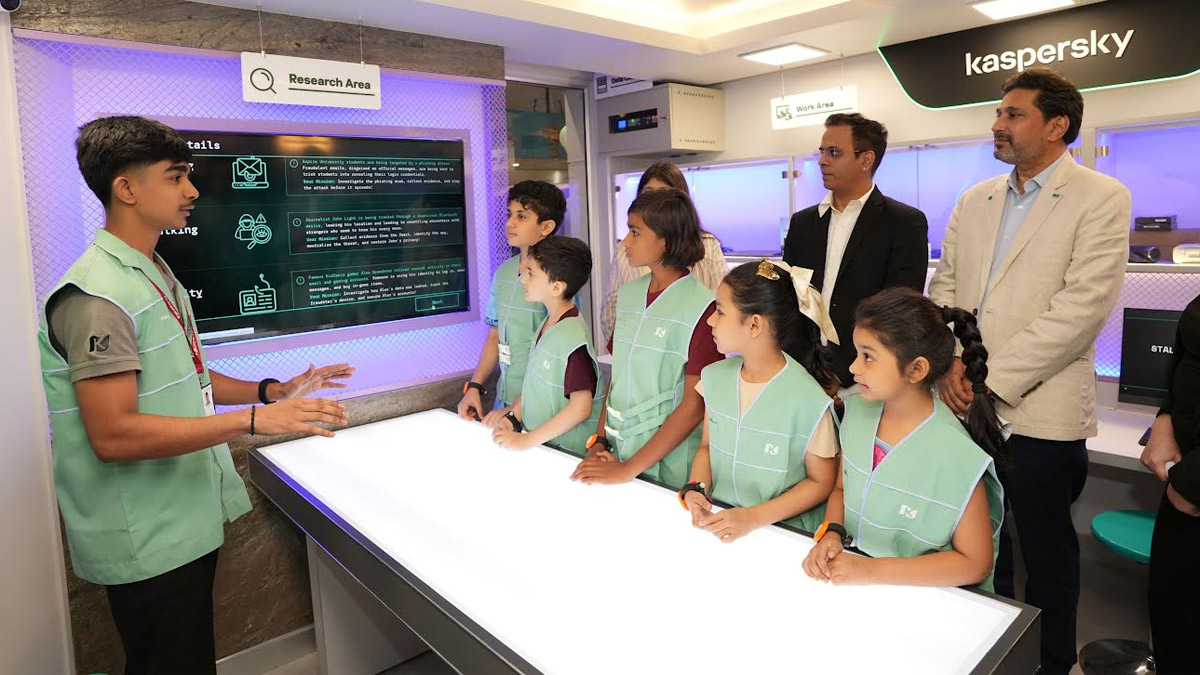
MUMBAI: India’s children are growing up online faster than anyone can protect them. Kaspersky, the global cybersecurity firm, is betting that the best way to fix that is to make six-year-olds feel like detectives.
The company has opened a Cyber Investigation Centre inside KidZania Mumbai at R City Mall, Ghatkopar, in what it is calling a first-of-its-kind cybersecurity role-play experience for children. Kids suit up in Kaspersky uniforms, sit down at dedicated workstations loaded with security software, and spend 20 minutes cracking simulated cases of phishing, identity theft and cyberbullying. Up to six children can play investigator at a time. Those who crack the case walk away with a personalised Kaspersky Cyber Investigator card — and a healthy suspicion of dodgy links.
The timing is not accidental. In India, 82.2 per cent of children have access to a mobile device by the age of 14. They use it to stream, game, chat and study. Most of them have never heard the word “phishing.”
“The earlier we equip children with the awareness and skills to navigate the digital world safely, the stronger our collective digital future becomes,” said Jaydeep Singh, general manager for India at Kaspersky. Tarandeep Singh Sekhon, chief business officer of KidZania India, put it more plainly: “Every parent today is thinking about how to prepare their child for a digital-first future.”

The partnership comes with commercial sweeteners. Visitors buying KidZania tickets get a complimentary two-month Kaspersky trial subscription. Annual pass holders get a full year’s subscription thrown in. Discount vouchers go out at the exit gates.
The launch ceremony leaned into KidZania’s theatrical DNA — a diya lighting, a dance performance, a key handover, a parade through the miniature city, and a ribbon-cutting at the new centre.
Cybercriminals, it turns out, do not discriminate by age. Kaspersky and KidZania are hoping that neither will the next generation of people trying to stop them.







