MAM
Meet Azmat Jagmag, the storyteller who went from brands to big screen


MUMBAI: It unfolded instead through instinct, intention and an almost stubborn belief that storytelling, when done right, can shape culture and deliver returns. Over 18 years in the media and entertainment business, Jagmag built and scaled some of India’s most iconic brands across television, streaming, music and movies, including Max, discovery+, SonyLIV, Zee TV, Discovery, Cartoon Network and Pogo. She led teams across India, South East Asia, Hong Kong and Taiwan, navigated SVOD and AVOD ecosystems, and worked closely with regional and global stakeholders through moments of growth, disruption and reinvention.
An “intra-preneur” by self-definition, she made her mark shaping pop-culture moments from the inside, anchored in strategy, driven by creative intuition, and sharpened by an analytical mind. Along the way, she was recognised by Google as a leading woman in new-age media and entertainment, co-authored a brand case study for IIM Ahmedabad, and deepened her leadership lens with an executive MBA from IIM A, along with certifications from Harvard Manage Mentor and Google.
And then, she stepped away.

After heading marketing at Warner Bros, Jagmag made a move that surprised many—but felt inevitable to her. She crossed over from marketing content to producing it, joining hands with world-class collaborators to announce her first film slate, D55, in partnership with Dhanush, Rajkumar Periasamy, Wunderbar Films, RTake Studios and Netflix.

“It would be easy to call this a dream come true,” she wrote at the time. “But in all honesty, it was too audacious to even dream of something like this.”
In this conversation, Jagmag reflects on that leap—not as a rupture, but as a continuation. On pressure, storytelling, the myths of mid-management comfort, and why the most important creative decisions often come from learning when not to listen to the inner voice that tells you to play it safe.
What nudged you from marketing content to producing it?
Well, the nudge was always there. But what made me take the plunge was the right people with the right intent and right timing all coming together.
I’ve spent years shaping how stories meet audiences. At some point, the curiosity naturally shifted upstream. I wanted to be closer to the source of the story, not just its moment of arrival and to shape stories with intent rather than only guiding how they travel. Producing felt less like a pivot and more like completing a circle moving from amplifying narratives to actively helping build them.
Storytelling has always been a passion & I have been lucky to receive the opportunities that helped me fuel that passion, & the amazing people that I met to put their faith in me.
Did the move feel like a leap or a natural extension?
Honestly, it felt very organic. The environments may be different, but the instincts are the same. Clarity of vision, respect for the audience, and an obsession with detail. The boardroom and the production floor operate at different rhythms, but both demand decisiveness, empathy, and the ability to see the big picture without losing sight of craft. The job is still to bring coherence to complexity.
How different is pressure when the product is a film?
With platforms, pressure is relentless and continuous. There are back-to-back launches, updates, metrics, cycles. With a film, the pressure is more concentrated and deeply personal. There’s no iteration once it’s out there. You’re putting a singular piece of work into the world, and it has to land emotionally, not just perform commercially.
Platforms demand sustained momentum; films demand unwavering conviction.
What made you commit to this project?
It was a shared vision. At this stage, I’d rather not get into specifics, but the alignment between creative ambition and production values stood out. Partnering with RTake Studios & Wunderbar Films, whose long-term vision and belief in meaningful storytelling made the commitment feel both grounded and aspirational. Of course, working with world class talent like Dhanush Sir & RajKumar Periasamy at such an early stage of my production innings is and I quote “The stuff that dreams are made of.”
How would you describe the film’s tone or space?
I’d prefer to let the film reveal itself in time. What I can say is that the focus is on emotional honesty and cultural resonance, without being boxed into easy categories.
Is this a big-budget spectacle or content-first film?
The approach is firmly content-first. Scale is used where it serves the narrative, not as an end in itself.
What’s broken in film marketing today?
I’d look at it in two parts: what’s working well, and where we can do better. What’s great is the openness today to experiment and push creative boundaries. On the flip side, over-indexing on “trending” creativity can sometimes make us lose sight of consumer insight and long-term brand building. Too much noise, not enough narrative. We often mistake volume or urgency for impact, when audiences actually respond to authenticity and thoughtfulness, not just frequency.
I’d like to see marketing that understands & trusts the audience more, builds curiosity instead of fatigue, and aligns tone with a brand’s emotional truth. Ultimately, it’s about telling stories that feel real and letting them breathe. In other words what I refer to as the “Logic To Magic” approach.
Last OTT show you binged and couldn’t stop thinking about?
The Studio. Satire at its smartest. Funny, precise, and painfully relatable. It exaggerates just enough to entertain, yet captures the push-and-pull of vision, collaboration, and execution perfectly. The characters are chaotic, ambitious, flawed, and endlessly fascinating. Do people really operate like this? Your guess is as good as mine. Sharp, unpredictable, and unforgettable, that’s The Studio in a nutshell.
One international show you wish had been made in India?
I would say shows like Game of Thrones / House of the Dragon. Not just for the scale, but for how confidently they build immersive worlds rooted in history, power, and mythology. India has an extraordinary wealth of folklore, epics, royalty and mythologies that naturally lend themselves to layered, character-driven fantasy.
I’d love to see that kind of high-end magical realism emerge from our storytelling traditions, where spectacle is grounded in cultural texture, moral complexity, and generational conflict. It’s a space we’re uniquely positioned to lead, not just participate in. We grew up with our grandparents’ bedtime stories being all about morals and magic. I think its time we told those stories to the world.
Three books that shaped your thinking?
I would pick three from different stages in my life and how they shaped my life view personally and professionally.
Alice’s Adventures in Wonderland — Lewis Carroll
“Why, sometimes I’ve believed as many as six impossible things before breakfast.”
This line from the series has stayed with me because it captures how I experience life & creativity. They often start with logic, but the real breakthroughs happen when you allow yourself to suspend it and trust imagination. That shift from structure to wonder is where new ideas begin to feel possible.
Animal Farm — George Orwell
“All animals are equal, but some animals are more equal than others.”
It was one of the earliest reminders for me that leadership isn’t static or self-righteous. Power needs to be questioned constantly, including by the people who hold it, or even the best intentions can quietly unravel.
Brand Like a Rock Star — Steve Jones
The brands that really stand out don’t just look good; they live and breathe from the inside. They start with a clear sense of belief and values, and when that core is authentic, everything else, culture, messaging, products naturally click and connect with people.
Are there any podcasts you listen to regularly?
I’m actually not a heavy podcast listener. I tend to absorb ideas more through reading, cinema, and real conversations rather than scheduled listening.
That said, when I do dip into podcasts, I gravitate toward ones that are slower and more reflective. The Knowledge Project is one I return to occasionally. It’s less about hot takes and more about how people think, decide, and make sense of complexity.
More often, my influences come from long-form writing, films, and observing culture in real time. I find ideas stay with me longer when experienced like this.
A perfect day off?
The freedom to put my phone on silent, a rare alignment of schedules so my husband and I are both in the city, and the chance to spend quality time with our daughter. Add a fiercely competitive game of UNO, and finish it off with a drive for some ice cream. That’s my perfect day. Simple, intentional and full of little joys.

The long view
Jagmag’s journey is not a rejection of structure or success, but a reminder that comfort can sometimes be the loudest distraction from destiny. Her own advice is pointed, especially for those in mid-management roles who mistake passion for permanence.
The inner voice that tells you to stay the course, she says, is not always wisdom. Sometimes, it is fear dressed up as logic.
As she steps into production, Jagmag carries with her the same principles that shaped her years in marketing: respect for the audience, conviction in craft, and a belief that when logic meets imagination, with the right people, intent and timing, magic is not accidental.





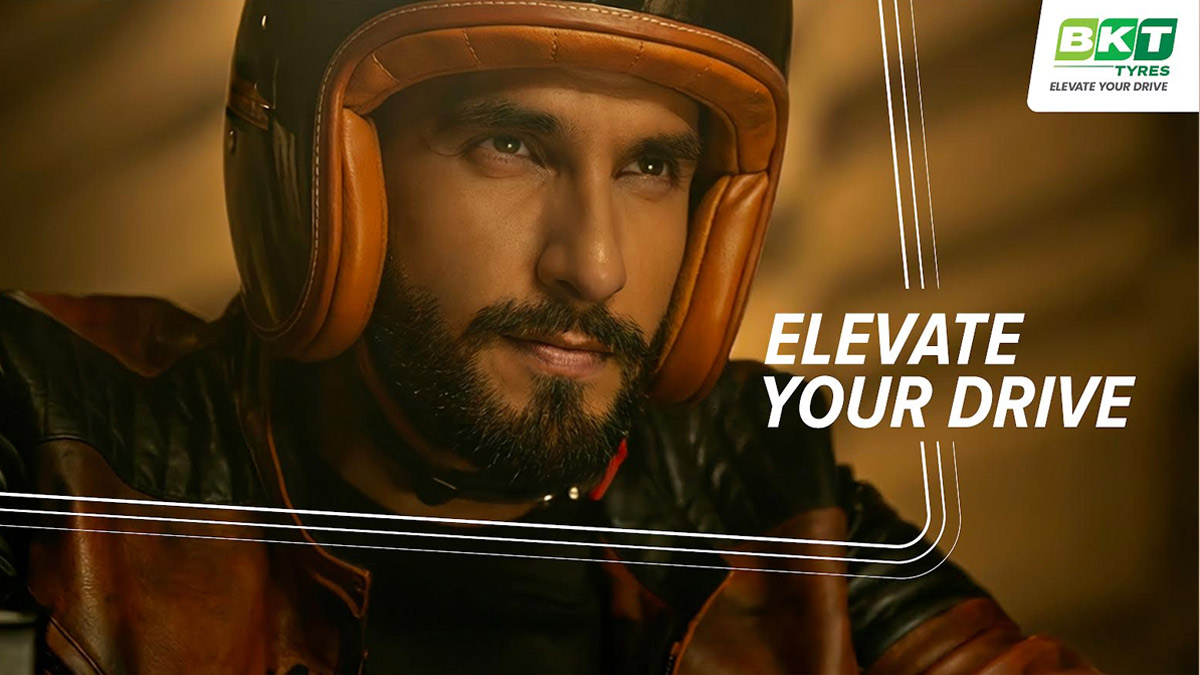
MUMBAI: BKT Tyres has decided to roll into the two-wheeler world with some serious jurrat and it’s brought Ranveer Singh along for the ride. The off-highway tyre specialist has unveiled its new campaign, ‘Jurrat’, marking a strategic push into India’s massive two-wheeler segment. The high-energy TV commercial, featuring brand ambassador Ranveer Singh, debuted on 3 April 2026 during the Indian Men’s T20 League 2026.
The campaign revolves around the core belief that true confidence on the road comes from dependable performance beneath you. ‘Jurrat’ (meaning courage) captures the mindset of riders who navigate dynamic and often unpredictable daily commutes with determination. It brings BKT Tyres’ brand philosophy ‘Elevate Your Drive’ into the two-wheeler space by spotlighting three key product benefits: long life, exceptional road grip, and unmatched comfort.
BKT Tyres chief marketing officer for India Mahesh Koppad said, “India’s two-wheeler segment reflects the way the country moves, works, and progresses every day. ‘Jurrat’ highlights how performance-led tyres, engineered for long life, comfort, and grip, enhance the overall riding experience and support uninterrupted progress in everyday life.”
The campaign is being rolled out across television and digital platforms with high-impact placements to ensure maximum reach and engagement.
This launch represents BKT Tyres’ calibrated expansion from its stronghold in off-highway tyres to becoming a more holistic mobility brand, addressing the everyday transportation needs of millions of Indian riders who rely on motorcycles and scooters as their primary mode of transport.
In a segment where confidence is everything, BKT Tyres is betting that a combination of bold celebrity appeal and strong product performance will help it gain serious traction on Indian roads. The campaign signals that the company is ready to move beyond its traditional turf and accelerate in the fast-paced two-wheeler market.






