MAM
Meesho appoints Mohit Rajani as chief product officer
Mumbai: Meesho, an e-commerce marketplace, has announced the appointment of Mohit Rajani as chief product officer (CPO). A seasoned product and technology expert, Mohit joins Meesho with a distinguished track record of building high-impact products at globally acclaimed tech companies such as Meta, Google, and Carta. In his role as CPO, Mohit will lead Meesho’s product organisation, overseeing the product management, design, and analytics teams.
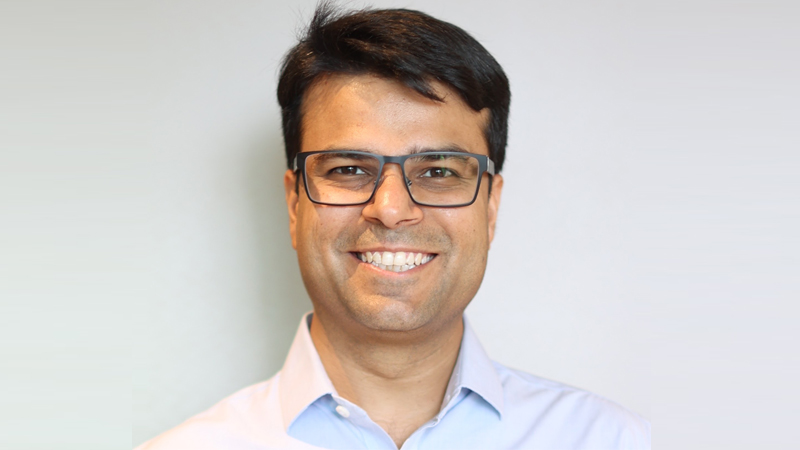
“We are thrilled to welcome Mohit to the Meesho family. Mohit’s leadership will be instrumental in driving product innovation, enhancing customer experience and building a world class product organization as we continue to scale our platform,” said Meesho founder and CEO Vidit Aatrey.
“I have long admired Meesho’s transformative impact on e-commerce in India,” said Mohit Rajani. “The company’s mission to democratize internet commerce resonates deeply with my passion for creating meaningful products. I am excited to work with Meesho’s talented team to build innovative solutions that empower millions of Indians.”
Prior to joining Meesho, Mohit held significant leadership roles at several global technology leaders. At Meta, he led the messenger’s monetization initiative, scaling it into a multi-billion-dollar business from the ground up. Before that he was part of the core team at Instagram that launched ads and business products, expanding the platform to over one million advertisers. Most recently, at Carta, Mohit managed a diverse product portfolio and spearheaded initiatives including international expansion and new generative AI-enabled products.
Mohit holds an MBA from Harvard Business School and a bachelor’s degree in computer science from the Indian Institute of Technology, Delhi.

Brands
Domino’s Q1 profit falls 6.6 per cent, announces $1 billion buyback
Sales rise 3.4 per cent as pizza giant balances growth and shareholder returns
NEW YORK: Domino’s reported a mixed start to 2026, with first-quarter net income slipping even as global sales and store expansion held steady. The company also announced a fresh $1 billion share buyback, underlining its continued focus on shareholder returns.
Global retail sales rose 3.4 per cent on a constant-currency basis to $4.74 billion. The US remained a key growth engine, with same-store sales inching up 0.9 per cent, supported by a 1.5 per cent rise at company-owned outlets.
International markets, however, painted a more uneven picture. While Domino’s added 161 net new stores overseas during the quarter, international same-store sales declined 0.4 per cent. Overall revenues still climbed 3.5 per cent to $1.15 billion, driven by higher supply chain revenues and a 2.6 per cent increase in food basket pricing for franchisees.
On the profitability front, net income fell 6.6 per cent to $139.8 million, compared to $149.7 million a year earlier. Diluted earnings per share dropped to $4.13 from $4.33. The decline was largely attributed to a $30 million unfavourable swing in unrealised gains linked to its investment in DPC Dash Ltd.
Despite this, operational performance showed resilience. Income from operations rose 9.6 per cent to $230.4 million, supported in part by a $7.8 million pre-tax gain from the sale of a corporate aircraft.
Domino’s footprint continued to expand, with the company ending the quarter at 22,322 stores across more than 90 markets. In the US, digital orders remained dominant, accounting for over 85 per cent of retail sales in 2025.
The company also maintained its dividend payout, declaring $1.99 per share, payable on 30 June 2026. After repurchasing $75.1 million worth of stock during the quarter, the new authorisation lifts the total available for buybacks to $1.29 billion.
Domino’s chief executive officer Russell Weiner said the company’s scale and store-level economics position it well to capture further market share in 2026, even as competition intensifies.
As Domino’s leans into expansion and capital returns, the latest results show a business managing short-term pressures while keeping its long-term growth strategy firmly in play.