MAM
#MediaMinds2 | Havas Group India Group CEO Rana Barua talks about digitisation and programmatic advertising


MUMBAI: A prominent face in the media industry, Rana Barua is a veteran with more than two decades of experience in the marketing industry. Having worked across agencies like Ogilvy, JWT and Creativeland, he is about to complete two years as Havas India CEO and has been doing some great work for the agency.
Barua believes in defining tasks that are short-term while keeping long-term plans in mind. He is also obsessed with time-oriented goals.
In the fourth episode of Media Minds 2, Barua talks about how the industry, including Havas, has been very aggressive about mergers and acquisitions in the past two-three years.

Elaborating more on the same Barau said, “Acquisitions may come down but will still be on. It will give you a certain edge. I see mergers happening more than acquisitions. When I say mergers, which is why I am splitting mergers and acquisitions, I see mergers because I can see certain companies merging into each other.”
Speaking about his future plans Barua shares, “We are being cautious about every form for the next few months in terms of every form of cost. What we are doing is very measured, we are ensuring that there is no ad-hocism, there is no upheaval or any kind of unplanned thoughts going on. So, if we are in the month of July, we are very clear how August and September have to be for us. There is is a lot of conversation that keeps happening between the senior management and the people who are running the show in the group.”
Watch the complete episode here:






Brands
Adani Airport Holdings and Blinkit launch India’s first in-terminal quick commerce service at Mumbai’s Terminal 2
Passengers at Chhatrapati Shivaji Maharaj International Airport can now order essentials on the Blinkit app and have them delivered within minutes
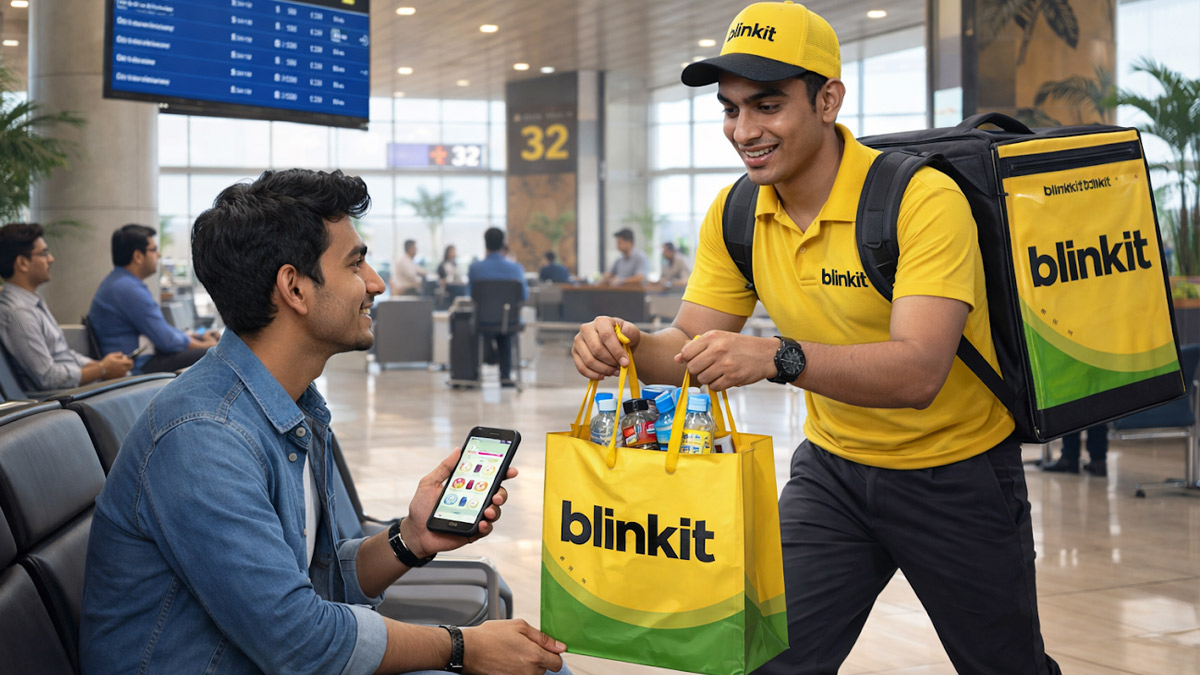
MUMBAI: Forget the overpriced airport shop. Travellers rushing through departures at Mumbai’s Chhatrapati Shivaji Maharaj International Airport can now order essentials on their phones and have them delivered within minutes, right to their gate.
Adani Airport Holdings Limited, India’s largest private airport operator, has partnered with quick commerce platform Blinkit to launch what the two companies claim is India’s first in-terminal quick commerce service. The service is live at Terminal 2, domestic departures, and allows passengers to order through the Blinkit app for delivery anywhere within the terminal, including boarding gates, lounges, the food court and select partner outlets. Deliveries are handled by trained on-ground personnel, ensuring a seamless experience without disrupting travel timelines.
The product range covers travel accessories, electronics, snacks, books, baby care and personal essentials. Permissible liquids including packaged water, cold beverages and juices are sourced from approved in-terminal inventory, in line with airport security protocols.
An AAHL spokesperson said the initiative was part of a broader push to reimagine digital services at airports. “Bringing app-based convenience into the terminal allows passengers to make better use of their time and raises the overall service standard,” the spokesperson said, describing it as a step towards building “more responsive and passenger-centric airports.”
For Blinkit, the tie-up extends quick commerce into a high-frequency, high-intent environment. For AAHL, it reflects a strategic push to grow non-aeronautical revenue through digitally enabled retail, a increasingly important revenue stream for airport operators worldwide.
You are already late for your flight. At least now you do not have to be thirsty too.






