MAM
Media firms look beyond ads as attention becomes a new business asset at FICCI Frames
Commerce, fandom, micro-dramas and AI emerge as new routes to monetise audiences


MUMBAI: Attention is money, but only if media companies can make it count. As audiences split their time across television, streaming, social media and short-form platforms, the media industry is increasingly looking beyond advertising to turn engagement into commerce, subscriptions, fandom and other revenue streams.
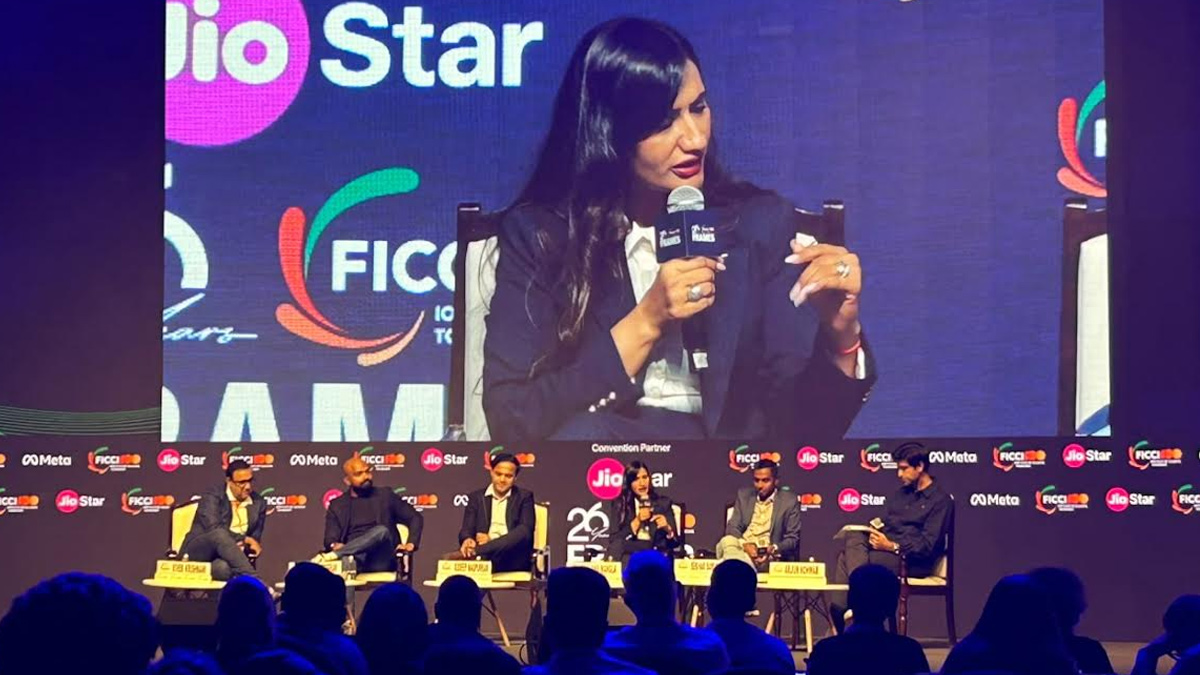
That was the central theme of the panel discussion The Value of Attention: From Eyeballs to Enterprise at FICCI Frames 2026, which examined how media companies are attempting to convert audience attention into sustainable business value.
The conversation brought together senior executives from JioStar, Zee Entertainment Enterprises, Sony LIV and The Epic Studios, with Arjun Nohwar, co-chair of the FICCI M&E Committee and managing director, South Asia, Warner Bros. Discovery, moderating the session.
The traditional media model largely separated advertising from commerce. Content attracted audiences, advertising created awareness and transactions happened elsewhere.
That line is now becoming increasingly blurred.
Media companies are exploring ways to place commerce directly inside content experiences, allowing audiences to move from watching to purchasing without leaving the platform. Live sports, entertainment shows and other high-attention environments are emerging as potential spaces for such integrations.
JioHotstar’s commerce proposition, launched around the IPL, was cited as an early example. The service enabled viewers to order food within the app while continuing to watch a match. Around 37 million users were exposed to the proposition during its initial phase.
The broader ambition is to create a connected monetisation engine in which advertising can lead to commerce, commerce can feed fandom and subscriptions can sit alongside contextual advertising and smaller transactions.
The underlying principle is simple: if platforms interrupt an audience’s attention without giving something useful in return, the interaction can feel intrusive. If the experience adds value, the same attention can become a commercial opportunity.
Another emerging opportunity lies in bringing traditional media properties into the creator economy.
Characters from television shows and other established content can develop identities of their own, creating opportunities for collaborations with digital creators and brands.
With television networks producing hundreds of shows across multiple languages, these characters can potentially move beyond the programmes in which they originated and become part of wider digital and commercial ecosystems.
This could open new avenues for brand integrations, creator collaborations and commerce while giving established media IP a longer life across platforms.
Technology is making these combinations easier to execute, while AI is also being explored as a tool for content creation, brand integration and new forms of audience engagement.
If long-form entertainment is one end of the attention spectrum, micro-dramas occupy the other.
The discussion highlighted the growing popularity of short episodic storytelling, where individual episodes can run for around a minute or slightly longer. The format recreates one of television’s oldest audience behaviours, anticipation, but compresses it into a mobile-first experience.
Instead of waiting a day for the next television episode, viewers can consume multiple short episodes in one sitting and immediately move on to the next part of the story.
Zee Bullet and other short-form offerings are being developed around this behaviour, creating a different content and monetisation model from conventional television and streaming.
For JioStar, Tadka was cited as an early test of this new attention economy. The short-form platform had accumulated around 100 million views within its first few months, while watch time per user had increased fivefold since launch.
The wider strategy is not necessarily to choose between short and long content. Platforms are increasingly looking at the entire spectrum, from short clips and micro-dramas to several-hour sporting events, and attempting to provide a meaningful experience at every point.
Short-form content is also being used as a gateway into longer programmes rather than as a replacement for them.
Reality and unscripted formats such as Kaun Banega Crorepati, Shark Tank, MasterChef and Indian Idol can be broken into five to 10-minute segments designed for social platforms and short-video feeds.
These clips can offer a complete viewing experience while also giving audiences a taste of the larger programme.
The approach effectively turns short-form content into a discovery and marketing funnel. Viewers can sample a show on one platform before deciding whether to invest more time in the full-length version.
The growing consumption of game and reality formats on streaming platforms is also encouraging investment in more established international formats, including Wheel of Fortune and Family Feud, alongside newer entertainment concepts.
The rise of micro-drama is also expanding the definition of what short-form video can become.
YouTube’s established Shorts ecosystem provides a natural foundation for episodic storytelling, with creators and media companies already experimenting with stitching together short clips into much longer viewing experiences.
Examples from Chinese content markets have demonstrated that audiences can consume extended narratives built from short-form episodes when the storytelling is structured effectively.
The model also creates additional monetisation possibilities. Episodic short-form content can remain free and ad-supported while also being offered through memberships or other paid access models.
This gives platforms another route to monetise highly engaged short-form audiences without relying solely on conventional advertising.
AI was another major part of the discussion, particularly its growing role in producing short-form and micro-drama content.
The technology can make content creation faster, cheaper and more efficient, potentially lowering the barriers to production and allowing a much larger volume of content to enter the market.
But greater supply does not automatically mean greater consumption.
Audiences still have a finite number of hours in a day, creating a sharper competition for attention even as the amount of available content expands.
The discussion also raised the possibility of audiences increasingly wanting to distinguish between AI-generated and traditionally produced content. While AI-generated material is already finding applications in shorter formats, questions remain around its ability to sustain audience engagement in longer-form entertainment.
As the technology improves, the creative question may shift from what AI can produce to how creators use it. Human storytelling, characters and creative judgement could remain important differentiators even as production processes become increasingly automated.
The broader takeaway from the session was that media monetisation is moving beyond a single revenue stream.
Advertising remains important, but platforms are increasingly looking at commerce, subscriptions, memberships, micro-transactions, fandom, creator partnerships and direct audience participation as interconnected opportunities.
Engagement itself is also becoming more active. Polls, quizzes and other interactive features around live sports and entertainment can turn passive viewers into participants, adding another layer of value to the audience relationship.
For platforms, the challenge is to connect these different pieces without damaging the viewing experience.
In an era where almost anyone can create content and production barriers are falling, the real scarce resource is no longer content. It is meaningful attention.
The media businesses that can convert that attention into useful experiences, deeper relationships and multiple sustainable revenue streams could define the next phase of the industry’s growth.