
Brands
Maruti chair urges faster reforms as auto industry sees growth
RC Bhargava projects car market at 6.3 million units by FY31


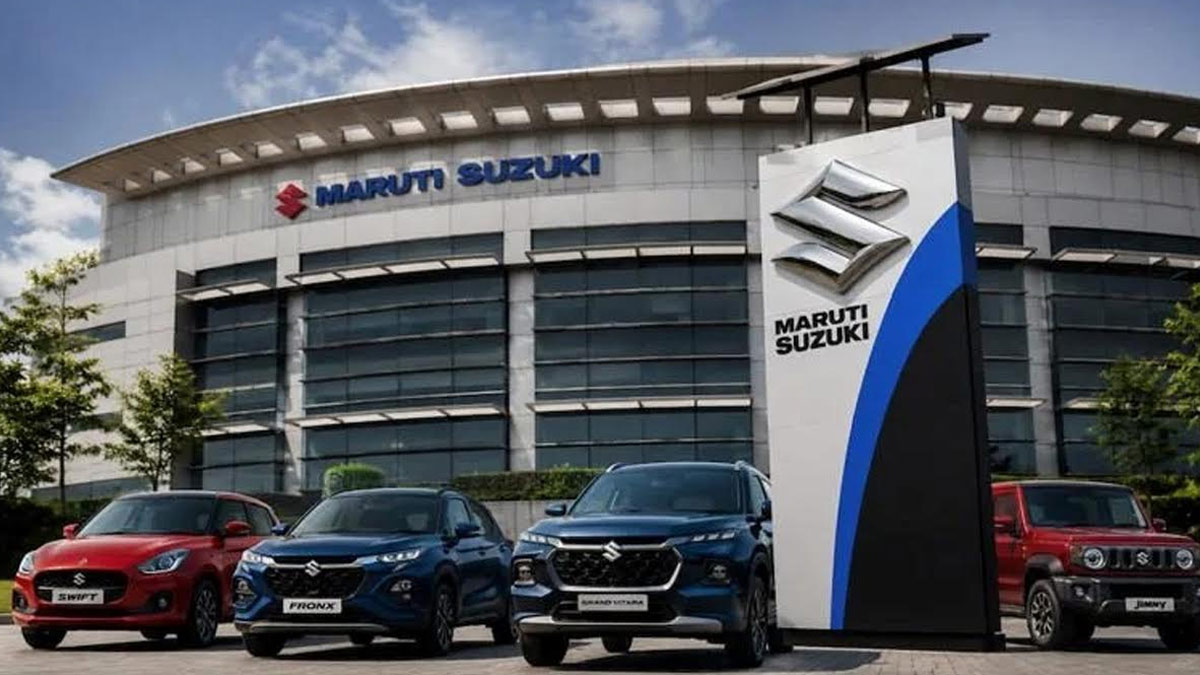
MUMBAI: India’s car market appears to be shifting into a higher gear. Maruti Suzuki India chairman R. C. Bhargava has called for faster reforms and easier business conditions, while projecting that India’s car industry could reach 6.1 million to 6.3 million units by FY31.
In his message to shareholders in Maruti Suzuki’s annual report for 2025-26, Bhargava urged the Centre and state governments to accelerate reforms and make greater use of technology to reduce delays and corruption.
He also called on political parties to support reforms and programmes that encourage wealth creation, arguing that faster and more efficient economic growth would help generate resources for a more equitable society.
Bhargava said the automobile sector has demonstrated how competitive industries can create large employment opportunities while contributing to broader economic growth.
Bhargava said the company’s longer-term estimates could change following the growth seen after the implementation of GST 2.0.
Maruti Suzuki currently expects the overall car industry to reach between 6.1 million and 6.3 million units by FY31. The company also expects the small-car segment to grow significantly faster than it did over the previous five years.
The outlook comes after a sharp improvement in passenger vehicle demand. Following the implementation of the new GST rates in September 2025, Maruti Suzuki’s retail sales increased 17 per cent in the second half of FY26.
The company ended March 2026 with around 1.9 lakh pending bookings, which Bhargava attributed to inadequate manufacturing capacity for models that were in demand.
The capacity mismatch followed several years of adjustments as the market shifted away from small cars towards SUVs.
Maruti Suzuki has since been making its new production lines more flexible, allowing the company to switch between platforms and models depending on market demand.
The strategy appears to be paying off. Maruti Suzuki’s sales grew 38 per cent in the first quarter of FY27, compared with 28 per cent growth for the overall industry.
Small-car sales also accelerated, rising 35 per cent in the first quarter of FY27 after growing 17 per cent in the second half of FY26.
Bhargava also called for quicker action on reforms, including greater use of technology across government systems.
He argued that digital processes can reduce corruption and delays, while saving time and lowering production costs.
He also urged policymakers to place greater trust in private enterprise and competition, arguing that faster wealth creation is essential for India to make up for lost economic time.
His comments come as the government continues to assess the impact of GST reforms on consumption and economic activity. Bhargava said GST collections had remained buoyant despite tax rates being reduced on more than 90 per cent of products.
Beyond vehicle sales, Bhargava reiterated Maruti Suzuki’s position that India will need multiple technologies to achieve its net-zero ambitions.
He highlighted biogas as a potential alternative to imported CNG, arguing that it can be produced from locally available resources and provide a cleaner, renewable source of energy without an import requirement.
The process could also generate fermented organic manure, which could improve soil quality and agricultural productivity. Bhargava said greater use of biogas could help reduce crop burning, support farmer incomes and encourage greater mechanisation in agriculture.
Maruti Suzuki has been working with the Indian Agricultural Research Institute in Pusa for the past two years to study the potential.
The company is now moving towards commercial experimentation. Its board has approved the first phase of four biogas plants at an investment of Rs 561 crore under the government’s GOBARdhan initiative.
Maruti Suzuki expects the initial projects to help it learn more about the technology and production process before potentially committing larger investments to biogas production and distribution.
For India’s largest carmaker by volume, the strategy is therefore expanding beyond selling more cars. With demand accelerating, small cars showing signs of a comeback and biogas entering its clean-energy plans, Maruti Suzuki is betting that the next phase of growth will require both faster reforms and more flexible thinking.






