MAM
Mahindra Group launches ‘Rise Up – Anthem for the Girl Child’
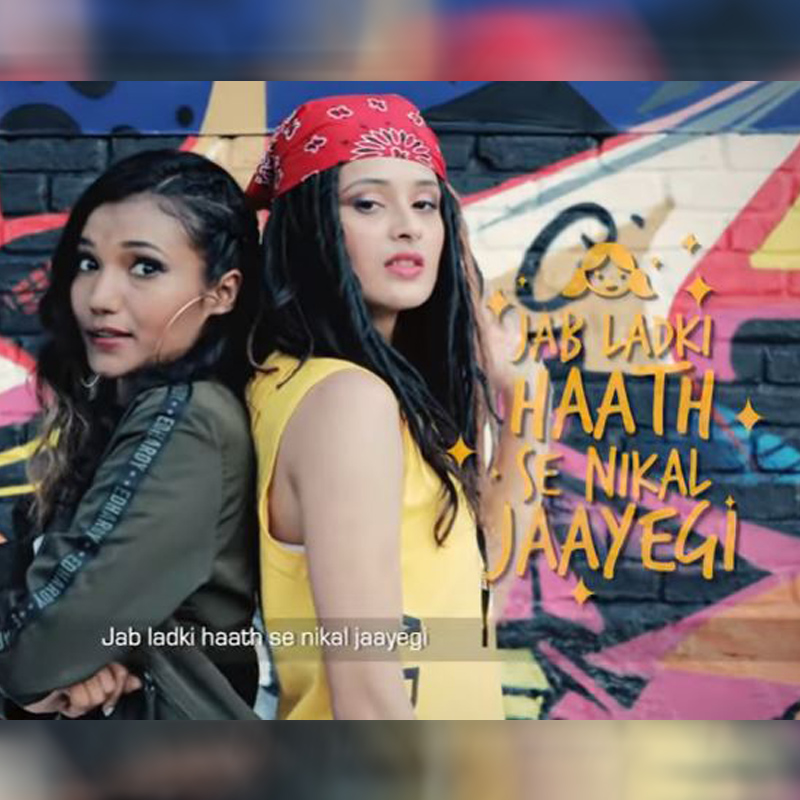
MUMBAI: The Mahindra Group and ‘Project Nanhi Kali’ marked the National Girl Child Day with the launch of ‘Rise Up – Anthem for the Girl Child’. The anthem is an offshoot of #LadkiHaathSeNikalJayegi campaign of the brand and presents it in an all-new avatar.
Conceptualised by 22feet Tribal Worldwide, the anthem has been created Mahindra Group and Project Nanhi Kali in collaboration with artists Deepa Unnikrishnan, aka Dee MC and Simi Talsania. The anthem has gone live today across all digital channels of Project Nanhi Kali and Mahindra Rise and will be reinforced through the social media pages of the two artists.
Mahindra & Mahindra Ltd CMO group corporate brand Vivek Nayer commented, “Mahindra is a socially responsible and trusted brand, and with the Rise for Good initiatives, we not only want to do good in the community but also aim to inspire others to drive societal change. #LadkiHaathSeNikalJayegi was one such campaign which provided a positive perspective on an age-old and negative mindset. Expanding the mindset beyond girl child education and helping them envision their preferred, potentially unconventional career choices was the logical succession to the campaign. Today, on National Girl Child Day, we are thrilled to be launching the ‘Rise Up’ anthem, and there could be no better role models than Dee MC – a rapper, and Simi – a dancer in the hip-hop genre, to help us tell this story differently.”
Mahindra Group senior vice president – CSR and KC Mahindra Education Trust executive director Sheetal Mehta said, “Project Nanhi Kali has consistently communicated that education is the only tool which enables girls to rise from a life of poverty and go on to live a life of dignity. Our campaign #LadkiHaathSeNikalJaayegi referred to the patriarchal attitudes towards girls which discouraged them from getting educated but gave a positive spin to the phrase, by linking their education to achieving their aspirations, to become self-reliant and independent women. Our TAG (teen age girls) report launched recently, in fact, revealed that 74 per cent girls wish to work after their studies, and have a specific career in mind. The Rise Up anthem will definitely open up the minds of girls and encourage them to be fearless in making unconventional career choices.”

AD Agencies
Fevicol releases its last ad campaign by the late Piyush Pandey
The adhesive brand’s last campaign by the late advertising legend Piyush Pandey turns an everyday Indian obsession into a quietly powerful metaphor
MUMBAI: Fevicol has never needed much of a plot. A sticky bond, a wry observation, a truth that every Indian instantly recognises — that has always been enough. “Kursi Pe Nazar,” the brand’s latest television commercial, is no different. And yet it carries a weight that no previous Fevicol film has had to bear: it is the last one its creator, the advertising legend Piyush Pandey, will ever make.
The film, released on Tuesday by Pidilite Industries, fixes its gaze on the kursi — the chair — and what it means in Indian life. Not just as a piece of furniture, but as a currency of ambition, a vessel of authority, and a source of quiet social drama that plays out in every home, office and institution across the country. Who sits in the chair, who waits for it, and who eyes it hungrily from across the room: the film transforms this sharply observed cultural truth into a narrative that is, in the best Fevicol tradition, funny, warm and instantly familiar.
The campaign was Pandey’s idea. He discussed it in detail with the team before his death, but did not live to see it shot. Prasoon Pandey, director at Corcoise Films who helmed the commercial, said the team needed five months to find its footing before they felt ready to shoot. “This was the toughest film ever for all of us,” he said. “It was Piyush’s idea, magical as always.”
The emotional weight of that responsibility was not lost on the team at Ogilvy India, which created the campaign. Kainaz Karmakar and Harshad Rajadhyaksha, group chief creative officers at Ogilvy India, described the process as “a pilgrimage of sorts, on the path that Piyush created not just for Ogilvy, but for our entire profession.”
Sudhanshu Vats, managing director of Pidilite Industries, said the film was rooted in a distinctly Indian insight. “The ‘kursi’ symbolises aspiration, transition, and ambition,” he said. “Piyush Pandey had an extraordinary ability to elevate such everyday observations into iconic storytelling for Fevicol. This film carries that legacy forward.”
That legacy is considerable. Over several decades, Pandey’s partnership with Fevicol produced some of the most beloved advertising in Indian history, building the brand into something rare: a household name that people actively enjoy watching sell to them.
“Kursi Pe Nazar” does not try to be a tribute. It simply tries to be a great Fevicol film. By most measures, it succeeds — which is, in the end, the most fitting send-off of all.