MAM
Local paint industry looking at bright future: Kamdhenu Paint’s Saurabh Agarwal

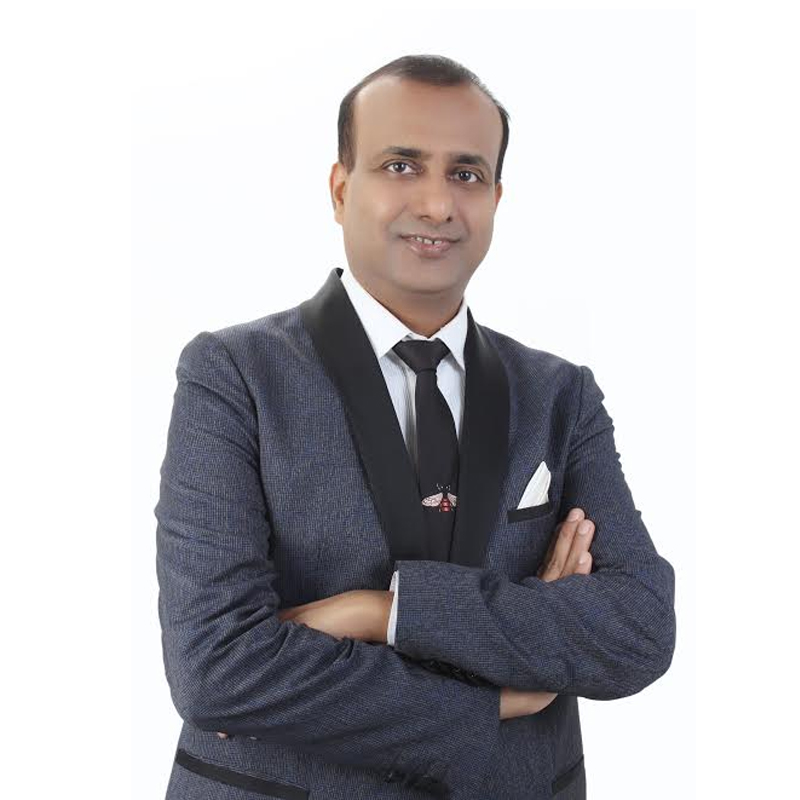
NEW DELHI: The Indian paint idustry, pegged at Rs 50,000 crore in total value, is coping with tough times these days, consequent to the extended lockdown condition and interrupted economic activities in the country. According to Kamdhenu Paints director Saurabh Agarwal, the prospect for the industry is not going to be good for the current year.
“The pandemic and lockdown conditions enforced throughout the country has caused significant problems to local businesses having to maintain their fixed expense such as salary payments to their staffs, rental obligations of shops or offices etc. Further, local business is also looking at a massive shortage in the availability of labour in the markets as migrant workers have left the cities and head to their home towns,” he told Indiantelevision.com.
However, Agarwal believes that the industry is looking at a bright future ahead as there will be tremendous growth prospect for all Indian paint companies, courtesy the ‘Vocal for Local’ campaign, initiated by the Indian government.
He told Indiantelevision.com that the paint industry is greatly dominated by Indian players. “Domestic brands have a market share of about 75 per cent to 80 per cent of the paints industry while the rest is made up by international companies operating in the country. The promotion of the ‘Vocal for Local’ campaign will have a positive impact on Indian paint companies as branded customers will now be focusing on domestic companies rather than going for products of international players.”
The brand has taken extensively to raise the support and awareness towards the motto of popularising local brands in India. It also launched a new social media campaign to amplify the message of buying local and self-reliance.
Agarwal shared, “The main idea behind the various social media campaigns that we undertake is to support the call made by our PM. It is a good opportunity for all Indian industry to come forward and support this campaign. It is also our moral duty to encourage our fellow countrymen to buy only 'Made in India' products.”
He showed confidence in the fact that with such campaigns, Kamdhenu Paints will be able to add new consumers to its portfolio.
Elaborating more on the consumer behaviour towards the local brands, Agarwal quipped, “Consumer buying behaviour can be broadly categorised into two. One category is the brand-conscious buyer that will only buy brand names and the other is the price-conscious buyer who will buy products that give him the biggest bang for the buck. By adopting better standards in the manufacturing process local brands can produce competitive products with quality that are at par with the best. Improving quality in production by local brands can attract both the brand-conscious buyer and the price-conscious buyer as high-quality local brands will be available to consumers at very economical prices which suits their pocket.”
Agarwal also praised the government support, which has been extended in the past few weeks. “The government has announced a very good package for the economy. I am sure it will have a positive impact on economic recovery as we come out of the lockdown restrictions. The result may however not be visible instantly as the impact of the initiative will take some time to percolate through.”
However, he also feels that as we emerge from the shadows of the lockdown and the economy slowly begins to pick up, the government needs to do more as this is not a one-shot cure and more needs to be done to prop up the economy.
He concluded, “The government can look at giving some relaxations in tax slab that can help cushion everyone from the impact of the pandemic. They might consider giving some relaxation in tax slab for all individual, an interest waiver for full-year on EMI of all types of loans, direct benefit transfer of some amount directly to low salary workers in both organised and unorganised sector, compensation of rent for all low-class employee or migrant labourers and arrangement of shelter homes for all migrant workers with provision for food and stay facilities.”