MAM
Local, corporate & digital is Kinetic India’s OOH plan

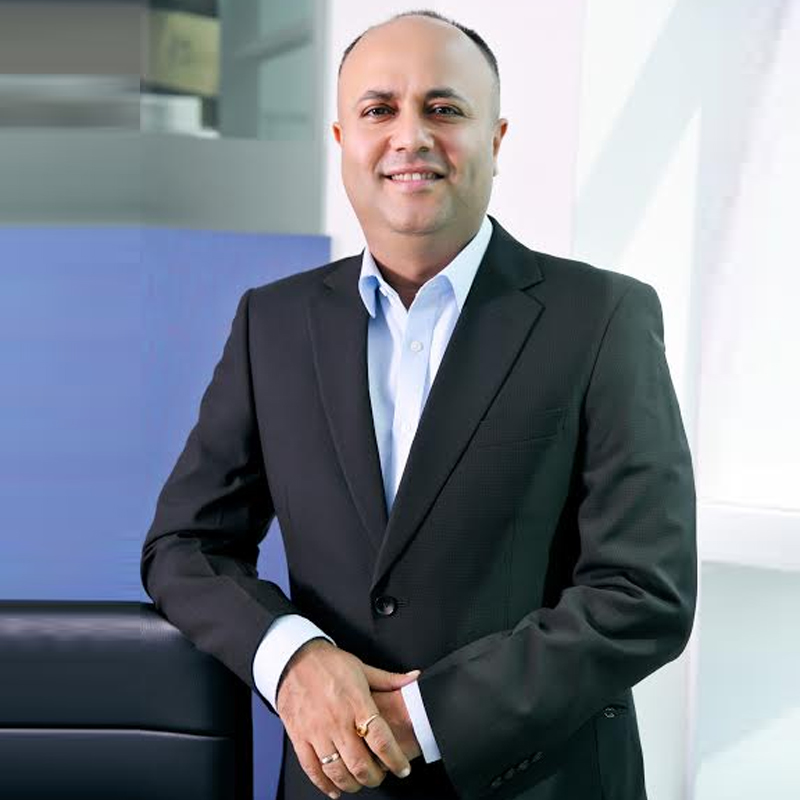
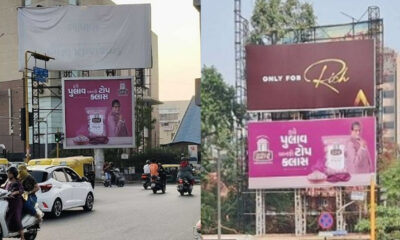
NEW DELHI: The Covid2019 pandemic seems to have hit some industries harder than others, including events, experiential and out of home (OOH). The OOH industry saw a good year in 2019. According to the FICCI-KPMG report, the industry witnessed a growth of five per cent to reach a size of Rs 34 billion. Kinetic India managing director Ajay Mehta says that the unlock phases have seen over 149 new clients coming back to the OOH space.
He says that during lockdown the conversation has become localised such as residential areas (high-rises with digital OOH), the local kirana store, the nearby grocery and retailer, etc. “Very interestingly from 1 June onwards – data shows that grocery impacts exceeded pre-Covid2019 numbers. This can be attributed to changed buying behaviour exhibited by audiences. Post-July, we are seeing increased traffic on the roads and this is being recognised by advertisers and a few large-scale campaigns have started or are starting,” he adds.
As India continues to battle this grim pandemic – Kinetic India is focussing its medium-term on five pillars. “We call it LoCDAT which stands for local – corporate – digital – airports – tier 2/3,” Mehta highlights.
Explaining the five pillars, he shares, “Localise your campaigns – focus on hyperlocal targeting in and around the residential areas, which will continue to remain the key focus. As workplaces continue to open and people return to corporate offices they will gain an enhanced prominence in the new-normal as they are a unique touchpoint to connect with usually hard to target audience. Digital OOH – which has the highest reach for targeting 25-45-year olds across China will see greater investments in India as well. Moving towards the programmatic for digital OOH will be critical for this medium to deliver ROI – which continues to remain largely missing in the traditional OOH space.”
Advertisers, including FMCG, automobile and BFSI, have used the medium heavily during the pandemic. “The FMCG industry has seen the launch of over three dozen new products during this lockdown period in the cleaning and disinfectant category amongst others. Personal mobility has assumed prominence with car brands back on OOH with long-term investments. BFSI with products having guaranteed returns is also present on OOH. Media brands are also back in a meaningful manner,” says Mehta.
Mehta shares that the months of June-July generally witness a seasonal dip on account of a few brands fearing increased costs due to flex tears due to the monsoons. He says: “However, the brands which decide to be present on OOH during this period are able to achieve an enhanced share of voice and cut-through. However, it is heart-warming to see the rate at which clients are coming back to OOH since the declaration of Unlock 1.0. Multiple notable brands with contextualised creatives and success stories on OOH have shown the way for other brands to emulate.”
As consumer habits have had a sea-change during this COVID2019 pandemic, the company expects mass brands to focus on OOH across the length and breadth of India. “As tier II and III cities open up faster on account of a lower Covid2019 infection rate, multiple brands especially in the FMCG, insurance and mobility (including four and two-wheeler) space are making their presence felt on OOH. Apart from these other categories like media including OTT, home improvement, mobile handsets, computers,” he shares.
The industry in the past has suffered due to a lack of unified measurement system, but lately many big players have invested heavily to bring transparency. Kinetic India had recently announced IOM (India on the move), an in-house developed tool which understands the audience traffic pattern and helps in designing sharper targeting audience with minimised spillover.
“The moot point today is that clients are demanding ROI more than ever. Every investment is put under the scanner. IOM on a very simplistic platform helps our clients clearly understand the efficiency being delivered for their campaigns. It analyses multiple data points to track traffic movement across road, rail and air. This ensures a data-based approach to decision making. It is based on pre and post-Covid2019 numbers and helps establish a baseline to allow the client to calibrate their OOH investments,” Mehta emphasised.
“For this tool, we have focused on transparency and multiple available data sources for preparing our tools. What is proprietary is the thought and execution that goes behind it. We have used mobility data, transit data to derive a systematic measurement system that provides a real-time understanding of the on-ground audience scenario,” he concludes.